

«Данное сообщение (материал) создано и (или) распространено иностранным средством массовой информации, выполняющим функции иностранного агента, и (или) российским юридическим лицом, выполняющим функции иностранного агента»

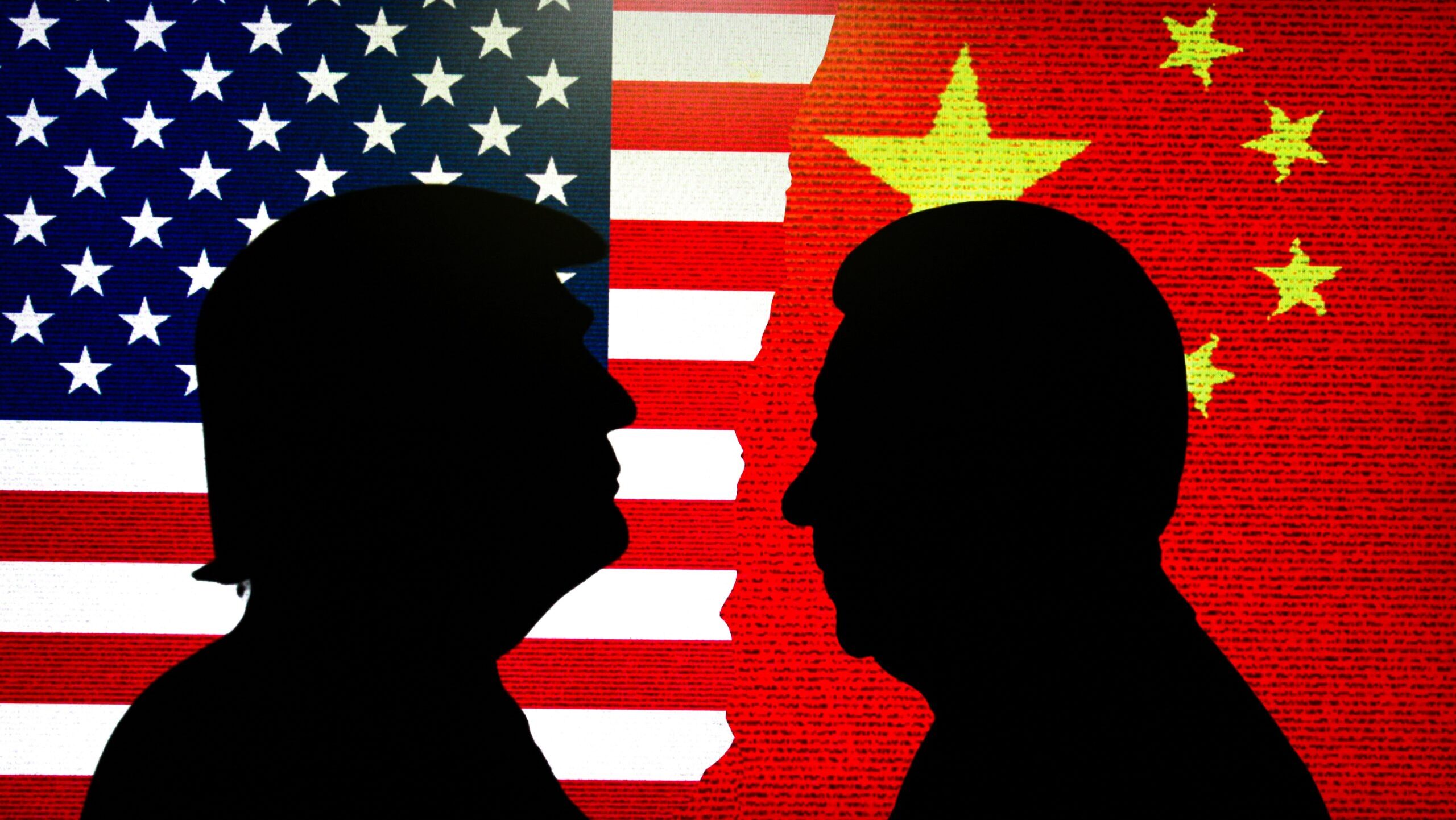
Silhouette of Donald Trump and Xi Jinping in front of their national flags, symbolizing how their competing energy and industrial strategies are reshaping global climate politics and clean-energy markets. (Shutterstock/Thrive Studios ID)
Topic: Climate, Critical Minerals, and Nuclear Energy Blog Brand: Energy World Region: Americas, and Asia Tags: Advanced Nuclear Reactors, China, Energy Security, North America, Nuclear Fuel, Paris Climate Agreement, Small Modular Reactors (SMRs), South Korea, United States, and US-China Relations How US and China’s Climate and Clean Energy Policies Diverge February 24, 2026 By: Taek Goo Kang, and Ming-Te Hung
Share
Climate and Energy policy choices in Washington and Beijing are reshaping global trade, technology flows, and investment patterns.
As strategic competition between the United States and China intensifies, many analysts argue that interactions between the two countries—the world’s largest greenhouse-gas emitters and leaders in clean-energy technologies—are undergoing a major realignment driven by their divergent approaches to climate and clean energy policy. An area once framed as bilateral cooperation is now increasingly defined by rivalry. Climate and clean energy now form a core arena of political, technological, and supply-chain competition. Understanding these dynamics is vital for South Korea as it seeks to advance its national interests.
US: America First and Energy Dominance
The Trump administration views climate change as a “hoax,” prioritizing “America First” and “energy dominance.” It favors fossil fuel expansion over renewables (wind and solar) to boost the economy, secure energy independence, and strengthen US power, viewing renewables as unreliable and harmful to the grid/landscape.
The administration’s negative perception of global climate accords remains largely unchanged from its first term. Grounded in a doctrine of American nationalism, the second Trump administration has withdrawn from a range of international climate cooperation initiatives. On his first day in office in January 2025, President Donald Trump signed an executive order titled “Putting America First in International Environmental Agreements,” formalizing the United States’ withdrawal from the Paris Climate Agreement. This marks another decision following his withdrawal from the agreement during his first term in office. However, since the administration has not declared withdrawal from the United Nations (UN) Framework Convention on Climate Change (UNFCCC)—a treaty with binding legal status—it is anticipated that the United States will not completely disengage from global climate governance.
Trump’s Selective Clean Energy Transition
The United States understands the clean energy transition as one that relies heavily on supply chains controlled by China. Washington perceives that a shift toward so-called “green energy” or clean energy will ultimately contribute to China’s economic development, and that US dependence on China for critical minerals and clean-energy industries would severely undermine American national security.
In this context, the Trump administration’s approach to the clean energy transition is selective. While it adopts a hostile stance toward existing support for wind and solar energy—either limiting or abolishing such measures—it is more favorable toward nuclear power and geothermal energy, which align with its emphasis on fossil fuels and contribute to US energy-security objectives. Trump’s approach can be identified in the One Big Beautiful Bill Act (OBBBA), signed on July 4, 2025.
First, OBBBA repeals or reduces the tax-credit benefits for renewable energy sources such as solar and wind that were created under the Biden administration’s Inflation Reduction Act (IRA).
Second, section 70513(b) restricts foreign access to the US energy-storage supply chain, signaling federal support for storage technologies tied to grid stability and renewables, and indicating a shift toward a domestic supply chain through localized battery production and critical-mineral processing.
Third, although the legislation accelerates the phaseout of renewable-energy tax credits, the administration preserves or restructures incentives for advanced nuclear, carbon capture and storage (CCS), and hydrogen. The OBBBA classifies income from hydrogen, CCS, advanced nuclear, small modular reactors (SMRs), hydropower, and geothermal energy as qualifying income for certain Publicly Traded partnerships. Thus, the Trump administration does not reject all clean energy but adopts a selective approach, emphasizing advanced reactors—Generation III+, SMRs, and microreactors—and strengthening the nuclear-fuel supply chain for national-security goals.
Bilateral Alliance Networks and “Friend-Shoring”
The Ukraine war and the pandemic exposed weaknesses in global supply chains, leading the United States and its Euro-Asian partners to adopt “friend-shoring,” which concentrates trade among trusted countries. This move departs from traditional globalization and, according to supporters, offers a way to rebuild supply chains while reducing dependence on “authoritarian” states such as China and Russia.
To advance this objective, the United States has mobilized federal development finance instruments, including the Export–Import Bank of the United States and the US International Development Finance Corporation, to support overseas mining and processing projects deemed strategically relevant to clean-energy technologies. In addition, Washington has established dedicated funding mechanisms for critical minerals, thereby diversifying US access to global mineral sources and reinforcing a supply-chain architecture insulated from geopolitical coercion.
With respect to clean-energy supply chains, the United States is making concerted efforts to secure a stable supply chain in response to China’s weaponization of critical mineral resources. The US strategy for securing raw-material supply chains emphasizes expanding critical-mineral production through a “friend-shoring” approach while reducing dependence on“hostile foreign powers.” To this end, the United States is diversifying its access to global mineral supply chains by providing financing for overseas mining projects through the Export-Import Bank of the United States and the US International Development Finance Corporation, as well as by establishing dedicated funds for critical minerals.
China: Clean Energy as a Driver of Sustainable Economic Growth
Recognizing that its fossil-fuel-intensive structure limits competition with the United States, China under Xi Jinping has elevated the clean energy transition to a core national strategy. Beijing aggressively expands renewable dominance to upgrade its industry, secure stable energy for growth, and enhance global influence through clean-energy leadership
In an address to the United Nations General Assembly (UNGA) in September 2020, Xi Jinping announced that China would achieve carbon neutrality by 2060, signaling Beijing’s ambition to present itself as a global climate-governance leader. China pledged to reach peak carbon emissions before 2030 and attain full neutrality by 2060. Although it remains a developing country under the UNFCCC as a non–Annex I Party—with no binding obligations on emissions reductions or climate-finance contributions—it has nevertheless expanded its international climate role. At COP29 in Baku in November 2024, China reported providing more than177 billion yuan (about $24 billion) since 2016 in project-based financing for climate initiatives in developing countries, using UN climate-finance terminology. These actions highlight Beijing’s strategic use of its dual identity to broaden its influence within global climate-governance structures.
To cultivate its clean-energy industries, China has provided extensive industrial-policy support and substantial fiscal incentives. Key initiatives like the 2012 “Seven Strategic Emerging Industries” and the 2015Made in China 2025 plan targeted energy-efficient and new-energy vehicle sectors with subsidies, tax incentives, and investment assistance. Estimates suggest cumulative government support for electric vehicle (EV) development reached $230.9 billion between 2009 and 2023. Moreover, China’s clean-energy investment is massive, totaling 6.8 trillion renminbi, which is comparable to global fossil-fuel investment in 2024.
Simultaneously, China seeks energy security and self-sufficiency, prioritizing domestic clean energy to power emerging industries such as artificial intelligence (AI) and semiconductors. However, to ensure a stable supply and achieve carbon neutrality goals, China still relies heavily on coal, which accounted for 63.9 percent of primary energy production in 2024. Despite promoting a clean-energy transition, China continued building large-scale coal-fired power plants in 2024 to avoid disruptions in electricity supply. As seen in recent coal-related policy developments, concerns are mounting that the expansion of renewable energy is occurring alongside a strengthened role for fossil fuels, rather than replacing them. In this context, some analysts argue that China’s energy-security strategy reflects not an “energy transition” but an “energy overlap”—a dual-track strategy advancing both clean energy and coal-fired generation, rather than a full replacement.
Weaponization of Critical Minerals and China’s Aggressive Investment Strategy
China is weaponizing critical minerals (rare earths, lithium, cobalt, graphite) by controlling production and processing and imposing export curbs. China refines 73 percent of global cobalt, 59 percent of lithium, and processes an overwhelming 92 percent of rare earths. This dominance is a strategic asset. Export controls, phased in since 2023, reflect Beijing’s view of these minerals as instruments of strategic leverage.
Internationally, China is also investing actively in resource-rich regions—particularly in Africa—to secure stable access to raw materials essential for clean-energy infrastructure. Between 2018 and 2020, China invested approximately $16 billion in overseas mining projects, with significant portions reportedly directed toward the so-called Lithium Triangle of Argentina, Bolivia, and Chile. In Zimbabwe, which holds Africa’s largest lithium reserves, Chinese companies spent over $1 billion between 2021 and 2023 to acquire and develop lithium projects.
Emerging US–China Friction in Climate and Clean Energy Transition
Rising Multipolarity and the Weakening of US Climate Influence
Divergent US–China approaches to global climate governance risk weakening cooperation and eroding US influence. With Washington prioritizing “energy independence,” the EU stressing “carbon neutrality,” and China blending “energy security” with gradual low-carbon goals, these competing agendas may accelerate a multipolar climate order and delay global mitigation efforts. The Trump administration’s emphasis on fossil-fuel expansion and nuclear energy development contrasts with China’s mix of renewables and “clean coal,” increasing global dependence on fossil fuels. Slower renewable deployment and declining investment—especially in developing countries—could further weaken climate-mitigation momentum and postpone carbon-neutrality timelines.
Declining US Influence in Clean Energy Technologies and Industries
Reduced US support for renewable energy may slow domestic industry growth and weaken US global leadership, while China expands financial and technological investments across South Korea, Japan, Africa, and Southeast Asia. As regional dependence on Chinese capital and technology deepens, US strategic influence may further decline. In short, falling renewable-energy costs may allow China to benefit from rising global demand for clean and affordable energy. While the United States remains tied to a fossil-fuel economy, China is positioned to lead the emerging low-carbon economy.
Selective US Clean-Energy Strategy
Although the Trump administration stresses fossil-fuel development, it does not reject all clean energy. Instead, it selectively prioritizes technologies where the United States can compete—such as advanced nuclear, including SMRs, and geothermal—rather than solar and wind, dominated by China. This technological bifurcation may heighten US–China competition, reducing interoperability, raising costs, and intensifying standards-setting rivalry.
Intensification of Clean Energy Supply-Chain Fragmentation
Divergent US and Chinese supply-chain strategies may further deepen the fragmentation of global supply chains. The Trump administration seeks to reduce dependence on Chinese clean-energy supply chains by prioritizing domestic mineral development and strengthening bilateral supply-chain partnerships. With China’s dominance in solar, EVs, and battery industries—as well as critical minerals—the global supply chain may become increasingly segmented and polarized.
Policy Recommendations for South Korea
In response to the heightened tensions and competition between the United States and China following the inauguration of the Trump administration, Korea should consider the following strategic directions:
First, Korea should maintain multilateral cooperation grounded in universal global norms. By anchoring its efforts in international legal agreements such as the Paris Agreement and universally recognized norms and principles, South Korea should reinforce its participation in multilateral cooperation frameworks and play a proactive role in global agenda-setting.
Second, as US engagement in global climate governance recedes, South Korea should strengthen cooperation with regional partners and the EU to advance global climate goals. It should deepen cooperation with the EU to stabilize and diversify clean-energy supply chains. Building on the existing “South Korea–EU Green Partnership,” South Korea should accelerate joint efforts to develop shared technology standards and regulatory frameworks.
Third, South Korea should deepen cooperation with the United States in clean-energy sectors targeted for expansion under the OBBBA, signed by President Trump in July 2025—specifically, hydrogen storage, CCS, advanced nuclear energy, and geothermal energy. Korea must also prepare strategies to respond to China’s rapid advances in clean-energy industries.
Fourth, South Korea should actively seek a strategic role within regional clean-energy supply chains. South Korea can position itself as an “Indo-Pacific Clean Energy Supply Chain Hub” (provisional designation), leading regional cooperative agendas and flagship projects while enhancing its diplomatic influence.
Note: This article was written following the research work “WO2025-02”, funded by the Korea Environment Institute (KEI).
About the Authors: Taek Goo Kang and Ming-Te Hung
Taek Goo Kang is a research fellow at the Korea Environment Institute in South Korea. His main research focus areas are in international relations and Chinese environmental policy.
Ming-Te Hungis a research fellow at the Institute for National Defense and Security Research in Taiwan. His research focuses on emergency management mechanisms, natural disasters, and Chinese foreign policy. He holds a PhD from the Graduate Institute of International Politics at the National Chung Hsing University in Taiwan.
The post How US and China’s Climate and Clean Energy Policies Diverge appeared first on The National Interest.
Источник: nationalinterest.org