

«Данное сообщение (материал) создано и (или) распространено иностранным средством массовой информации, выполняющим функции иностранного агента, и (или) российским юридическим лицом, выполняющим функции иностранного агента»
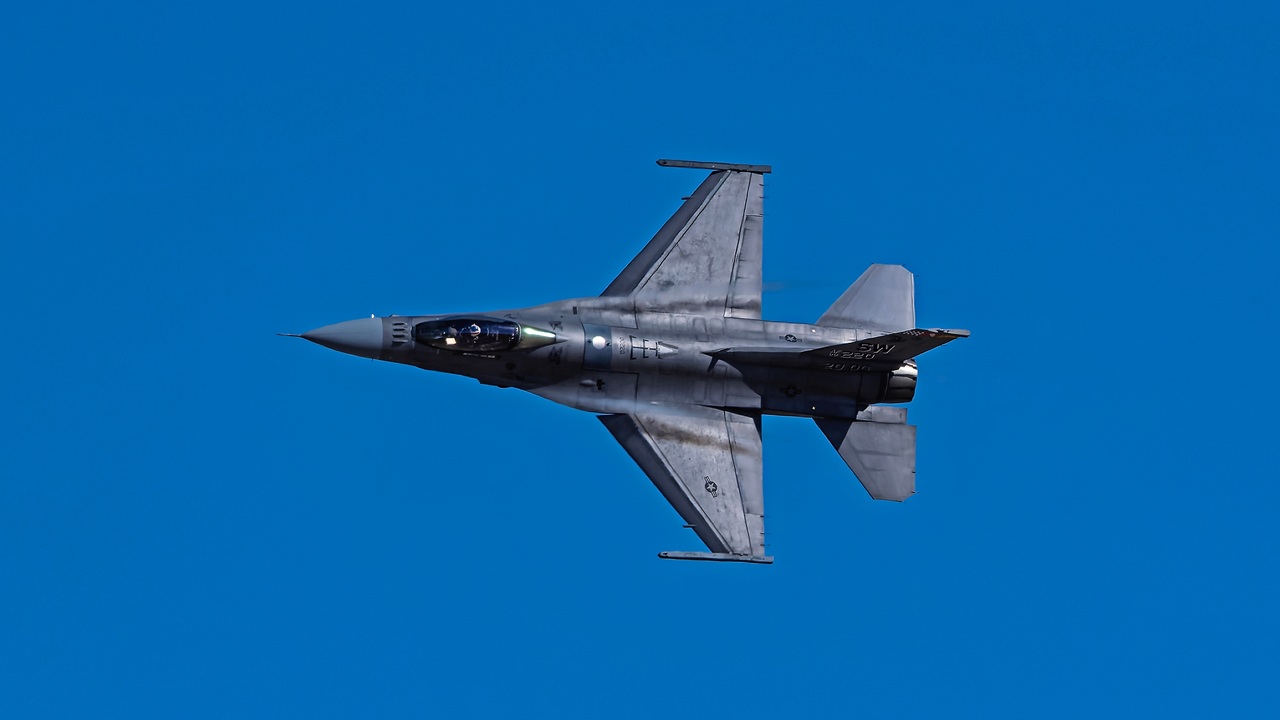
A US Air Force F-16C taking off at the Heritage Flight Conference at Davis Monthan Air Force Base in March 2025. (Shutterstock/Robin Guess)
Topic: Air Warfare, and Trade Blog Brand: The Buzz Region: Asia Tags: Aircraft, F-16 Fighting Falcon, Fighter Jets, Indo-Pacific, Military Budget, Philippines, and United States Good News: The Philippines Hasn’t Closed the Door on the F-16 After All February 17, 2026 By: Peter Suciu
Share
Media reports that the Philippine government had declined to buy the F-16 Fighting Falcon fighter jet may have been premature—though its high price tag remains an obstacle.
Last June, the Philippines began reconsidering whether to proceed with the purchase of American-made F-16 Fighting Falcons, even after the sale had received US State Department approval.
“Seen as an important milestone in the Philippines’ efforts to enhance its aerial capabilities, this arms deal would be strategic for both nations,” Maya Carlin previously wrote for The National Interest. “The People’s Liberation Army Navy’s hostile activities in the South China Sea pose a threat to both Manila and Washington.”
Given the high stakes, such a deal seemed like a win-win arrangement for both sides. However, the American warplane’s cost remained a major concern, with the Philippine Department of National Defense prioritizing other, more affordable military modernization projects.
“Right now, I think it’s on hold, mainly because… the funding is the key element of this whole purchase,” the Philippines Ambassador to the United States, Jose Manuel Romualdez, told reporters in September, per Reuters.
The F-16 Fighting Falcon’s Specifications
- Year Introduced: 1978
- Number Built: 4,600+
- Length: 47 ft 8 in (14.52 m)
- Wingspan: 31 ft (9.45 m)
- Weight (MTOW): 37,500 lbs (16,875 kg)
- Engine(s): One Pratt & Whitney F100-PW-220 afterburning turbofan (23,000 lbf thrust static sea level)
- Top Speed: 1,319 mph (2,122 km/h) / Mach 1.73
- Range: 1,260 mi (2,027 km)
- Service Ceiling: 50,000 ft (15,240 m)
- Loadout: One General Electric M61A1 20mm six-barrel cannon; up to 15,200 lbs on nine hardpoints, including air-to-air missiles (AIM-9 Sidewinder on wingtip rails; alternatives include the MATRA Magic 2 or Rafael Python 3)
- Aircrew: 1 (F-16A) or 2 (F-16B)
Negotiations Between Lockheed Martin and the Philippines Continue
Even as the deal remains in limbo, Defense News reported on Friday that negotiations between Lockheed Martin and the Philippines regarding the potential purchase of the single-engine multirole aircraft had quietly continued.
This month, Romualdez said that Manila is “not closing its doors” to a potential acquisition of the Fighting Falcons, but added that it would take “imaginative and creative ways” to find a path forward.
The Philippines continues to explore options to replace its aging fleet of 10 Northrop F-5A/B Freedom Fighters, acquired in 2005. Manila acquired a dozen South Korean-made FA-50s in 2015 and, last June, signed a deal for another dozen. The FA-50 is the fighter/attack variant of the KAI T-50 Golden Eagle supersonic advanced jet trainer, and the Philippines initially planned to use the aircraft in a trainer role.
The Philippine Department of National Defense continues to explore options for approximately 40 multirole fighters, but funding remains a major issue for the relatively small Philippine defense budget.
In addition to the F-16, Manila has considered several options, including the Swedish-made Saab JAS 39E/F Gripen, Leonardo’s Eurofighter Typhoon, and the Korean Aerospace Industry’s (KAI’s) KF-21 Boramae.
Filipino Defense Secretary Gilberto Teodoro told Defense News that a decision on which aircraft to acquire has already been made. Although he didn’t confirm if it was the F-16 Fighting Falcon or a competing offering, he simply answered, “Give me the funds today, I’ll make the decision.”
American Planes Are Getting More and More Competition
The same shortlist of combat aircraft has been presented to buyers worldwide. The Swedish Gripen has found favor in the developing world, notably in South America, but South Korea is also actively courting potential buyers.
The United States has also touted the Fighting Falcon as being an affordable, cost-effective, and low-maintenance multirole fighter. Although the newer, heavily upgraded variants, notably the Block 70/72 models, have higher acquisition costs, the F-16 is considered a cost-effective platform compared with stealth or twin-engine fighters.
About the Author: Peter Suciu
Peter Suciu has contributed over 3,200 published pieces to more than four dozen magazines and websites over a 30-year career in journalism. He regularly writes about military hardware, firearms history, cybersecurity, politics, and international affairs. Peter is also a contributing writer for Forbes and Clearance Jobs. He is based in Michigan. You can follow him on Twitter: @PeterSuciu. You can email the author: Editor@nationalinterest.org.
The post Good News: The Philippines Hasn’t Closed the Door on the F-16 After All appeared first on The National Interest.
Источник: nationalinterest.org