

«Данное сообщение (материал) создано и (или) распространено иностранным средством массовой информации, выполняющим функции иностранного агента, и (или) российским юридическим лицом, выполняющим функции иностранного агента»

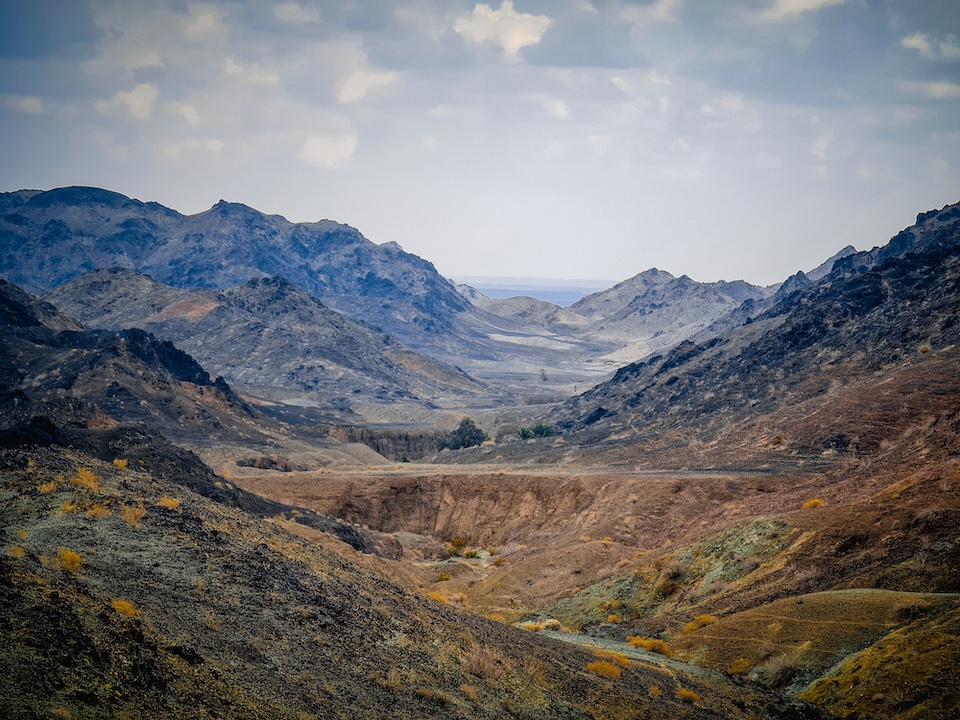
The Valley of Copper in Chagai district, Baluchistan, Pakistan, where the Reko Diq mine is located. (Shutterstock/Salik Javed)
Topic: Critical Minerals Blog Brand: Energy World Region: Americas, and Asia Tags: Balochistan, Copper, Export-Import Bank, Pakistan, Project Vault, South Asia, and United States Reko Diq and the Emerging Geopolitics of Critical Minerals February 16, 2026 By: Saima Afzal
Share
US financing of Pakistan’s Reko Diq mine shows how critical minerals are becoming tools of statecraft, reshaping geopolitics, industrial policy, and great-power competition.
The United States has approved $1.3 billion in financing for Pakistan’s Reko Diq copper and gold project as part of its expanding effort to strengthen global critical-mineral supply chains, a commitment highlighted during the 2026 Critical Minerals Ministerial in Washington. The decision, authorized through the US Export-Import Bank, represents more than routine project financing. It reflects a tightening convergence between resource security, industrial policy, and great-power competition at a moment when control over critical minerals is beginning to shape geopolitical influence as profoundly as energy once did.
Situated in Balochistan’s mineral-rich Chagai belt, Reko Diq ranks among the world’s largest undeveloped copper and gold deposits, containing an estimated 5.9 billion tonnes of ore alongside substantial precious-metal reserves. As global electrification accelerates, driven by electric vehicles (EVs), expanding power grids, and renewable-energy infrastructure, the strategic importance of copper has risen accordingly. Long-range projections now suggest that worldwide copper demand could approach twice current levels by the mid-2030s, sharpening competition for secure and dependable supply.
For Pakistan, a country whose vast geological promise has long outpaced sustained investment in its extractive sector, Reko Diq offers the prospect of structural change: movement from the margins of global mineral trade toward meaningful participation in supply chains central to the energy transition and advanced manufacturing. Yet the deeper significance of recent US financing lies less in the scale of the deposit itself than in what it reveals about the emerging geopolitics of critical minerals.
Critical Minerals as Instruments of Statecraft
Washington’s backing of Reko Diq under the Project Vault framework reflects a broader shift in American economic strategy. Minerals such as copper, lithium, cobalt, and rare-earth elements now form the material foundation of technologies spanning electric mobility, artificial intelligence (AI), and advanced defence systems. Because processing capacity for many of these resources remains heavily concentrated in China, access to mineral supply has moved decisively from the realm of commerce into that of national security.
Project Vault’s multibillion-dollar architecture illustrates how finance itself is being deployed as a strategic instrument-strengthening domestic production while selectively supporting overseas ventures capable of diversifying supply. Reko Diq’s distinction as the only non-US project within this initiative underscores both the magnitude of the deposit and Pakistan’s growing relevance within global resource politics.
The strategic logic is clear. By embedding itself in upstream mineral development abroad, the United States reduces exposure to supply disruption, deepens economic ties with geopolitically significant partners, and reinforces industrial resilience at home.
Pakistan’s Mineral Inflection Point
For Islamabad, the opportunity is equally consequential. Despite producing numerous commercially viable minerals and supporting hundreds of thousands of mining-related livelihoods, Pakistan’s extractive sector has historically contributed only modestly to national output and exports. Regulatory uncertainty, infrastructure shortfalls, and persistent insecurity—particularly in Balochistan—have long discouraged sustained foreign investment.
Reko Diq begins to alter that trajectory in several ways.
First is scale. Copper output projected in the hundreds of thousands of tonnes annually, sustained across decades of operation, implies export revenues potentially reaching billions of dollars each year alongside substantial long-term fiscal inflows.
Second is credibility. Financing anchored by a major US institution—combined with participation from global lenders and an experienced Canadian operator—reduces perceptions of sovereign and operational risk. This signaling effect may ultimately prove as significant as the mine itself, encouraging broader exploration across Pakistan’s mineral frontier.
Third is regional development. Employment generation, transport infrastructure, and industrial activity in Balochistan could help address long-standing economic grievances, though only if revenue distribution remains transparent and local communities perceive tangible benefit. Without credible inclusion, resource wealth can deepen instability as readily as it alleviates it.
The Security-Development Dilemma of Pakistan’s Critical Minerals
Large extractive ventures in fragile regions frequently expose a familiar paradox: development depends on stability, yet resource extraction can intensify political contestation. Balochistan’s history of insurgency, uneven governance, and sensitive border geography heightens this risk.
Security guarantees, environmental safeguards, and equitable fiscal arrangements will therefore determine whether Reko Diq becomes a catalyst for integration or another source of grievance. International financiers are increasingly attentive to environmental, social, and governance performance, meaning that long-term capital access now depends as much on political legitimacy as on mineral reserves.
Historical precedent offers caution. From Chile’s copper politics to Indonesia’s assertion of control over nickel processing, resource wealth has repeatedly reshaped domestic political settlements. Pakistan’s challenge is thus institutional rather than geological: capturing value without eroding investor confidence-a balance few states achieve easily.
Between Competing Powers: The United States and China
Reko Diq also unfolds amid an intensifying US-China strategic rivalry. China’s extensive infrastructure and energy investments have made it Pakistan’s most consequential long-term economic partner, while American participation in a flagship mining project introduces a targeted strategic counterweight focused on critical mineral supply chains.
Rather than forcing binary alignment, this dual engagement reflects a broader pattern across the resource-rich Global South: states leveraging relationships with competing powers to expand opportunity while preserving autonomy. In this sense, Reko Diq appears less an exception than an early indicator of an evolving geopolitical order in which middle powers balance cooperation and competition simultaneously.
Structural Shifts in the Global Resource Order
Three wider trends converge in the project.
Finance as strategy. Export credit, development lending, and industrial subsidies are increasingly used to secure upstream resource access, once governed primarily by markets.
Partner-based sourcing. Advanced economies are prioritizing politically aligned or stable jurisdictions to mitigate disruption risks.
Resource nationalism with integration. Host states seek greater domestic value capture while still relying on foreign capital and technology.
Reko Diq sits squarely at the intersection of these transformations, illustrating how mineral development has become embedded in system-level geopolitical competition.
Policy Implications of Reko Diq for the US and Pakistan
For the United States, meaningful engagement will require more than financing alone. Long-term success depends on supporting transparent governance, local development, and secure logistics-ensuring the project contributes to stability rather than merely extracting supply.
For Pakistan, the imperative is institutional. Predictable regulation, equitable provincial revenue distribution, and credible security arrangements will determine whether Reko Diq becomes a foundation for mineral-led growth or another unrealized promise. The decisive contest lies not beneath the ground, but within governance itself.
Reko Diq: A Strategic Landmark in the Making
Mining projects unfold across decades rather than political cycles. Commercial production expected later this decade would mark only the beginning of a lifecycle extending thirty to forty years, during which commodity prices, technological change, and regional stability will shape outcomes more decisively than any single financing decision.
Pakistan’s decision to expand its intelligence architecture and raise a dedicated force to secure the mineral-rich province of Balochistan reflects this longer strategic horizon. In regions where geology promises prosperity, security ultimately determines whether that promise can endure.
Yet certain moments reveal deeper historical movement. The entry of US state-backed finance into Pakistan’s most significant mineral venture signals that critical minerals are no longer merely industrial inputs—they are instruments of grand strategy.
Reko Diq’s ultimate fate will be decided in the deserts of Balochistan, through governance, security, and public trust. But its meaning already extends far beyond Pakistan. It reflects a world in which geology and geopolitics are inseparable, and where the contest for technological and energy leadership is fought as much underground as above it. In that emerging order, Reko Diq is not simply a mine. It is a strategic landmark, subsiding, and returning, each time at a higher cost to both the province and the Pakistani state.
About the Author: Saima Afzal
Saima Afzal is an independent and freelance researcher specializing in South Asian security, counter-terrorism, the Middle East, Afghanistan, and the Indo-Pacific region. Her work focuses on geopolitical developments, strategic affairs, and regional conflict dynamics. She holds an M. Phil in Peace and Conflict Studies from the National Defence University, Islamabad, Pakistan.
The post Reko Diq and the Emerging Geopolitics of Critical Minerals appeared first on The National Interest.
Источник: nationalinterest.org