

«Данное сообщение (материал) создано и (или) распространено иностранным средством массовой информации, выполняющим функции иностранного агента, и (или) российским юридическим лицом, выполняющим функции иностранного агента»
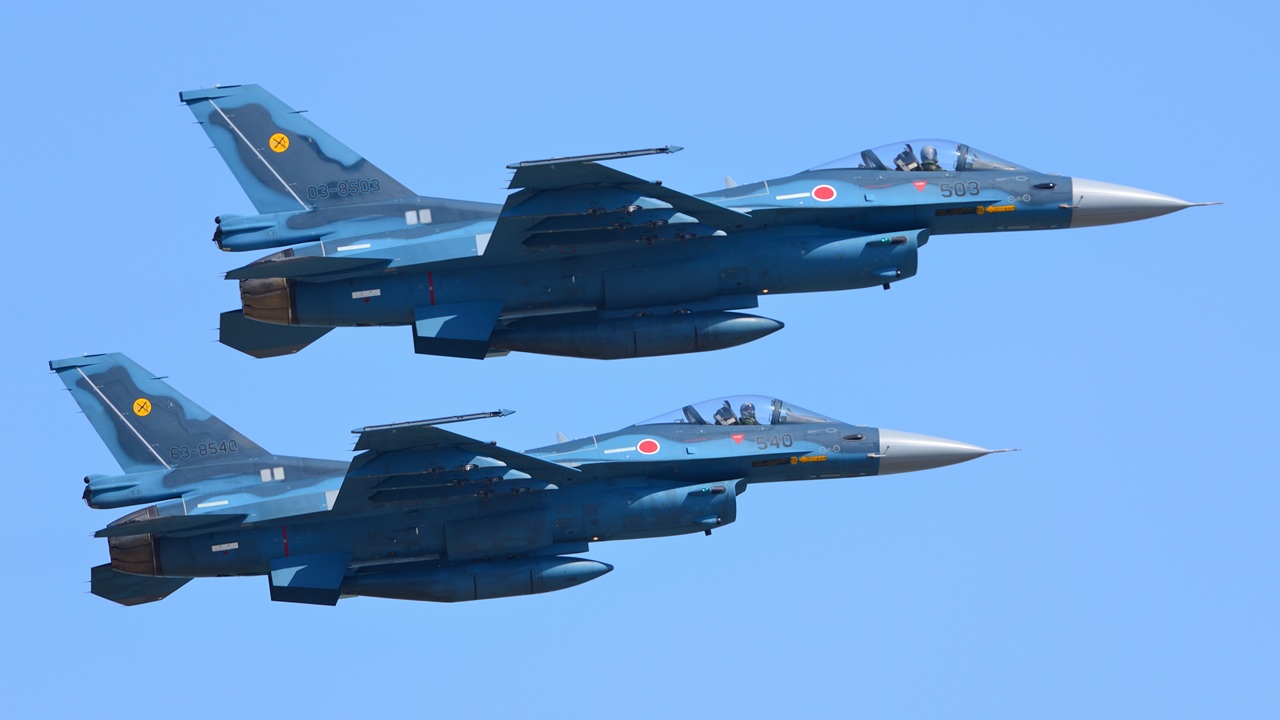
Two Mistubishi F-2A multirole fighters in the Japan Air Self-Defense Force in flight over Fukuoka, Japan, in April 2014. (Shutterstock/viper-zero)
Topic: Naval Warfare Blog Brand: The Buzz Region: Asia Tags: Article 9, China, East Asia, Indo-Pacific, Izumo-Class, Japan, Japan Self-Defense Force, and South China Sea Is Japan’s “Army” Really an Army? Depends Who You Ask February 15, 2026 By: Harrison Kass
Share
The Japan Self-Defense Forces (JSDF) have pursued a number of doctrinal changes intended to improve their offensive posture—raising questions about their adherence to the country’s pacifist constitution.
Japan’s post-World War II constitution constrained overt offensive military power. Yet today, Japan fields one of the most technologically advanced forces in Asia. The pressing question, as China rises, is whether Japan’s military is still purely defensive, or whether it is evolving towards an offensive capability in response to regional threats.
Understanding the Japan Self-Defense Forces
Japan’s post-1945 pacifist constitution’s Article 9 renounced war as a sovereign right. In 1954, shortly after the United States ended its military occupation, Tokyo formed the Japan Self-Defense Forces (JSDF), with a military posture framed strictly as defensive. Japan relied on their security alliance with America for extended deterrence beyond the JSDF.
But Asia has changed significantly since the 1950s. Growing Chinese naval and air activity in the East China Sea, and around Taiwan, have put Japan on guard. North Korean missile tests over Japan, Russian air and naval patrols near Japanese territory have led to tensions, and growing great-power competition has forced a reassessment of Japan’s purely defensive model.
Japan’s nominally defensive posture relies upon air, maritime, and missile defense systems. In the air, Japan relies on the F-15J and the F-35A- and B-variants. Its air units are integrated with missile defense systems, with the Patriot PAC-3 and Aegis destroyers providing layered defense.
At sea, Japan has a strong anti-submarine warfare (ASW) capability and a highly capable destroyer fleet. Japanese diesel-electric submarines are amongst the quietest in the region. In all, Japan is focused on sea-lane protection and territorial defense. With respect to missile defense, Japan has sea-based Aegis BMD destroyers and land-based Patriot systems, with an emphasis on intercepting North Korean ballistic missiles.
Increasingly, however, Japan is discussing “counterstrike” doctrine and the acquisition of long-range cruise missiles—a step that is difficult to justify under a “defensive” military doctrine. Meanwhile, its Izumo-class amphibious assault ships are being converted to operate the F-35B, allowing for power projection beyond Japan’s shores. And notably, Japan is developing and acquiring standoff weapons capable of striking launch sites—signaling a major doctrinal shift toward preemptive response options.
Why Japan Is Moving Away from Its Defensive Model
From a tactical perspective, Japan operates a highly trained force with strong ISR and close interoperability with US forces. The JSDF places an emphasis on rapid response, distributed operations, and island chain defense. Strategically, however, Tokyo has significantly increased its defense spending and appears to be seeking deterrence without abandoning their constitutional framework. The island nation is clearly moving towards a more autonomous deterrence capacity, with reduced reliance on US strike capabilities.
The shift comes as China is expanding their navy and missile forces, as North Korea is behaving unpredictably with missile and nuclear posture, and as Russia renews its own Pacific presence. Japan is attempting to respond by shoring up its qualitative edge and technology-intense modernization. Still, Japan’s constitutional constraints are politically sensitive, and its force size will always be limited relative to China. Similarly, the country’s demographic challenges—particularly its anemic birthrte—will affect the military’s long-term supply of manpower.
Given these constraints, it is likely that Japan’s military strategy will remain fundamentally defensive for the time being. But its capabilities increasingly blur the line between defense and limited offense. In great power competition, Japan is building tools to deter its regional adversaries—a shift that reflects realism rather than the mid-century militarism that preceded it.
About the Author: Harrison Kass
Harrison Kass is a senior defense and national security writer at The National Interest. Kass is an attorney and former political candidate who joined the US Air Force as a pilot trainee before being medically discharged. He focuses on military strategy, aerospace, and global security affairs. He holds a JD from the University of Oregon and a master’s in Global Journalism and International Relations from NYU.
The post Is Japan’s “Army” Really an Army? Depends Who You Ask appeared first on The National Interest.
Источник: nationalinterest.org