

«Данное сообщение (материал) создано и (или) распространено иностранным средством массовой информации, выполняющим функции иностранного агента, и (или) российским юридическим лицом, выполняющим функции иностранного агента»

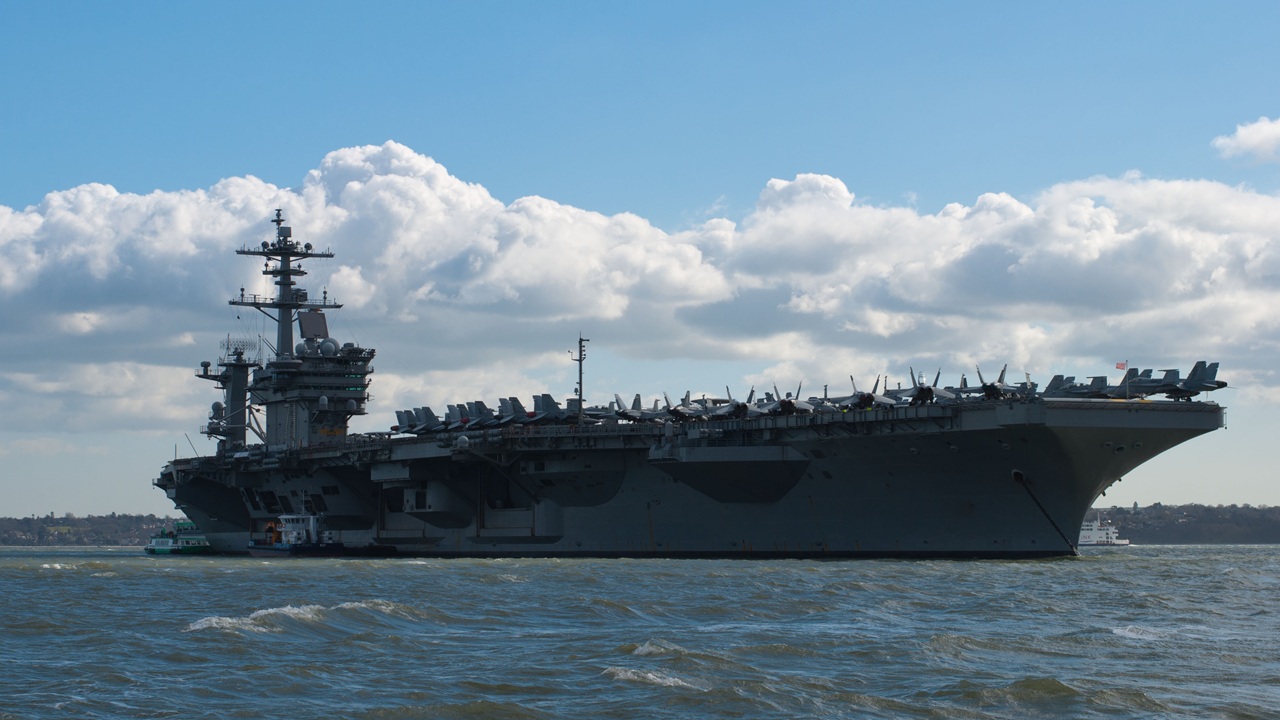
The USS Theodore Roosevelt anchored in the Solent off Portsmouth on its five day visit to the United Kingdom in March 2015. Image: Shutterstock / Alex Moore Photography.
Topic: Naval Warfare Blog Brand: The Buzz Region: Americas, Asia, Eurasia, Europe, and Middle East Tags: Admiral Kuznetsov, Aircraft Carriers, Amphibious Assault Ships, Australia, Chakri Naruebet, China, Egypt, Ford-Class Carriers, France, FS Charles de Gaulle, Fujian, HMS Prince of Wales, HMS Queen Elizabeth, INS Vikramaditya, INS Vikrant, Italy, Japan, LHD, Liaoning, Nimitz-Class Carriers, People’s Liberation Army Navy, Royal Navy, Russia, Russian Navy, Shandong, South Korea, Spain, Thailand, Turkey, United Kingdom, United States, and US Navy These Are the 14 Countries with Aircraft Carriers in 2026 February 15, 2026 By: Harrison Kass
Share
One nation stands head and shoulders above the rest in terms of its carrier capabilities—though another is quickly catching up.
Aircraft carriers are unique symbols of a nation’s military might. The enormous warships allow a nation to project power far beyond its own shores, giving it a global presence. However, carriers are not strictly military in use; they are fundamentally political symbols, and can be used for humanitarian purposes in times of crisis, helping to elevate a country’s profile on the international stage.
With this in mind, it should come as no surprise that most of the world’s medium and great seagoing powers have sought to invest in one or more aircraft carriers. These range from “Landing Helicopter Docks” (LHDs) or amphibious assault ships, which are typically small and carry only a small range of specialized aircraft, to the enormous supercarriers of the United States Navy, which house crews of thousands and air wings with dozens of fighter jets and support aircraft.
Taking an all-inclusive definition of what constitutes an “aircraft carrier,” these 14 nations operate aircraft carriers, though the dimensions and capabilities of their fleets vary widely.
Spain
Number of carriers: 1 (Juan Carlos I LHD)
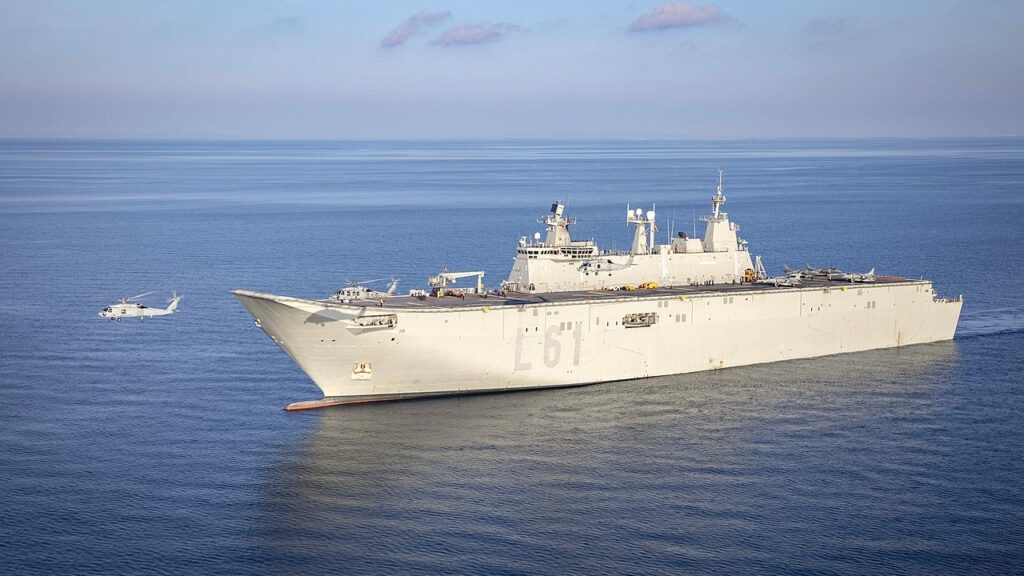 A US Navy Sikorsky MH-60S Sea Hawk and two Spanish Navy SH-60B fly near the Spanish amphibious assault ship Juan Carlos I (L-61) during interoperability training in the Adriatic Sea in February 2023. (US Navy / Mass Communication Spc. 3rd Class Samuel Wagner)
Spain operates the Juan Carlos I LHD light carrier, which flies the AV-8N Harrier II fighter jet and various helicopters. This gives Madrid options for STOVL strike, fleet support, and expeditionary flexibility.
Spain uses the Juan Carlos for Mediterranean and Atlantic operations and coalition deployments. The Harrier keeps its fixed-wing naval aviation ambitions alive, at least for the time being. In the near future, the Spanish Navy intends to retire the Harrier jets, but it has not yet decided on a replacement aircraft—meaning that, at least for a time, Spain could have an aircraft carrier without any aircraft!
Thailand
Number of carriers: 1 (Chakri Naruebet)
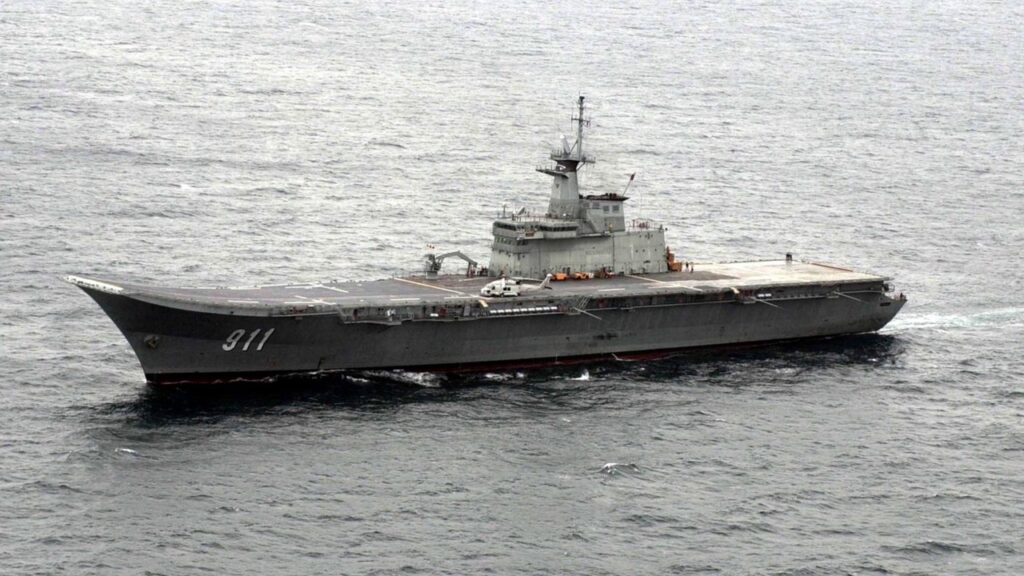 The Royal Thai Navy (RTN) His Thai Majesty’s Ship (HTMS), Chakri Naruebet (CVH-911) in the Gulf of Thailand during a Cooperation Afloat Readiness and Training (CARAT) Exercise in 2001. (US Navy / Petty Officer 1st Class Kevin H. Tierney)
If Spain were to retire its Harrier jets and eliminate its carrier’s fixed-wing capabilities, it would follow in the footsteps of Thailand—whose small Chakri Naruebet aircraft carrier formerly launched the Harrier, but now only launches helicopters following the Royal Thai Navy’s retirement of that aircraft.
The Chakri Naruebet enables HADR, maritime presence, and command platform well beyond Thailand’s shores—which the Southeast Asian nation uses for disaster response and regional signaling more than actual combat aviation. In essence, the Naruebet is a carrier in form, and could return to fixed-wing operation someday, but for the time being offers nothing more than rotary-wing support.
Turkey
Number of carriers: 1 (TCG Anadolu amphibious assault ship)
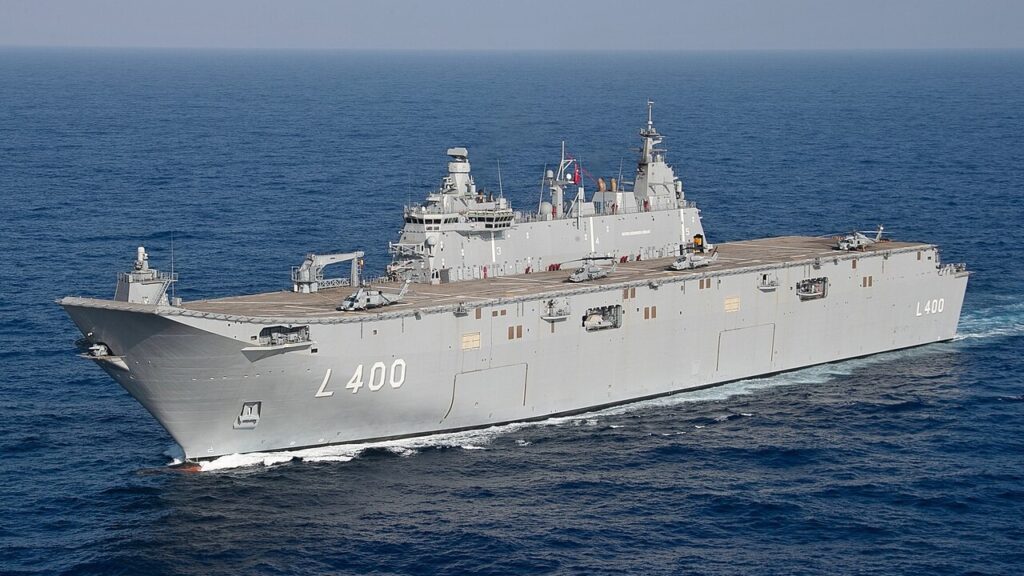 The Turkish Navy amphibious assault ship TCG Anadolu (L400) steams in the Mediterranean Sea, Aug. 21, 2023. Anadolu steamed in formation with the world’s largest aircraft carrier USS Gerald R. Ford (CVN 78) and other Turkish ships. (US Navy / Mass Communication Spc. 2nd Class Jackson Adkins)
Turkey operates the TCG Anadolu, which facilitates helicopter aviation and carrier-oriented drones, but not manned fixed-wing platforms. This enables sea-based ISR and strike experimentation off Turkey’s coastline, both in the Black Sea and the Mediterranean. The latter theater is particularly important, as Turkey has a long-running geopolitical rivalry with western neighbor (and fellow NATO ally) Greece.
Turkey has not been to war since 1945, when it briefly entered World War II against Nazi Germany in order to join the United Nations. In lieu of actual war, it currently uses the Anadolu for testing. In particular, it has sought to integrate drone capabilities to its carrier operations, suggesting an emerging interest in lower-cost air power at sea. The ongoing wars in Ukraine and Sudan have demonstrated the utility of drones on the modern battlefield, so this is a worthwhile endeavor—but it is clearly not a direct substitute for a true carrier air wing, either.
Russia
Number of carriers: 1 (Admiral Kuznetsov)
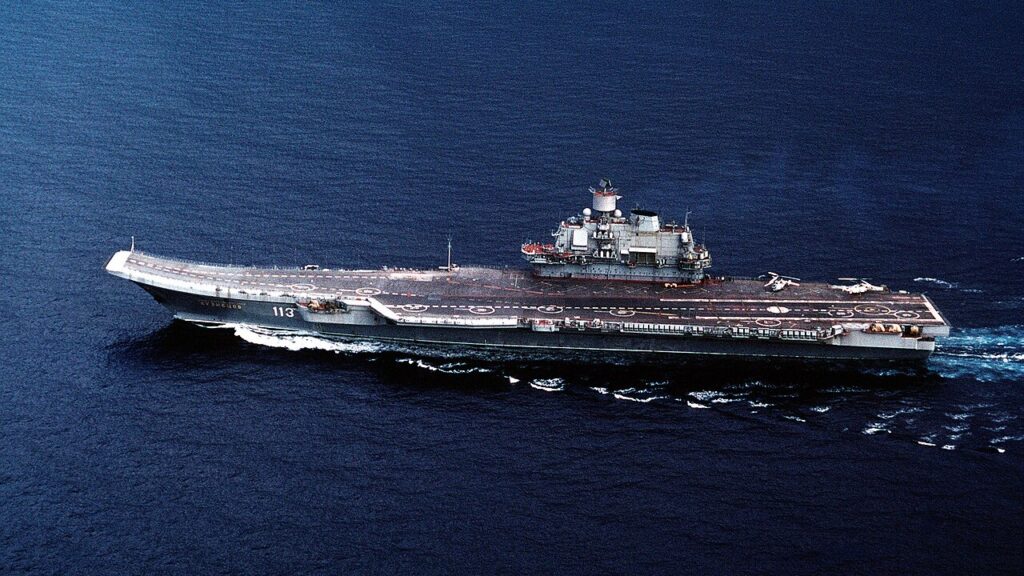 The Admiral Kuznetsov sailing past the south of Italy en route to duty with the Soviet Northern Fleet in 1991. (US Navy / Petty Officer 2nd Class Paul A. Vise)
Russia’s lone aircraft carrier, the oft-maligned Admiral Kuznetsov, has been undergoing a refit since 2017. Whether the carrier will ever sail again remains uncertain, given the scale of its problems and the demands on Russia’s stretched economy from the ongoing war in Ukraine.
The carrier, which was launched in 1985 and formally commissioned into the Russian Navy in 1991, was notorious for its myriad mechanical and technical problems, repeated breakdowns, and sanitation issues.
When last in operation, the Admiral Kuznetsov launched the Su-33 and MiG-29K fighters, enabling limited carrier aviation, prestige, and episodic regional presence. Historically, the Kuznetsov had been deployed to Syria, but is presently stationed in the Arctic near Murmansk—and highly unlikely to leave any time soon.
France
Number of carriers: 1 (FS Charles de Gaulle)
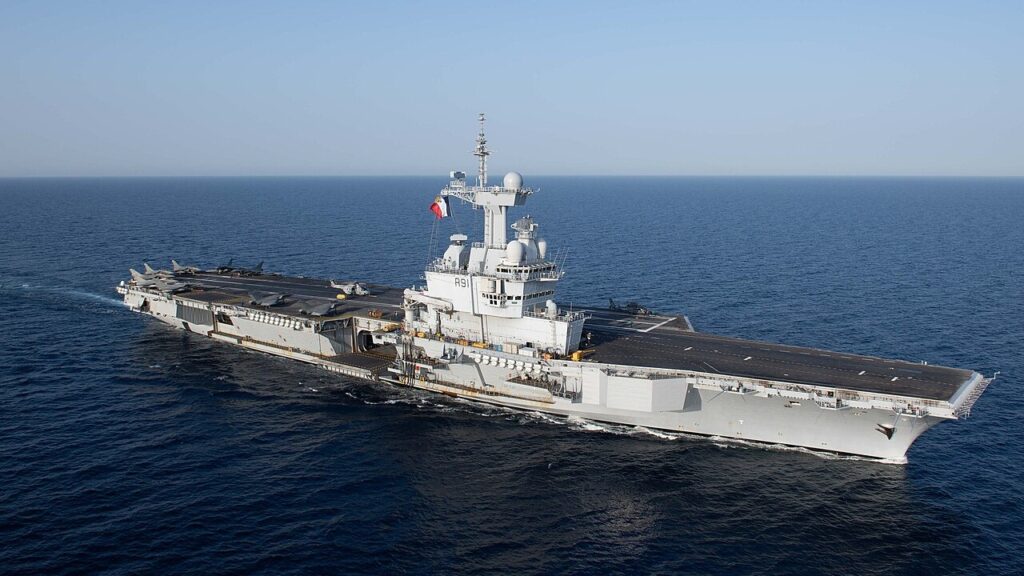 The French Marine Nationale aircraft carrier Charles de Gaulle (R91) underway in the Red Sea on April 15, 2019. (US Navy / Mass Communication Spc. Seaman Joshua L. Leonard)
France’s Charles de Gaulle, commissioned in 2001, is a CATOBAR-equipped aircraft carrier capable of launching the Rafale M, E-2C Hawkeye, and helicopters. This enables true blue-water strike, nuclear deterrence signaling, and independent expeditionary air power. Notably, France is the only naval power besides the United States with a nuclear-powered aircraft carrier; all other nations possess only conventional oil-powered carriers, limiting their range and endurance.
France uses these capabilities for sustained sorties in coalition or national operations, high-end C2 and AEW advantage. Ultimately, France possesses Europe’s most complete carrier aviation ecosystem.
Egypt
Number of carriers: 2 (Mistral-class LHDs)
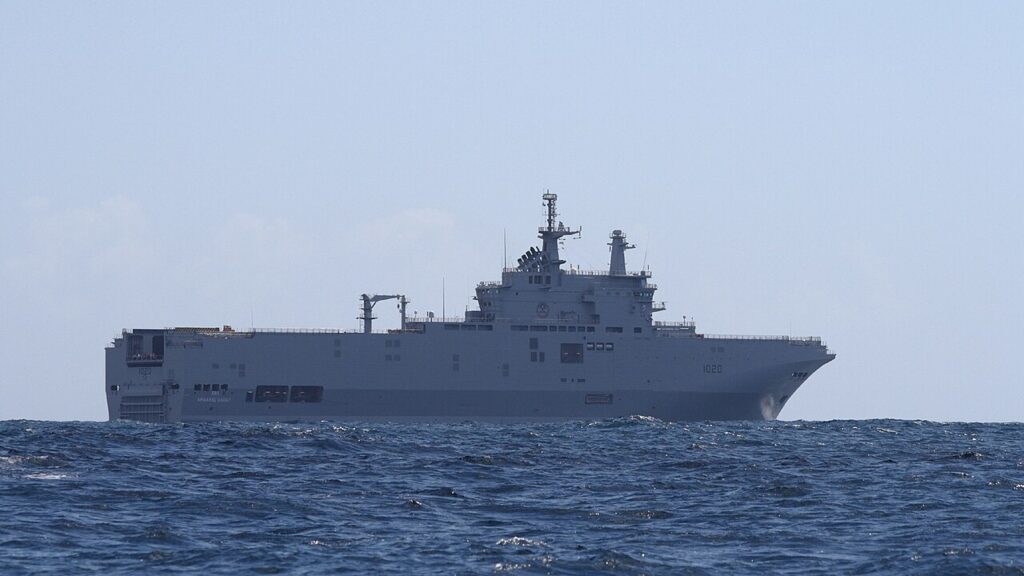 The ENS Anwar el-Sadat, a Mistral-class landing helicopter dock, at sea in August 2016. (Wikimedia Commons / Remi Jouan)
Egypt operates two Mistral-class LHDs, the Gamal Abdel Nasser and the Anwar El Sadat. From the Mistral, Egypt may launch only helicopters, configured for either attack, utility, or ASW missions. This enables amphioxus operations, a regional presence, and HADR.
Egypt uses these capabilities for littoral power projection and prestige. However, the lack of fixed-wing launching capabilities limits the scope of Egypt’s naval aviation effectiveness.
Australia
Number of carriers: 2 (Canberra-class LHDs)
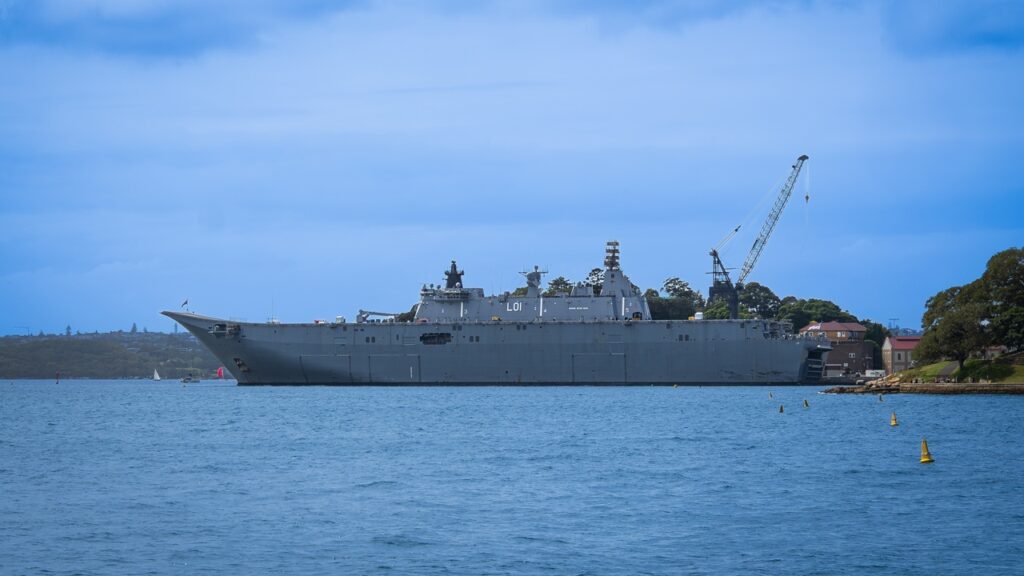 The Australian Canberra-class ship HMAS Adelaide L01 at sea near Sydney, New South Wales, in March 2025. (Shutterstock / Alan Kolnik)
Australia possesses two Canberra-class LHDs, the HMAS Canberra and the HMAS Adelaide. The Canberra-class is capable of launching only helicopters like the MH-60R and occasionally the Chinook. This enables amphibious assault, HADR, command-and-control, and limited sea control support. Australia uses this capability for regional crises, disaster relief, coalition amphibious operations, and aviation for lift and ISR—not strike. Essentially, Australia enjoys a “carrier-like” presence, but without a true fixed-wing, strike-capable aircraft carrier option.
South Korea
Number of carriers: 2 (Dokdo-class amphibious assault ships)
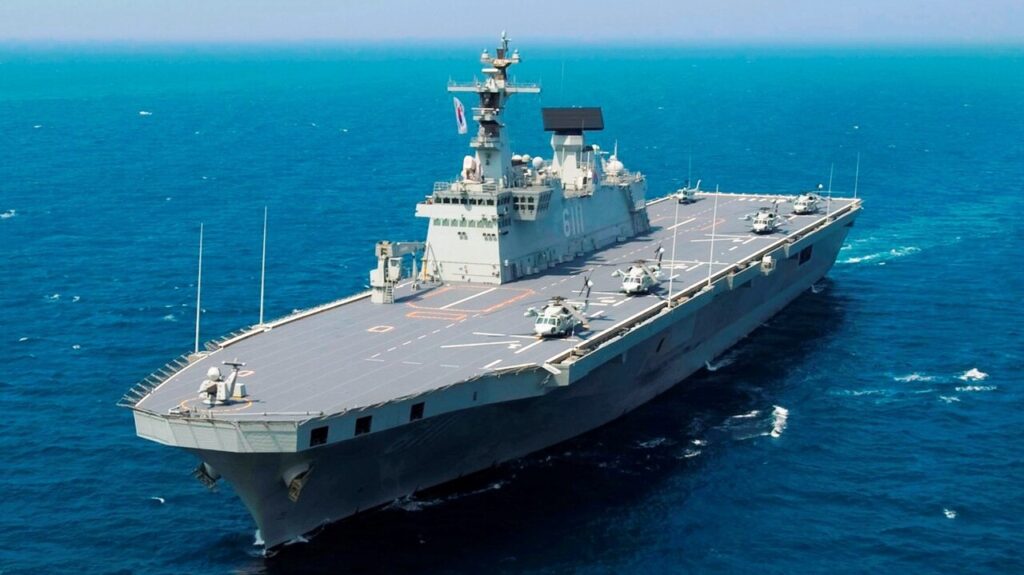 Republic of Korea Ship (ROKS) Dokdo (LPH 6111) steams in the Sea of Japan during operation “Invincible Spirit” in July 2010. (US Navy / Mass Communication Spc. 2nd Class Adam K. Thomas)
South Korea’s Dokdo-class amphibious assault ship is helicopter-centric, although there are future ambitions to incorporate the F-35B or another STOVL-type fixed-wing aircraft. Currently, however, the Dokdo is limited to helicopters.
The Dokdo vessels enable amphibious operations, HADR, and maritime lift. South Korea thereby enjoys peninsula-centric readiness and regional response—but not blue-water or strike options, at least not yet.
Japan
Number of carriers: 2 (Izumo-class destroyers)
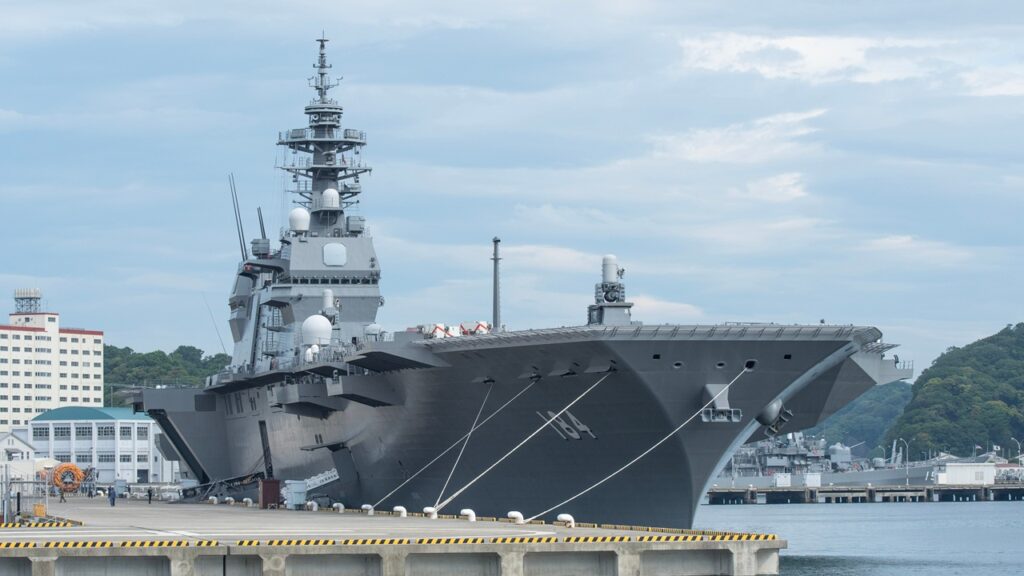 Japan Maritime Self-Defense Force JS Kaga (DDH-184), an Izumo-class helicopter destroyer, docked near Kanagawa in May 2019. (Shutterstock / viper-zero)
Japan is currently converting two Izumo-class vessels, the Izumo and the Kaga, for STOVL operations. Currently, the carriers are capable of launching helicopters, but post-conversion, the carriers will also be able to launch the F-35B short takeoff/vertical landing (STOVL) aircraft. This will enable defensive sea-based air cover and distributed basing in Pacific contingencies.
Japan is expected to use its aircraft carrier capabilities for homeland defense reinforcement, island chain support, and alliance interoperability with the United States and its other Indo-Pacific partners. While the STOVL conversion is politically sensitive, given the ongoing controversy over Japan’s Article 9 constitutional prohibition on war, it is also a response to a growing regional air threat.
Italy
Number of carriers: 2 (Cavour, Trieste LHD)
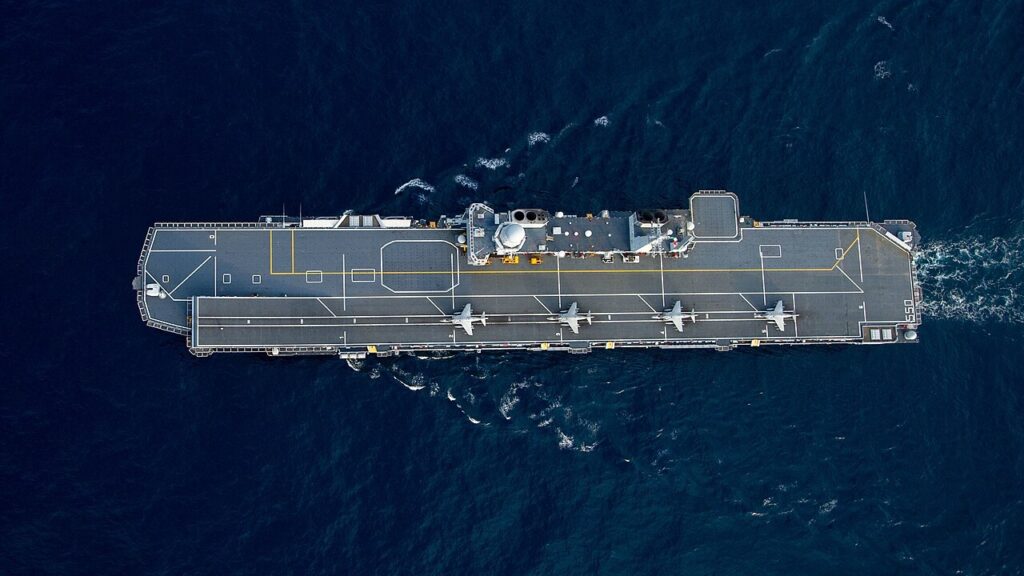 The Italian aircraft carrier Cavour (550) underway in the Ionian Sea on March 17, 2022. (US Navy / Mass Communication Spc. 3rd Class Bela Chambers)
Italy has a carrier, the Cavour, and an LHD, the Trieste. Both can launch the F-35B Lightning II fighter jet and helicopters, enabling flexible expeditionary air power from the sea and NATO interoperability. Italy uses the two vessels for crisis response and coalition operations—with a Mediterranean focus. The STOVL approach trades CATOBAR scale for versatility and survivability of basing, making for a more modest carrier ecosystem, but one to be respected nonetheless.
Italy also has in storage one retired aircraft carrier, the Giuseppe Garibaldi. Commissioned in 1985, the Garibaldi served in the Italian Navy for 40 years before its retirement in 2025. The ship is still intact and could be brought back into service in case of an emergency. Talks are also ongoing to sell the retired carrier to Indonesia—which, if completed, would give that large developing Pacific nation a carrier capability of its own.
India
Number of carriers: 2 (INS Vikramaditya, INS Vikrant)
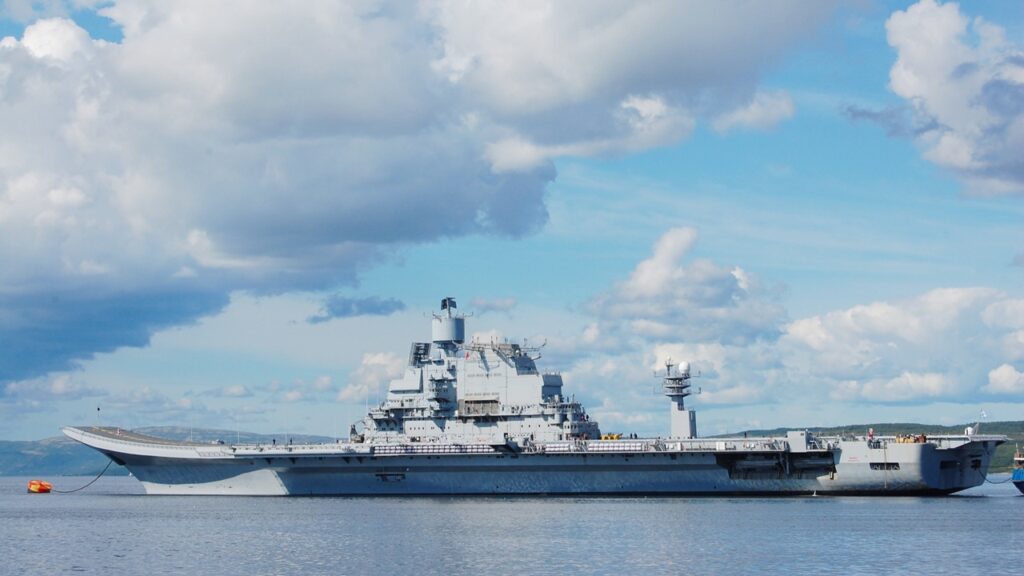 The Indian aircraft carrier Vikramaditya (formerly the Russian cruiser Admiral Gorshkov) in Russia’s Kola Bay in July 2012. (Shutterstock / Mario Bandi)
India operates the Vikramaditya and Vikrant STOBAR carriers, capable of launching the MiG-29K/KUB, helicopters, and in the future, an indigenous platform. This enables India to maintain an Indian Ocean presence, sea control, fleet defense, and limited strike. India uses their carriers for deterrence patrols, exercises, and regional contingencies.
Strategically, India’s leaders can use the carriers to signal their ability to assert themselves regionally. For much of India’s history, it has been confined to fighting against neighboring Pakistan, against which aircraft carriers have limited use given the two nations’ close proximity. However, tensions have periodically escalated between India and China as well, and India’s military has pursued closer ties with those of the United States, Australia, and Japan—forming the so-called “Quad” in the Indo-Pacific.
United Kingdom
Number of carriers: 2 (HMS Queen Elizabeth, HMS Prince of Wales)
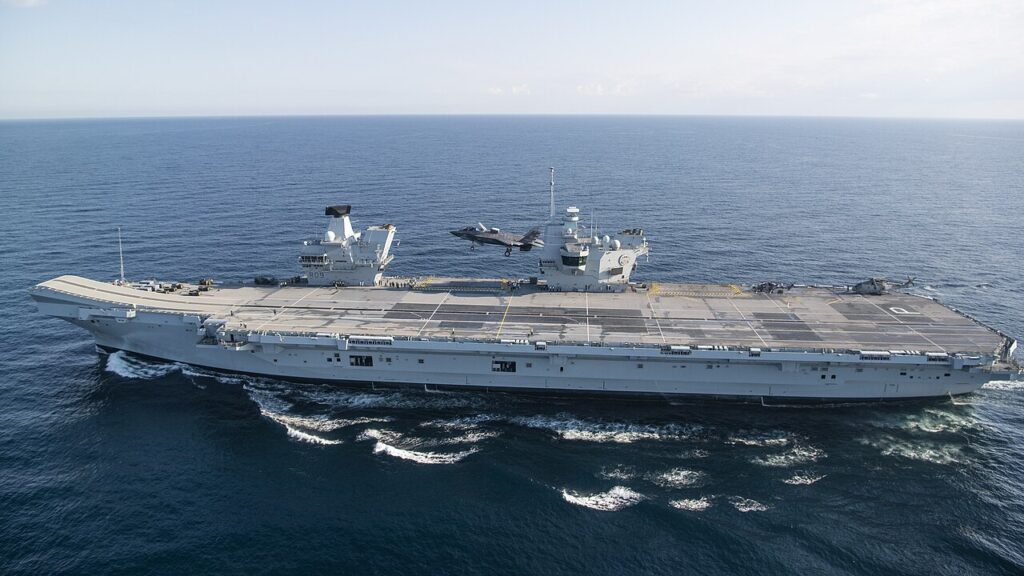 F-35 test pilot Marine Maj. Paul Gucwa flies an F-35B Lightning II fighter aircraft to the HMS Prince of Wales aircraft carrier in the Western Atlantic on Oct. 11, 2023. (US Navy / Dane Wiedmann)
The UK operates the Queen Elizabeth class, consisting of two vessels: HMS Queen Elizabeth and HMS Prince of Wales. Both carriers are conventionally-powered and equipped with a ski-jump ramp; both can carry the F-35B Lightning II STOVL-type fighter jet and helicopters. This enables high-end expeditionary air power, NATO/global presence, and flexible crisis response.
The UK uses its carrier capabilities for carrier strike groups, coalition operations, and deterrence patrols. Strategically, the STOVL model prioritizes availability and basing flexibility over the greater power and variety that a CATOBAR-type carrier could provide.
China
Number of carriers: 3 (Liaoning, Shandong, Fujian)
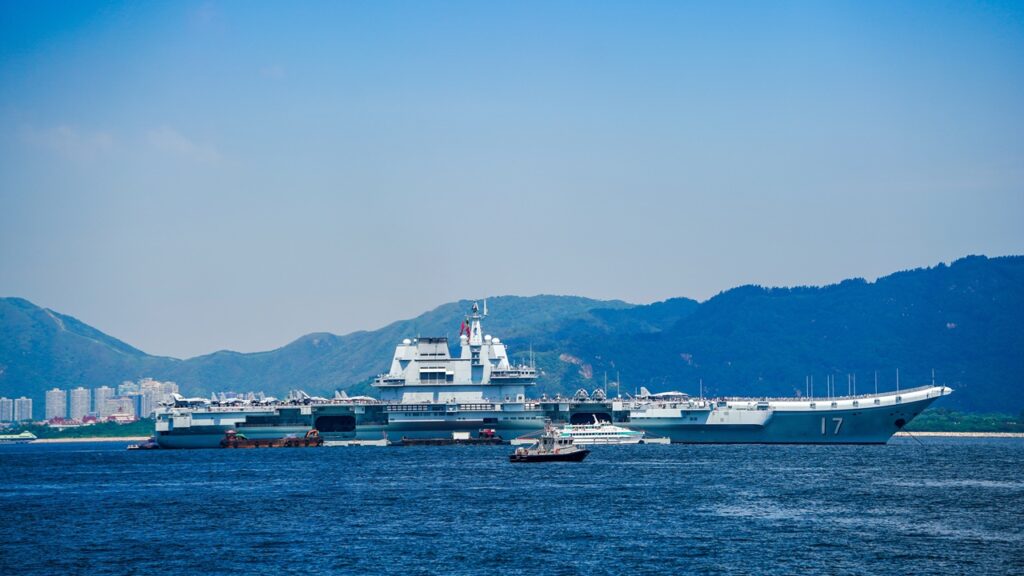 The Shandong aircraft carrier docked in Hong Kong waters in July 2025. (Shutterstock / Chintung Lee)
China’s People’s Liberation Army Navy (PLAN) currently operates three aircraft carriers: the Liaoning, the Shandong, and the Fujian. Each vessel has its own unique design; the Liaoning and Shandong are based on earlier Russian carriers with ski-jump takeoff configuration, while the more advanced Fujian is domestically designed and equipped with an electromagnetic catapult. The PLAN also intends to build an additional six aircraft carriers by 2035, which would bring its total carrier fleet size to nine and make it the second largest carrier fleet in the world.
Historically, China has relied upon the J-15 Flanker-K fighter jet, a carrier-capable Soviet derivative of the Su-33, for naval aviation. The J-15 is small enough to operate from a ski-jump ramp, but limited in range and firepower as a result. Beijing has recently unveiled a carrier-capable J-35 stealth fighter, marking the ongoing maturation of Chinese naval aviation technology. China operates the KJ-600 AEW&C aircraft.
The PLAN fleet is currently capable of fleet air defense, sea control, and power projection beyond coastal waters; China uses its carriers for layered maritime A2/AD extension and for training their relatively nascent force in the ways of blue-water operations. The Type 004 carrier is forthcoming, suggesting that China’s carrier evolution is ongoing.
United States
Number of carriers: 11 (10 Nimitz-class, one Ford-class) + 21 amphibious warfare ships
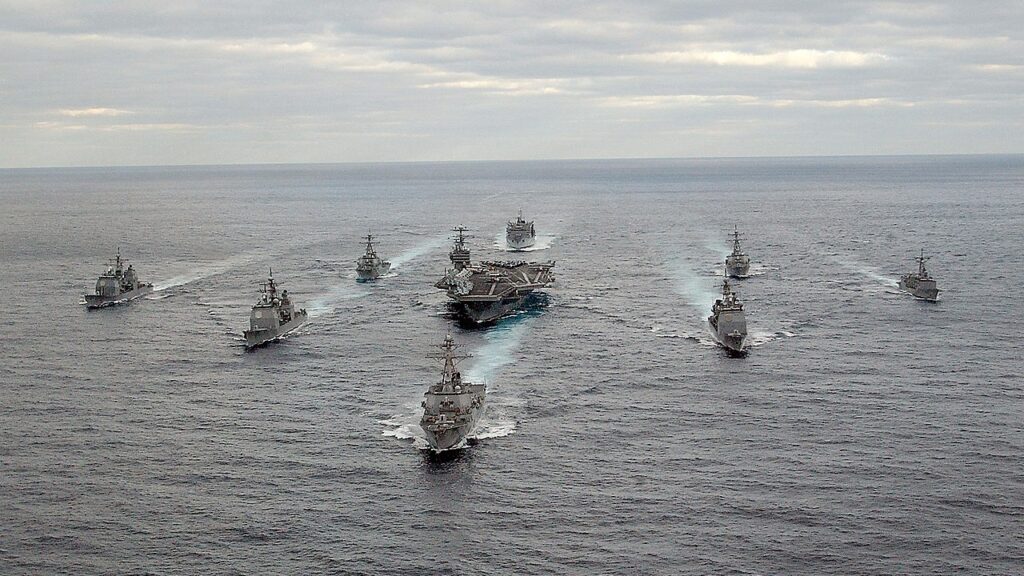 USS George Washington (CVN 73) Carrier Strike Group formation sails in the Atlantic Ocean for the Composite Training Unit Exercise (COMPTUEX) in November 2003. (US Navy / Photographer’s Mate 2nd Class Summer M. Anderson)
The US Navy is unrivaled in carrier aviation capabilities. The Nimitz-class and Ford-class nuclear-powered supercarriers—paired with the Wasp-, Tarawa-, and America-class amphibious assault ships and a handful of other amphibious vessels—allow the US to launch the F/A-18E/F, EA-18G, E-2D, F-35B, F-35C, and helicopters. This enables unmatched sortie generation, global power projection, sea control, and deterrence, which the United States uses for sustained campaigns, first-night strikes, ISR/C2 orchestration, and crisis response. However, at any given time, only around half of the US Navy’s carrier fleet is deployed, with the rest remaining in port or undergoing maintenance.
Strategically, the US carrier aviation ecosystem establishes the world’s benchmark, while also serving as the primary target in other nations’ A2/AD planning.
About the Author: Harrison Kass
Harrison Kass is a senior defense and national security writer at The National Interest. Kass is an attorney and former political candidate who joined the US Air Force as a pilot trainee before being medically discharged. He focuses on military strategy, aerospace, and global security affairs. He holds a JD from the University of Oregon and a master’s in Global Journalism and International Relations from NYU.
The post These Are the 14 Countries with Aircraft Carriers in 2026 appeared first on The National Interest.
Источник: nationalinterest.org