

«Данное сообщение (материал) создано и (или) распространено иностранным средством массовой информации, выполняющим функции иностранного агента, и (или) российским юридическим лицом, выполняющим функции иностранного агента»

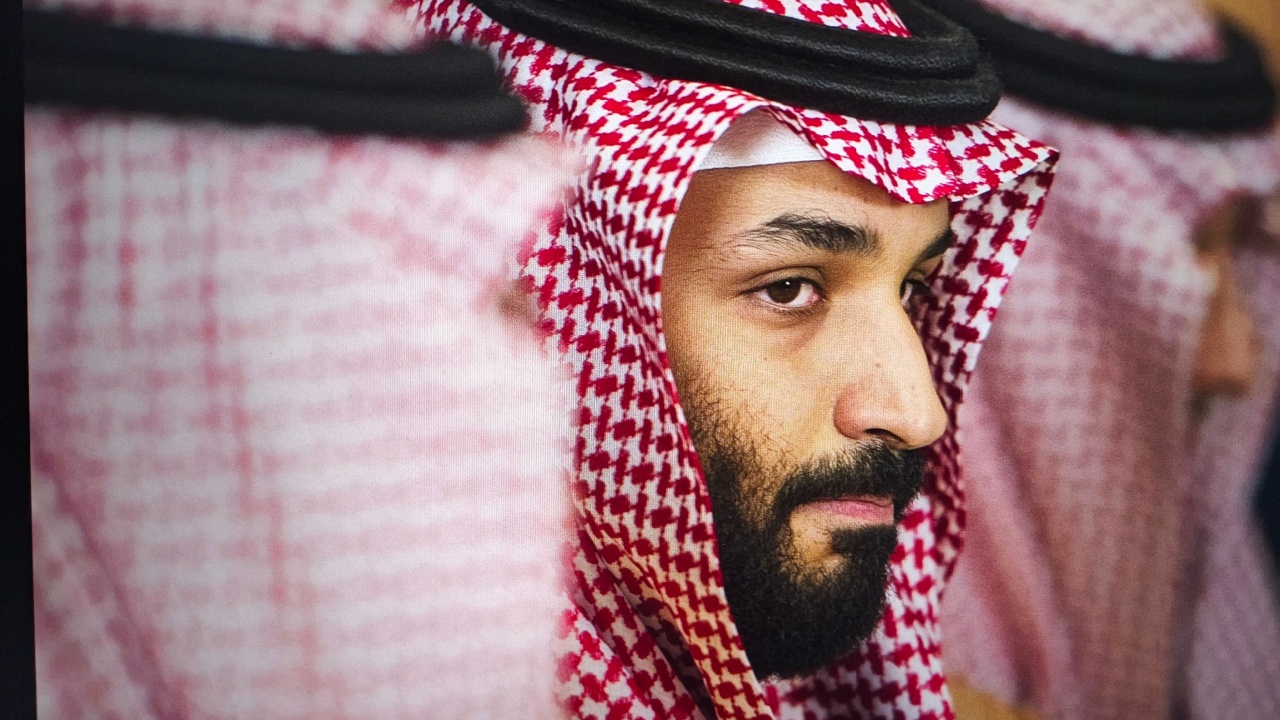
Saudi crown prince Mohammed bin Salman in a close-up photo. The Saudi royal’s relationship with his counterpart UAE president Mohammed bin Zayed has deteriorated over the last half-decade. (Shutterstock/Fotofield)
Topic: Diplomacy, and Foreign Leaders Blog Brand: Middle East Watch Region: Middle East Tags: Gulf States, Iran, Israel, MENA, Mohammed bin Salman (MbS), Mohammed bin Zayed, Persian Gulf, Saudi Arabia, Sudan, United Arab Emirates, United States, and Yemen Saudi Arabia vs. the UAE: The Other Gulf Crisis February 14, 2026 By: Mohammed Ayoob
Share
While the chances of direct conflict between Saudi Arabia and the United Arab Emirates are slim, the emerging rivalry is reshaping the Middle East.
With a massive American armada in the Persian Gulf and defiant rhetoric pouring out of Tehran, strategic analysts are obsessed with assessing the possibility of an American attack on Iran and mapping its potential consequences. However, another crisis in the Gulf is brewing that is likely to erupt sooner rather than later. Although this crisis may not have the apocalyptic connotations of a US-Iranian standoff, it could still destabilize the energy-rich region and have major consequences for American policy.
This impending crisis concerns the fraying relationship between two of America’s closest allies in the Gulf—Saudi Arabia and the United Arab Emirates (UAE). The effects of this crisis will be felt not only in the region but also much farther afield and will affect US security concerns in the energy-rich region, its strategic interests in the broader Middle East, and oil prices across the globe.
Until recently, most observers of Gulf politics took it for granted that Saudi Arabia and the UAE were working in tandem with Washington to contain Iran and its proxies in the region and to keep oil production and prices on an even keel. Throughout the 2010s, particularly following the rise of Crown Prince Mohammed bin Salman (MBS) in Saudi Arabia and the consolidation of power by Sheikh Mohammed bin Zayed (MBZ) as the ruler of Abu Dhabi and UAE president, the two states appeared to share an unusually close convergence on foreign policy priorities. Their cooperation in Yemen, joint resistance to the Muslim Brotherhood following the Arab Spring, and alignment against Iranian regional influence suggested the emergence of a new “Gulf axis” capable of reshaping Middle Eastern geopolitics.
Yet beneath this façade of cohesion, both states were simultaneously embarking on ambitious economic diversification agendas and expansive foreign policy initiatives that, over time, have placed them on increasingly divergent trajectories. While formal diplomatic ties remain strong and the leaderships maintain channels of communication, the structural foundations of the Saudi-UAE partnership have weakened. Analysts increasingly describe the relationship not as an alliance, but as a managed rivalry—a set of competitive interactions moderated by mutual dependence, institutional constraints, and an overriding desire to preserve Gulf Cooperation Council (GCC) stability.
After 2015, both states underwent profound internal transformations. Saudi Arabia launched Vision 2030, an ambitious plan to reorient its economy away from oil, attract foreign investment, and transform Riyadh into a global business hub. Simultaneously, the UAE deepened its long-standing model as a hyper-connected trade and services hub, centered particularly on Dubai and Abu Dhabi. Initially, these trajectories seemed complementary. Yet by 2020, the contradictions between the two visions became clear. Both aimed to monopolize the regional headquarters of multinational corporations, act as major hubs for global air traffic, and act as logistical corridors linking Europe to Asia and Africa. While both remained oil-dependent economies to varying degrees, they sought to diversify their energy sectors. As both states sought to build globally competitive economies, their trajectories shifted from alignment to structural competitiveness. The economic sphere became a major arena of rivalry.
The most visible economic flashpoint emerged in 2021–2022, when Saudi Arabia announced that government contracts would be awarded only to foreign firms that relocated their regional headquarters to Saudi territory. This was widely interpreted as a direct challenge to Dubai, in particular, which had long been the undisputed regional base for multinational companies operating in the Middle East. The UAE at large perceived this policy as undercutting its competitive advantage in finance, logistics, and business services. Saudi Arabia clearly signalled its intention to surpass the UAE as the Gulf’s central financial hub.
Moreover, Saudi Arabia’s creation of Riyadh Air and its multibillion-dollar airport expansion were explicitly designed to compete with Emirates, Etihad, and FlyDubai. It became clear that the Saudi aim is to transform Riyadh and Jeddah into aviation super-hubs linking Asia, Europe, and Africa—roles historically played by Dubai. Similarly, new tourism megaprojects—NEOM, The Line, the Red Sea Project, and the Al-Ula development—are intended to reinvent Saudi Arabia as a global tourism destination, directly challenging the UAE’s dominance in the tourism sector, particularly luxury tourism.
Differences between Saudi Arabia and the UAE were evident in the realm of regional security, where their geopolitical strategies diverged sharply. The clearest manifestation of this divergence was visible in Yemen. Initially, Saudi Arabia and the UAE followed a tightly coordinated policy toward the civil war raging in Yemen. They jointly launched Operation Decisive Storm in 2015 to restore the internationally recognized Yemeni government that had been largely displaced by the Iran-backed Houthis.
However, by 2017–2019, both started pursuing different objectives in Yemen. Saudi Arabia’s main priorities included preserving border security along its northern Yemeni frontier, maintaining the unity of Yemeni territory under a central government, countering Houthi missile and drone attacks, and preventing Iranian entrenchment. While some of the Emirati goals overlapped with those of the Saudis, the UAE also wanted to secure maritime chokepoints (Bab al-Mandab, Aden, Mukalla), empower local proxies such as the Southern Transitional Council (STC), and counter the Muslim Brotherhood-linked Islah Party. Consequently, while the UAE consolidated its influence in the south and along the coast, Saudi Arabia became bogged down in a prolonged conflict with the Houthis in northern Yemen. These conflicting networks of local allies occasionally clashed.
These clashes came to the fore recently when the UAE-backed STC made major territorial gains in South Yemen at the expense of the Saudi-backed internationally recognized government. The Saudis had to intervene directly in order to reverse these gains and, in the process, attacked UAE weapons shipments sent to buttress STC’s military strength. The UAE then announced that it was withdrawing from the Yemeni theater, leaving the Saudi-UAE joint venture in tatters.
But Yemen is not the only place where the rivalry between Saudi Arabia and the UAE is being played out. The UAE has built a strong relationship with Israel in both the strategic and economic spheres. The Saudi regime, on the other hand, while dealing clandestinely with Israel, is wary of an open relationship with the Jewish state, which could damage its leadership aspirations in the Arab and Muslim world. While the UAE maintains diplomatic relations with Israel, Saudi Arabia constantly refuses to do so in the absence of a clear path to Palestinian statehood.
This divergence can also be explained in part by the demographic composition within the two states. Approximately 90 percent of the UAE’s population is of foreign national origin, whereas in Saudi Arabia, the proportion ranges from 42 to 44 percent. This means that the UAE does not have much to fear in terms of a domestic backlash against its alignment with Israel, whereas Saudi Arabia must be very sensitive to domestic opinion on this issue, especially given the importance of the Wahhabi religious establishment in the Saudi governance structure.
Sudan is another major point of friction between Saudi Arabia and the UAE. While Saudi Arabia, along with Egypt, is a major supporter of Sudan’s military government, there are credible reports that the UAE has been clandestinely sending arms to its rival, the Rapid Support Forces (RSF). There are multiple economic and political reasons for the divergence in their policies regarding the civil war in Sudan. Still, they boil down to their preference to work with different types of actors across both sides of the Red Sea, including Yemen, the Horn of Africa, and the Sahel.
Saudi Arabia prefers to support internationally recognized governments, while the UAE prefers to patronize militias and insurgent groups, especially if they can provide it access to ports. This is also the case in the Horn of Africa, where Saudi Arabia supports the government of Somalia while the UAE clandestinely supports the breakaway entity Somaliland in cooperation with Israel.
While both regimes share their antipathy toward Iran, their approaches toward Iran have been very different. Until recently, Saudi Arabia viewed Iran as the primary threat to its aspirations within the region, with one of its former rulers describing the Iranian regime as the head of the snake that needed to be cut off. The UAE, on the other hand, has a substantial Iranian population, especially in Dubai, and has maintained diplomatic relations with Tehran and a transactional trade-driven relationship that is economically profitable for both countries.
Saudi Arabia’s 2023 rapprochement with Iran, mediated by China, has marked a strategic shift from years of confrontation, but suspicions remain on both sides. The UAE views Saudi-Iran normalization with cautious optimism but also with concerns that it may marginalize Emirati influence.
The personal dynamic between the Saudi and Emirati leaders, MBS and MBZ, also appears to have had a major influence on their bilateral relationship. Between 2015, when MBS assumed control of Saudi policy, and 2018, many perceived MBZ as a mentor to the younger MBS. However, since 2019, MBS has emerged as a confident, independent actor with grander ambitions for Saudi Arabia’s regional leadership, particularly through Vision 2030. This shift has created a great deal of friction. Both leaders aspire to make their state the Gulf’s preeminent power—a condition that inherently generates rivalry.
Despite rising tensions and economic and political rivalry, neither state appears interested at present in pushing the relationship to a breaking point, owing to economic interdependence and shared security concerns. The latter includes countering Islamist movements, especially the Muslim Brotherhood, which poses a major challenge to the legitimacy of both regimes. Moreover, given their shared monarchical forms of government, both are interested in maintaining authoritarian stability. Both rely on US security guarantees, which act as the strategic glue preventing Saudi Arabia and the UAE from open discord.
Furthermore, unlike in the case of the Saudi-Iranian relationship, ideological polarization is missing as a factor in the competitive relationship between Saudi Arabia and the UAE. Their conflict of interest is based on material factors that make the competition more manageable. Nonetheless, the danger of a crisis, especially in the context of the civil war in Yemen, should not be discounted. If it erupts, it will further complicate the already complex and volatile situation in the Gulf and the broader Middle East.
About the Author: Mohammed Ayoob
Mohammed Ayoob is a university distinguished professor emeritus of International Relations at Michigan State University and a senior fellow at the Center for Global Policy. His books include The Many Faces of Political Islam (University of Michigan Press, 2008), Will the Middle East Implode (2014), and, most recently, From Regional Security to Global IR: An Intellectual Journey (2024). He was also the editor of Assessing the War on Terror (2013).
The post Saudi Arabia vs. the UAE: The Other Gulf Crisis appeared first on The National Interest.
Источник: nationalinterest.org