

«Данное сообщение (материал) создано и (или) распространено иностранным средством массовой информации, выполняющим функции иностранного агента, и (или) российским юридическим лицом, выполняющим функции иностранного агента»
 Topic: Terrorism Blog Brand: Silk Road Rivalries Region: Eurasia Tags: Afghanistan, Al Qaeda, Central Asia, ISIS, ISIS-K, Pakistan, South Asia, and Taliban Why Afghanistan’s Terrorism Problem Isn’t Going Away February 9, 2026 By: Zalmai Nishat
Share
The Taliban is failing to contain and is, in fact, aiding the spread of radicalism in Central Asia.
On January 19, 2026, when an ISIS-linked bombing at a Chinese restaurant in Kabul killed seven people, including a Chinese national, it received limited international attention. Yet, it brought into sharp relief the persistent threat posed by militant groups operating in Afghanistan.
That threat is no longer confined within Afghanistan’s borders. Neighboring states can attest, as cross-border attacks by groups either tolerated or inadequately controlled by the Taliban have escalated violence in Pakistan and Tajikistan, as well as against Chinese interests, turning what appears to be stability from afar into a growing regional security crisis.
During the republic, the number of madrassas (religious seminaries) registered with the Ministry of Education (MoE) was about 13,000, and the number of students was estimated at around 1.5 million; today, the number of madrassas has increased to approximately 23,000, and the number of students has doubled.
Still, Western capitals increasingly view Taliban rule as a moral problem rather than a direct security threat. They continue to pragmatically “engage” with the Taliban and provide weekly cash plates under the rubric of “humanitarian assistance” to the Taliban.
While governments in Europe and North America routinely condemn the Taliban’s treatment of women and girls, Afghanistan is no longer widely viewed as a direct terrorist threat to the West. Since the Taliban’s return to power in August 2021, no major attacks in Europe or the United States have been conclusively traced to Afghanistan’s soil, an absence many policymakers cite as evidence that the Taliban is restraining transnational jihadist activity and seeking to prevent attacks against Western targets. The Taliban might have promised the United States to ensure not threatening Western interests from Afghanistan, but to what extent they can deliver or want to deliver is another question.
The picture looks markedly different in South and Central Asia. In these regions, terrorist activity linked to the territory of Afghanistan is on the rise. Governments across the region accuse the Taliban of tolerating—or in some cases, even protecting—extremist groups targeting Pakistan, Tajikistan, and Chinese interests.
Pakistan has borne the brunt. The territory of Afghanistan is reportedly used as a rear base by the Pakistani Taliban (Tehreek-e-Taliban Pakistan or TTP), which has carried out hundreds of attacks inside Pakistan since 2023. Pakistani officials allege that TTP leaders, training camps, and logistics hubs operate freely in eastern Afghanistan. In 2025 alone, Pakistan reported multiple large-scale infiltration attempts from Afghanistan’s soil and over 80 border clashes with Afghan Taliban forces, highlighting the volatility of the 2,670-kilometre frontier.
Khyber Pakhtunkhwa, where TTP activity is concentrated, recorded 2,331 fatalities in 2025—a 44 percent increase from 2024. In response, Islamabad closed all borders with Afghanistan in October 2025 and carried out airstrikes targeting TTP leadership and infrastructure in Kabul, Khost, Jalalabad, and Paktika.
In northern Afghanistan, other extremist groups carry out cross-border raids into Tajikistan, which shares a 1,357-kilometer border. In December 2025, Tajik authorities reported three heavily armed militants crossing from Afghanistan near Shamsiddin Shohin district; a firefight left two Tajik border guards dead, and all three infiltrators were killed. In November 2025, a drone attack launched from the territory of Afghanistan struck a Chinese workers’ camp in the Khatlon Region of southern Tajikistan. The Tajik government reported that three Chinese nationals were killed in this assault. Four days later, gunmen from Afghanistan fired on employees of the China Road and Bridge Corporation near Darvoz District, killing two Chinese workers and wounding two others.
Even Afghanistan itself remains insecure. The January 19 Kabul bombing claimed seven lives, including a Chinese national and six locals. China, usually cautious in public statements on Afghanistan, has hardened its stance. In early January 2026, Beijing issued a joint statement with Pakistan urging the Taliban to take “concrete and verifiable steps” to prevent Afghanistan-based groups from launching attacks on neighbouring countries. The presence of the Turkistan Islamic Party (TIP), a Uyghur-led network with combat experience in Syria, remains a particular concern for China, which sees TIP as a direct threat to its Xinjiang province, even if its border with Afghanistan is only 76 kilometers long.
The Taliban deny harboring any group that threatens other countries, citing religious decrees banning cross-border attacks, and insisting that the TIP is prohibited from targeting China. Neighboring states counter that such assurances amount to selective enforcement rather than effective counterterrorism. China argues that restraint without dismantlement leaves the underlying threat intact and perpetuates strategic risk.
Beijing’s concerns merit serious attention. Militant groups operating unchecked in Afghanistan not only destabilise the region but also have the potential to plan or inspire attacks beyond its borders, generating security risks that can ultimately reach Western countries.
As former US Secretary of Defense Robert Gates warned, “In the decades to come, the most lethal threats to the United States’ safety and security…are likely to emanate from states that cannot adequately govern themselves or secure their own territory.”
For Western policymakers, the absence of recent attacks on Europe or the United States has relegated Afghanistan to a largely manageable problem of values. For its neighbours, it has become an escalating security emergency. Stability, judged from afar, appears very different and far bloodier up close.
This burgeoning regional crisis, therefore, matters to the West. Ignoring it risks allowing extremist networks to regroup, destabilising geopolitical partnerships, triggering humanitarian crises and refugee flows, disrupting global economic interests, and eroding hard-won counterterrorism gains. The stakes extend well beyond Afghanistan’s borders and demand sustained international attention and action.
About the Author: Zalmai Nishat
Zalmai Nishat is the founder and executive chair of Mosaic Global Foundation, a charity registered in the UK that focuses on Afghanistan and Central Asia. Previously, he was the programme lead for Central and South Asia at the Tony Blair Institute. Follow him on X: @ZalNishat.
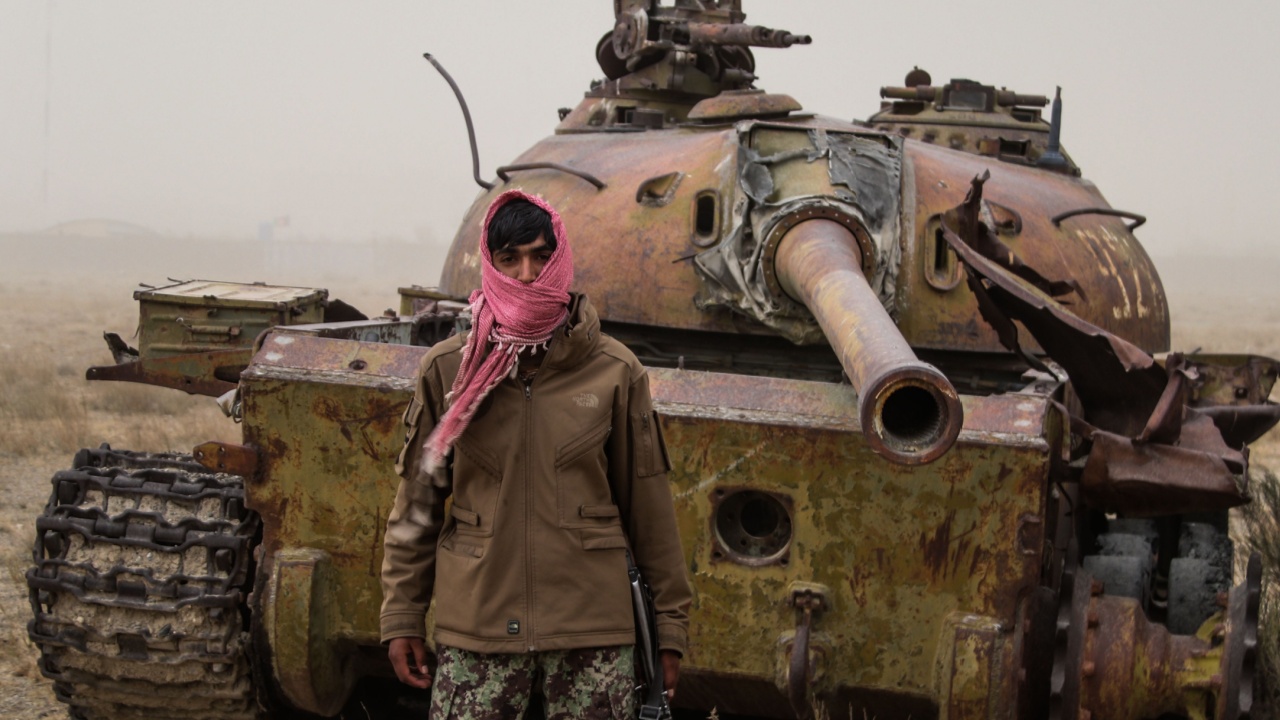
Image: Trent Inness / Shutterstock.com.
The post Why Afghanistan’s Terrorism Problem Isn’t Going Away appeared first on The National Interest.
Источник: nationalinterest.org