

«Данное сообщение (материал) создано и (или) распространено иностранным средством массовой информации, выполняющим функции иностранного агента, и (или) российским юридическим лицом, выполняющим функции иностранного агента»
 Topic: Air Warfare Blog Brand: The Buzz Region: Americas Tags: 3D Printing, Drones, North America, United States, and US Marine Corps The Marines Are Building New Killer Drones—for $700 Each February 7, 2026 By: Peter Suciu
Share
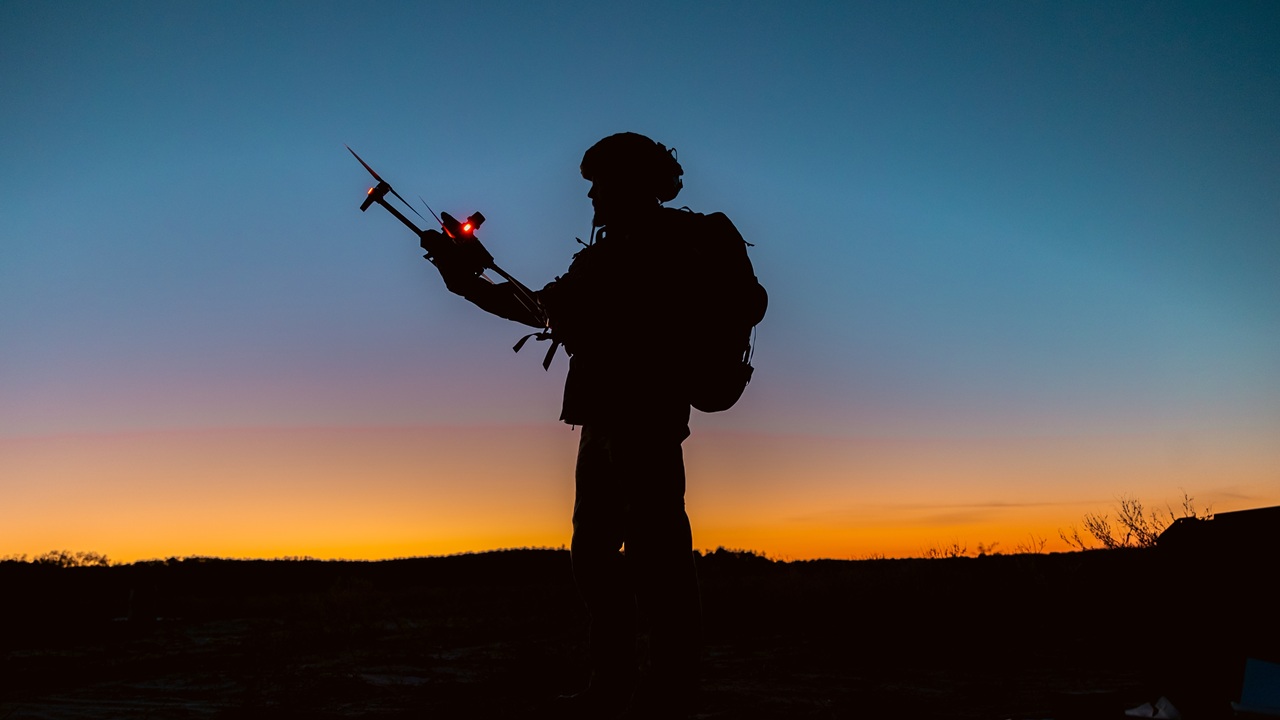
The “HANX” drone—the brainchild of Sgt. Henry David Volpe—can be built off the shelf from domestically sourced components and 3D-printed parts.
Small unmanned aerial systems (UAS) continue to reshape modern battlefield tactics, as military powers determine how best to employ drones and, more importantly, how to counter them. A significant threat remains a “drone swarm” that could overpower the capabilities to stop them.
The United States military remains committed to such platforms, and last year launched its “Drone Dominance” effort that calls for at least 300,000 one-way attack drones in service by early 2028. However, even as costs have fallen, challenges remain. In particular, US law prohibits the Pentagon from acquiring or deploying drones made with parts from specific foreign sources—chief among them China, which dominates the civilian drone manufacturing market.
The United States Marine Corps has sought to address these concerns by developing a National Defense Authorization Act (NDAA)-compliant 3D-printed modular drone. Dubbed the “HANX,” the low-cost drone was developed to be “holistically adaptable” and tailored to a wide range of modern missions.
“HANX marks a large leap from previous Marine Corps’ 3D printed drone capabilities, such as ‘nibbler’ in 2017,” the service explained.
From LEGO Models to Military Drones
The USMC’s HANX drone was developed under the direction of US Marine Corps Sgt. Henry David Volpe, an automotive maintenance technician with 2nd Maintenance Battalion, 2nd Combat Readiness Regiment, 2nd MLG. He began working with 3D printing in the seventh grade in his home state of Missouri, while in a LEGO robotics club. Volpe also came from a family that built more than just LEGO playsets.
“Both my parents are engineers, so I feel like I’ve always had that encouragement to tinker and experiment with things,” said Volpe. “Programming and designing things were just a natural continuation of my interest and the environment I grew up in.”
Volpe received training as a car mechanic before joining the Armed Forces during the pandemic. Initially assigned to the 2nd Maintenance Battalion as a motor transport mechanic, his experience with robotics opened the door to the II Marine Expeditionary Force Innovation Campus.
Although Volpe had built drones before, he had never built a 3D-printed UAS. He took that as a challenge and developed the prototype, meeting the 90-day deadline.
The HANX Drone Works—and It’s All Sourced Locally
Many of the USMC’s previous drone efforts failed to meet the NDAA compliance requirements, which means its parts are supply chain resistant but also free from “backdoor programs” from America’s potential adversaries.
Section 889 of the NDAA requires federal agencies, third-party contractors, and other entities that use federal funds to ensure there are no backdoors or other compromises from restricted foreign entities. The compliance includes avoiding specific manufacturers and their subsidiaries as sources for critical hardware. Certain Chinese firms, including Huawei and ZTE, are specifically banned.
The compliance applies to security cameras, networking equipment, drones, and other technology where components could be compromised.
To date, Volpe has created five major versions of HANX, improving the design with each iteration. The biggest challenge was addressing NDAA compliance, as there are components the US simply doesn’t produce, at least not at scale.
However, after obtaining the necessary components, the drone was completed, received NAVAIR approval, and is on track to be adopted for a variety of roles within the USMC.
“HANX provides the Marine Corps with a large potential in harnessing the ingenuity of warfighters, arming combat units with low-cost attack drone capabilities, and training senior officers to overcome bureaucratic risk-aversion culture in drone procurement and training,” the Pentagon explained.
While the US military continues to invest in advanced aircraft and warships that cost billions of dollars, HANX is a low-cost yet capable piece of equipment. Whereas many industry partners now produce drones for nearly $4,000, the base model HANX UAS is just around $700. Its modular design also makes it more customizable than many off-the-shelf offerings.
“When I first started working with 3D printing, I never could have imagined the technology would advance enough to enable anyone to be able to 3D print a drone,” said Volpe. “But seeing myself design and make one for the Marine Corps, a year ago, I wouldn’t have thought that was possible.”
About the Author: Peter Suciu
Peter Suciu has contributed over 3,200 published pieces to more than four dozen magazines and websites over a 30-year career in journalism. He regularly writes about military hardware, firearms history, cybersecurity, politics, and international affairs. Peter is also a contributing writer for Forbes and Clearance Jobs. He is based in Michigan. You can follow him on Twitter: @PeterSuciu. You can email the author: Editor@nationalinterest.org.
Image: Shutterstock / Sherbak_photo.
The post The Marines Are Building New Killer Drones—for $700 Each appeared first on The National Interest.
Источник: nationalinterest.org