

«Данное сообщение (материал) создано и (или) распространено иностранным средством массовой информации, выполняющим функции иностранного агента, и (или) российским юридическим лицом, выполняющим функции иностранного агента»
 Topic: Military Administration Blog Brand: The Buzz Region: Americas Tags: AWACS, China, Defense Industry, Department of Defense (DoD), Drones, F-35 Lightning II, F/A-XX, North America, and United States For the Pentagon, Perfect Is the Enemy of Good February 4, 2026 By: Alex Lee
Share
As it prepares for conflict with China, the Department of Defense has overlooked good programs today in pursuit of better ones tomorrow.
The Department of Defense has made note of China’s rising strength and aggression, but seems unconvinced that this threat is urgent. As Pentagon officials have repeatedly made clear before Congress, they are preparing for a war in the Pacific—but many of their most cutting-edge weapon programs have timelines that assume they have until the 2030s to prepare for such a scenario. Instead of following through with immediate but imperfect efforts to address China, countless initiatives have been delayed by demands for a better final product.
This trend has the potential to be strategically disastrous. Refusing to accept “good enough” programs now, in favor of the chance of having better ones later, not only compromises deterrence in the short term, but can also weaken the United States in the long term. This trend is especially frustrating because viable stopgap solutions are available, but making use of them depends on whether America’s defense leaders sincerely view China as dangerous.
China Is Prioritizing AWACS Planes. Why Isn’t America?
A glaring example of this tendency is the US military’s plan for detecting airborne threats—aircraft, missiles, and drones—in order to shoot them down. That role is currently served by planes carrying large radar systems, known as Airborne Warning and Control Systems (AWACS).
While less exciting than other equipment, AWACS is tremendously important for America’s national defense. AWACS aircraft arguably determined the outcome of Pakistan’s clash with India in May, where Chinese jets and Chinese air-to-air missiles shot down a nominally superior French-made Rafale fighter. Pakistan was able to use its second-tier systems more effectively than expected by leveraging AWACS planes, which identified targets and guided missiles toward them before Indian pilots could react.
This suggests that if conflict breaks out between China and Western nations, the more effective air force might be whichever has superior AWACS. With this in mind, it should come as no surprise that Beijing is building more of these planes than anyone else on the planet. It should also be deeply unnerving that the United States has stopped investing in this capability altogether. It has not bought additional AWACS aircraft in decades, and its aging fleet is shrinking as parts wear out. This neglect comes at least in part because AWACS planes are a problematic blend of highly expensive and easy to shoot down. Concerns about losing these costly systems have fed fatalistic logic about their chances in a war—and obstructed efforts to buy more.
The Pentagon seeks to avoid the vulnerability of AWACS aircraft by replacing them with upcoming satellite technology. One should be skeptical of these efforts. Even if future satellites can match the capabilities of AWACS planes—and, moreover, can be protected against the anti-satellite measures that China heavily invests in—this pivot still leaves a major concern: what if we need them before they’re ready? Buying more AWACS planes in the short term is the most obvious stopgap to prepare for an earlier war, and Congress is rightly pushing for this.
A less intuitive option could expand AWACS capabilities almost immediately while addressing the survivability issue by repurposing MQ-9 Reaper drones. A new radar system is currently under development for this platform, which could give new relevance to the hundreds of MQ-9s that the US acquired for counterterrorism. Losing an AWACS plane in combat would cost the lives of several crew members and hundreds of millions of dollars. On the other hand, a Reaper has no personnel on board, and a relatively affordable price tag in the tens of millions. A mix of conventional aircraft and Reapers offer a clean answer for AWACS needs in the coming years.
The F-35 Today, or the F/A-XX Tomorrow?
Similar to AWACS, the vulnerability of aircraft carriers has made the military rethink its approach to China. Once again, unrealistic expectations are jeopardizing its deterrence.
The root of the problem is the view that carriers will need to be kept farther from their targets to avoid Chinese ballistic missiles. This issue is especially pronounced for the F-35C fighter jet—a stealth plane that was not designed to use wing-mounted external fuel tanks, which would offer better range but negate its stealth characteristics.
The Navy’s solution to the need for a long-range stealth plane is the development of the F/A-XX, an entirely new carrier-capable stealth fighter with greater fuel capacity than the F-35C. This seems like yet another approach that disregards the risk of war in the near future.
Building fighter jets is always slower and more expensive when the process begins—which means fewer aircraft will be delivered than if the Navy’s budget was concentrated on production lines that have already picked up momentum. The resources needed for each F/A-XX could likely cover several F-35s, as manufacturing for the latter has grown remarkably efficient. Indeed, the F-35 itself hints at this trend; in spite of a notoriously cost-inflated and delay-prone introduction, the program has since been bolstered by economies of scale and export contracts, and its per-unit cost has been reduced by two-thirds. Learning from past wars between large countries, producing a fraction as many weapons is rarely justified without extraordinary margins of improvement. The F/A-XX would certainly outperform the F-35 for America’s purposes—but both already outclass China’s fighter jets, so the US Navy should be reluctant to compromise quantity for a marginal increase in quality.
Still, without a new aircraft, the Navy needs another way to extend the reach of its carrier-based stealth fighters. Rather than gambling on the F/A-XX, it should try to increase the range of already mass-produced F-35s.
This can be achieved most easily with better in-air-refueling systems like the unmanned MQ-25 Stingray, which is planned to enter service within the next year. While conventional tanker aircraft would struggle to survive in contested airspace, the MQ-25 drone serves as a faster, smaller, and less valuable target. The Stingray could also extend the range of other aircraft serving different roles, making it more versatile than the F/A-XX. For example, it could refuel Super Hornets carrying anti-ship missiles or Growlers jamming air defense, along with F-35s. Another option is equipping the F-35 with low-profile external fuel tanks, which have been under development for years. These were originally meant for the F-22 Raptor, but a Lockheed Martin executive noted they could be adapted for both fighters.
A third, more ambitious possibility comes from Darold Cummings, a prominent engineer formerly from Northrop Grumman: modifying the F-35. Cummings has unpacked the viability of this in detail, including a plan that reconfigures the wings and fuselage to hold 30 percent more fuel, while broadly avoiding changes to the rest of the design. Tanker drones, stealthy underwing fuel tanks, and altering the F-35 are less elegant than a single program that could combine the benefits of all three—but they would get the job done quickly, and cause less disruption to existing production lines.
The Pentagon’s High-Stakes Gamble on Chinese Restraint
Given the realities of our industrial base, investments must be driven by necessity, not idealism. The risk of ambitious defense programs goes beyond whether their benefits take too long—the payoff might simply never come. Canceling weapons production far earlier than planned is a familiar story, even for functional equipment.
This trend is so widespread that there are too many recent examples to list concisely. It reached headlines recently when the Constellation-class warship was cut short, following endless marginal “improvements” that could each be justified on their own but delayed construction until the program was too wasteful to continue. Rejecting sub-optimal ships has left the Navy with fewer usable ones; yesterday’s sacrifice did not lead to today’s success. The same mess could unfold for satellite AWACS substitutes, the F/A-XX, and numerous other proposals warped by perfectionism.
Adapting our current equipment and infrastructure is much lower risk. If the Pentagon truly believes that national security rests on our balance of power against China, overlooking these stopgap solutions would be a mistake.
About the Author: Alex Lee
Alex Lee is a recent graduate from Washington University in St Louis, where he majored in political science and minored in writing.
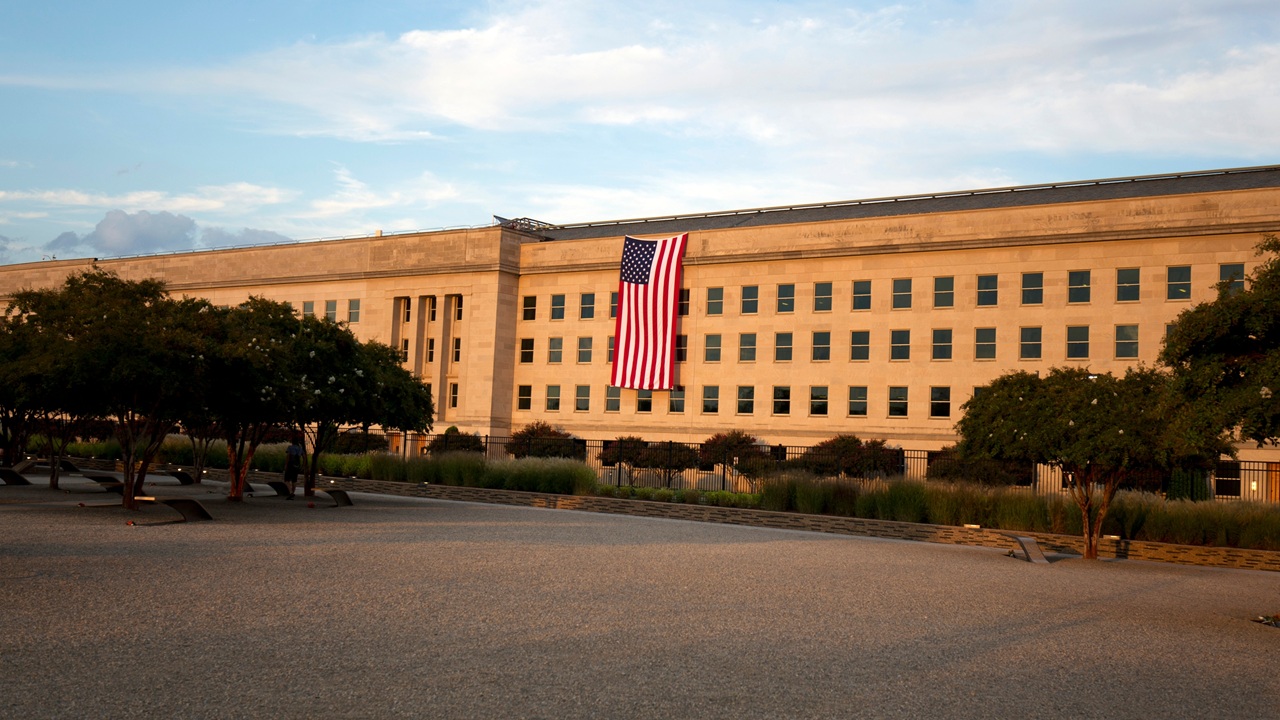
Image: Shutterstock / Janusz Pienkowski.
The post For the Pentagon, Perfect Is the Enemy of Good appeared first on The National Interest.
Источник: nationalinterest.org