

«Данное сообщение (материал) создано и (или) распространено иностранным средством массовой информации, выполняющим функции иностранного агента, и (или) российским юридическим лицом, выполняющим функции иностранного агента»
 Topic: Naval Warfare, and Trade Blog Brand: Silk Road Rivalries Region: Asia, and Oceania Tags: China, India, Indo-Pacific, Pacific, Pacific Islands, Quad, and South Asia India’s Pitch to the Pacific Islands February 2, 2026 By: Kriti Upadhyaya, and Allen Zhang
Share
The Pacific Islands are rapidly becoming a key arena of competition between India and China.
For much of India’s modern foreign policy, the Pacific Islands have not been a central strategic focus. Shifts in global trade, connectivity, and regional competition are now elevating the region’s importance.
However, the region has always been important, even historically. During World War II, the Pacific Islands showed how logistics and access shape strategic outcomes. Island chains mattered because they enabled control over ports, airfields, and sea lanes. That geographic logic still applies, even though the form of competition has evolved.
The South Pacific is now critical to both physical trade and digital connectivity. Major trans-Pacific shipping routes carry a significant share of global commerce. More than 95 percent of international data traffic travels through submarine cables, much of which crosses the Pacific basin or land in Pacific Island states.
India’s interests in the Pacific are indirect but substantive. Nearly 95 percent of India’s trade by volume moves by sea, and disruptions along major global shipping routes affect freight costs, insurance premiums, routing decisions, and supply chain reliability worldwide.
Digital connectivity is another exposure point. India’s economy increasingly relies on cross-border data flows, cloud infrastructure, financial transactions, and digital services. Submarine cable systems that traverse the Pacific form part of the global network supporting these activities. Vulnerabilities in these systems, whether from accidents, natural disasters, or deliberate interference, carry economic consequences that extend well beyond the Pacific.
The Pacific Islands also control vast exclusive economic zones relative to their land area. Fisheries are central to local economies and government revenue. Weak maritime governance facilitates illegal, unreported, and unregulated fishing, with regional losses estimated in the millions of dollars.
India’s Engagement with the Pacific Islands
India established the Forum for India-Pacific Islands Cooperation (FIPIC) in 2014 as a platform for engagement with 14 Pacific Island Countries. Until now, FIPIC has focused on diplomatic outreach and development cooperation.
At the third FIPIC summit in Port Moresby in 2023, India announced a 12-point action plan covering health, renewable energy, digital capacity, skills development, and climate resilience. Publicly announced initiatives included a regional super-specialty hospital in Fiji, IT and cybersecurity training centers in Papua New Guinea, solar and renewable energy projects, scholarships, and emergency medical support.
This reflects a broader pattern in India’s external engagement, in which it pursues development partnership models that emphasize grants, training, technical cooperation, and capacity building rather than large, debt-financed infrastructure projectsor military deployments.
China’s Expanding Role in the Pacific
China is significantly more active than India in the Pacific Islands, engaging the region across a wide range of issues and sectors. Economically, China has become one of the largest bilateral partners and lenders in the region. The Lowy Institute’s Pacific Aid Map shows China committing billions of dollars in aid and concessional loans since 2008, financing roads, ports, government buildings, and telecommunications infrastructure.
Diplomatically, China has expanded its presence through high-level visits, broader embassy networks, and sustained political engagement. Several Pacific Island states have switched diplomatic recognition from Taiwan to Beijing over the past decade.
Security engagement has drawn particular attention. The 2022 security agreement between China and the Solomon Islands allows Chinese police and military personnel to deploy for internal security assistance at the request of the Solomon Islands government and permits Chinese naval vessels to make logistical stopovers. While no permanent base has been established, the agreement marked a shift in the region’s security landscape.
China has also expanded police training and advisory programs in the Pacific. Analysts note that this form of engagement blurs the line between internal security assistance and longer-term strategic influence, particularly in states with limited capacity. China’s distant-water fishing fleets further complicate the picture. Weak maritime enforcement facilitates economic exploitation, undermining local revenue and governance and reinforcing dependency.
The cumulative effect is a gradual reshaping of the Pacific operating environment without requiring permanent military bases.
Why the Pacific Matters to India
The most significant vulnerability for the Pacific Islands lies at sea. Maritime surveillance, fisheries enforcement, and disaster response capacity are central to sovereignty and economic stability. These are also areas where capacity remains limited.
India’s current engagement, while valuable, does not directly address these maritime governance gaps. As a result, other actors, particularly China, are better positioned to shape outcomes through infrastructure, policing, and presence. In a region where maritime governance is inseparable from strategic access, long-term absence carries costs. It limits India’s ability to shape regional norms, coordinate with partners in a crisis, and protect the openness of systems on which its own economic security depends. Over time, this also shapes how partners assess India’s role and reliability across the full Indo-Pacific, not just in its immediate maritime neighborhood.
India already has the tools and approach needed to engage more meaningfully in the Pacific. The key is to apply its development-first model with a sharper focus on the region’s emerging strategic needs.
First, India can focus development cooperation on areas that directly strengthen Pacific state capacity. This includes port safety and standards, disaster logistics, maritime administration training, fisheries governance, and resilient digital infrastructure.
Second, India can support maritime law-enforcement capacity, joining other partners like the United States in their existing initiatives in the Pacific. Shipriders and bilateral maritime law-enforcement arrangements used by partners such as the United States allow Pacific states to enforce their own laws with external support. Though the United States maintains such agreements with at least 12 Pacific Island Countries, India’s involvement would significantly reinforce these partnerships. Currently, United States Coast Guard vessels operate primarily out of Hawaii, which constrains the frequency of joint patrols. India’s geographic proximity to the region would enable more frequent and sustained integrated maritime law-enforcement operations.
Third, India can support maritime domain awareness, enabling Pacific partners to govern their maritime zones better and address illicit activity, while also expanding India’s understanding of maritime activity and risks across the Pacific. During the 2022 Quadrilateral Security Dialogue, India extended its information-sharing scheme to the Pacific Island Forum Fisheries Agency and the Pacific Fusion Center, two regional fusion centers. Following up on this commitment, New Delhi should host various workshops and seminars to provide structured training, identify security priorities, and coordinate collaborative approaches. Regional engagement on this front would be a win-win for both the partners and the greater Indo-Pacific.
Fourth, India can normalize its presence through non-military cooperation. Regular port calls, disaster response exercises, and coast-guard-style engagements with countries such as Fiji and Papua New Guinea would build familiarity and trust.
The Pacific Islands are becoming more strategically consequential as trade, connectivity, and competition intersect. China has already adjusted its approach to reflect this reality. India’s engagement to date has been measured but growing. That foundation should be preserved, and India’s success in developmental partnerships should be applied to the region as well. Adapting it to address maritime governance and capacity gaps would better align India’s Pacific engagement with its broader Indo-Pacific interests and with the evolving needs of Pacific Island Countries.
About the Authors: Kriti Upadhyaya and Allen Zhang
Kriti Upadhyaya is a visiting fellow for India Policy in the Asian Studies Center at The Heritage Foundation. She currently serves as the vice president of Strategic Advisory at C2Ci Americas, an intelligent platforms company delivering defense and Industry 4.0 solutions globally. Upadhyaya is also the founder of the IndUS Tech Council, a Washington, DC-based policy advisory firm dedicated to strengthening US-India defense and technology collaboration. Previously, Upadhyaya was an associate fellow for the Wadhwani Chair in US-India Policy Studies at the Center for Strategic and International Studies (CSIS), where she led the chair’s work on Indian economic reforms and US-India defense ties.
Allen Zhang is a research assistant in Heritage’s Asian Studies Center. His work focuses on US-China strategic competition in the South Pacific, with particular emphasis on dual-use infrastructure, transnational crime, and US engagement with the Pacific Islands. His analysis has been featured in Breaking Defense, The Washington Times, and RealClearDefense, among other outlets.
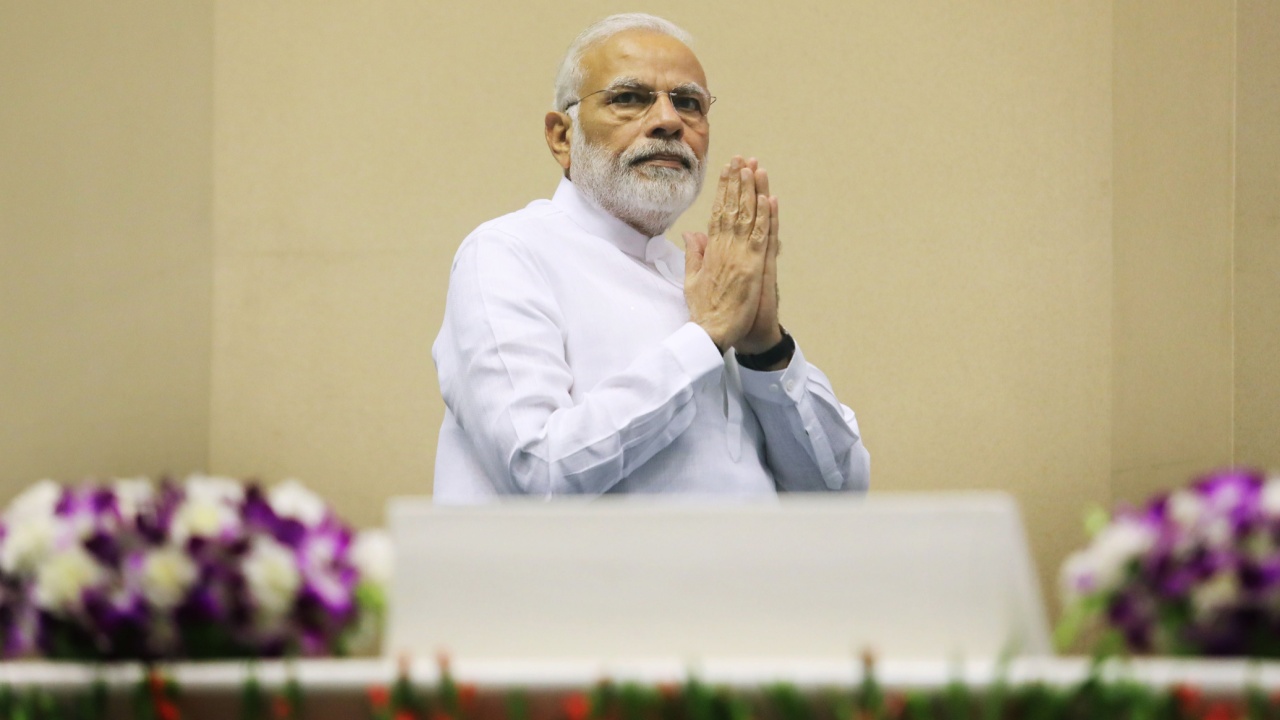
Image: Exposure Visuals / Shutterstock.com.
The post India’s Pitch to the Pacific Islands appeared first on The National Interest.
Источник: nationalinterest.org