

«Данное сообщение (материал) создано и (или) распространено иностранным средством массовой информации, выполняющим функции иностранного агента, и (или) российским юридическим лицом, выполняющим функции иностранного агента»
 Topic: Naval Warfare Blog Brand: The Buzz Region: Asia Tags: Corvettes, India, Operation Sindoor, Pakistan, and South Asia Why Pakistan Is Rushing to Build a Modern Navy December 31, 2025 By: Brandon J. Weichert
Share
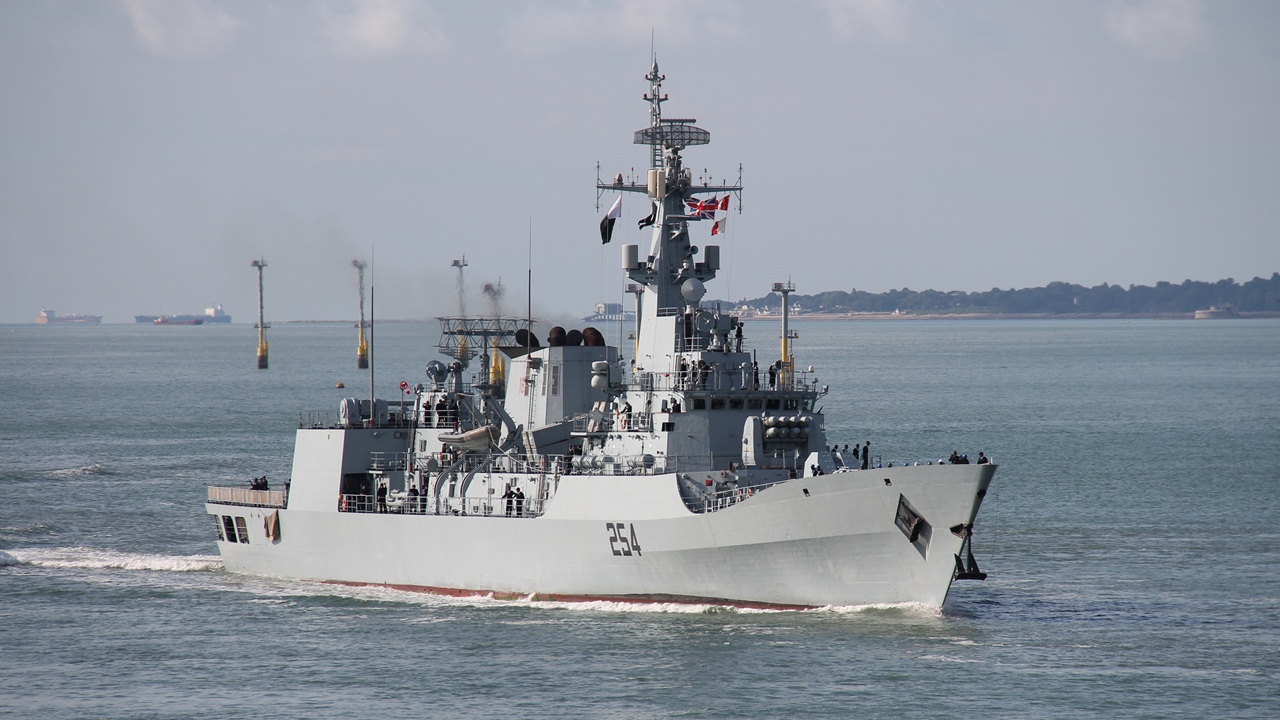
Pakistan’s development of the new Babur-class corvette is being matched by a similar Indian naval buildup, raising fears of an arms race.
Pakistan is undergoing a rapid military buildup and full-spectrum modernization program. This is coming at a time when hostilities with its neighbors have reached a crescendo. Pakistan’s primary opponent is India. But the nation is also threatened by the instability raging in neighboring Afghanistan.
What’s more, Pakistan—like India—is becoming a proxy in the growing rivalry between the United States (and its allies) and the People’s Republic of China (PRC).
To better compete in the constantly changing, increasingly dangerous geopolitical domain that is South Asia, Pakistan is rushing to create a truly modern, capable military that can both deter its adversaries and ensure its security from the forces of instability.
In its recent war with India, the Pakistani Air Force (PAF) surprised the Indian Air Force (IAF) with how effective Pakistan’s Chinese-made warplanes and missiles were. But there were other aspects of Pakistan’s military that didn’t perform as well.
The Four-Day War Was a Wakeup Call for Pakistan’s Navy
As I’ve written before in these pages, the promising Chinese-made HQ-19 air defense systems did not perform as expected in the face of Indian attack. Meanwhile, as the Indians struggled to assert dominance in the lower threshold of fighting, New Delhi moved to deploy their more advanced, larger navy to potentially attack the key Pakistani port city of Karachi.
That attack was stopped by the diplomatic intervention of the Trump administration. Had the Indian Navy gone forward with their threats against Karachi, though, there is little doubt that the Pakistanis would have had to kiss their port city goodbye.
Thus, Islamabad’s obsessive push for new naval capabilities is underway at double-time.
Everyone knows that the truce brokered between India and Pakistan that was brokered by the Trump administration could collapse at any moment. So, time is not on the Pakistani Navy’s side.
That is why their partnership with the Turkish firm is so important—and why the introduction of the second Babur-class guided-missile heavy corvette, the PNS Khaibar F-282), is so critical for Pakistan’s overarching maritime defense strategy.
About Pakistan’s Babur-Class Corvette
- Year Commissioned: 2025
- Number Built: Four (two built in Turkey, two built in Pakistan)
- Length: 357 feet (108 meters)
- Beam (Width): 48.56 feet (14.8 meters)
- Displacement: Around 3,000 tons
- Engines: Two MTU 16V 595 TE90 diesel engines (for cruising) and one General Electric LM2500 gas turbine (to boost speed)
- Top Speed: 29 knots (33.3 mph, 53.7 km/h)
- Range: 3,500 nmi (4,027 mi, 6,482 km)
- Armaments: Six Harbah anti-ship cruise missiles (in two triple launchers); 12 Albatros NG (CAMM-ER) surface-to-air missiles; one OTO Melara 76mm Super Rapid Naval Gun; One Aselsan GÖKDENİZ 35mm close-in weapon system (CIWS); two Aselsan STOP 25mm Remote Weapon Stations (RWS); two triple 324mm Mark 32 Lightweight Torpedo Tubes
- Crew: ~120
Can Pakistan Keep Up with India’s Navy?
But Pakistan’s rivals are not sitting still. India is responding to Pakistan’s development and deployment of these new Babur-class corvettes through a strategy of deep naval developments, such as “Project 18” destroyers and Next Generation Corvettes (NGCs). These systems will incorporate advanced Indian weapons, like the BrahMos hypersonic weapons, new stealth techniques, and anti-submarine warfare (ASW) capabilities while expanding India’s naval presence.
Islamabad welcomes the PNS Khaibar at an inflection point in its history. With two more on the way—set to be built in Pakistan, boosting its domestic defense industrial base—Islamabad is clearly considering the importance of having reliable, self-sufficient indigenous defense capabilities. Turkey is helping them to establish these important processes.
The question is, as always—will Pakistan have the time to complete their military modernization and expansion plans before the next round of hostilities with India begins?
About the Author: Brandon J. Weichert
Brandon J. Weichert is a senior national security editor at The National Interest. Recently, Weichert became the host of The National Security Hour on America Outloud News and iHeartRadio, where he discusses national security policy every Wednesday at 8pm Eastern. Weichert hosts a companion book talk series on Rumble entitled “National Security Talk.” He is also a contributor at Popular Mechanics and has consulted regularly with various government institutions and private organizations on geopolitical issues. Weichert’s writings have appeared in multiple publications, including The Washington Times, National Review, The American Spectator, MSN, and the Asia Times. His books include Winning Space: How America Remains a Superpower, Biohacked: China’s Race to Control Life, and The Shadow War: Iran’s Quest for Supremacy. His newest book, A Disaster of Our Own Making: How the West Lost Ukraine is available for purchase wherever books are sold. He can be followed via Twitter @WeTheBrandon.
Image: Shutterstock / Kevin Shipp.
The post Why Pakistan Is Rushing to Build a Modern Navy appeared first on The National Interest.
Источник: nationalinterest.org