

«Данное сообщение (материал) создано и (или) распространено иностранным средством массовой информации, выполняющим функции иностранного агента, и (или) российским юридическим лицом, выполняющим функции иностранного агента»
 Topic: Naval Warfare Blog Brand: The Buzz Region: Americas Tags: Caribbean, Donald Trump, International Law, Iran, US Navy, Venezuela, and War Crimes America’s Caribbean Crackdown Is Testing the Laws of War December 31, 2025 By: Brandon J. Weichert
Share
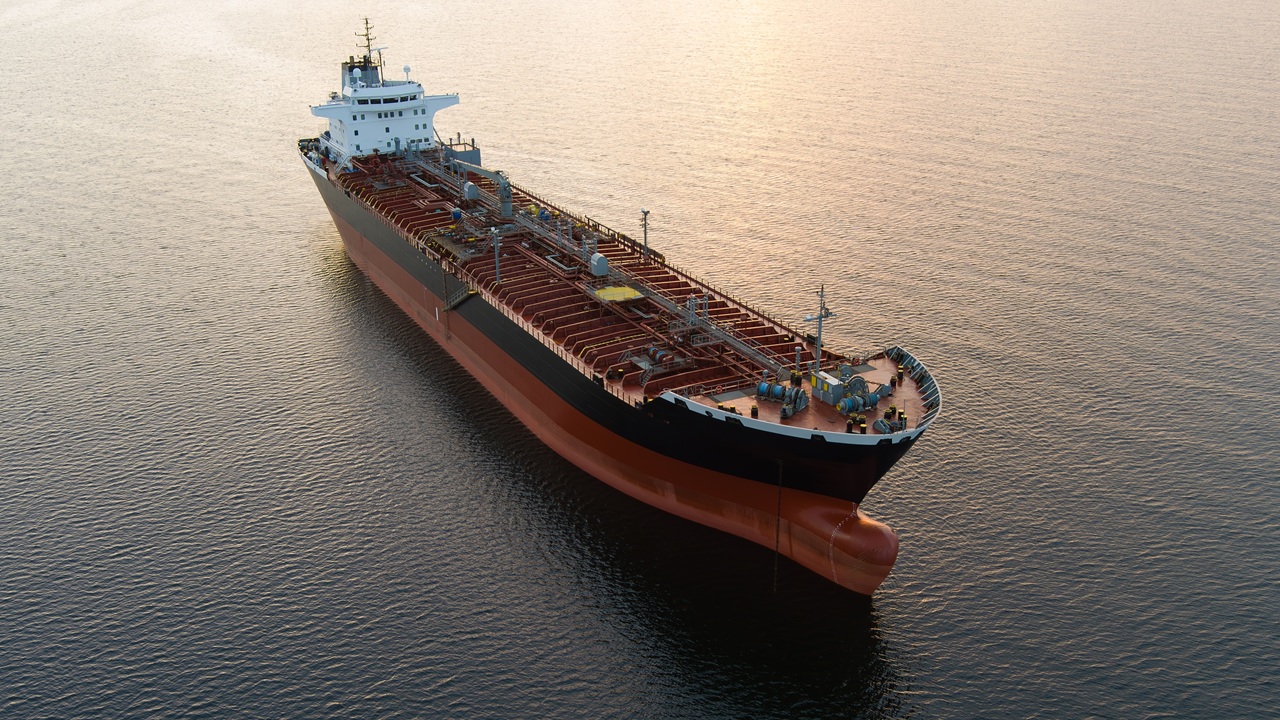
President Trump’s seizure of The Centuries, a Hong Kong-owned cargo ship, appears to be a flagrant violation of international law. Why did he do it?
President Donald Trump has enthused that he has deployed the largest flotilla of military ships off the coast of Venezuela that the region has ever seen. He is, of course, including the fleets of British, French, and Spanish warships that once dominated the waters of the Western Hemisphere during the Age of Sail and European colonization.
Trump is also counting all the pirate ships that once terrorized the waters of the region, too.
The US Navy’s Caribbean Strikes Are Probably Justified
Speaking of imperial missions, the 47th president has used this massive flotilla of US naval power in the Caribbean to sink suspected drug-running boats. He’s ordered the seizure of oil-filled container ships. And in a moment of brutal honesty, the American leader admitted that he is threatening Venezuela simply because he desires to take possession of the country’s vast oil reserves.
Most Americans are not morally disturbed by the sinking of suspected drug-running boats. After all, illicit narcotics kill more than 100,000 Americans per year. Many people either know someone personally or know someone who knows someone who was killed due to the current opioid crisis plaguing the United States. To the extent that there have been objections in the United States, these have instead mostly been on legal grounds; if the government can kill anyone for any reason and justify it by posthumously labeling them a “terrorist,” is anyone in the world safe? Yet for all the handwringing over the legality of these strikes, there is a high probability that the US military knows what the boats being targeted are carrying—and that the “narco-terrorists” were, in fact, narco-terrorists.
Even the recent seizure of a supposed Iranian oil tanker, the Skipper, that was headed to Cuba can be forgiven, seeing as that ship was likely part of the so-called “Shadow Fleet.” This fleet’s entire purpose is to evade and undermine the US government’s sanctions regime by transporting sanctioned goods—in this case, oil—covertly. Iran is a sanctioned country, as is Venezuela. The US Navy claims that the Iranian container vessels were carrying sanctioned Venezuelan oil to nearby Cuba. Accordingly, the Trump administration ordered the shipment intercepted.
But then came a real problem.
The Centuries Seizure: Where the Legal Argument Collapses
Up until December 20, as controversial as the Trump administration’s actions were in the Caribbean, they could still claim the moral high ground. They were killing suspected drug runners and coopting container ships that were blatantly breaking the law.
But then, The Centuries, a Panama-flagged vessel owned by the Hong Kong-based Centuries Shipping, was then seized by the US Coast Guard in the Caribbean.
The Centuries, unlike the first container ship that was interdicted by the Americans (the SS Skipper), was not on any sanctions list. Nor was there evidence that the Panama-flagged, Hong Kong-owned ship was either part of the Venezuelan shadow fleet or that it was trafficking stolen oil.
The administration argues that The Centuries was doing just that, but the evidence is simply not there. And failure to produce that evidence—and if that evidence is purely circumstantial—would mean that the Trump administration willfully broke international law.
In effect, the seizure turns the United States away from being the last remaining global superpower and into something more akin to a piratical power, no better than the “axis of autocracies” (China, Russia, and Iran) that Washington has often complained about. Seizing a Panama-flagged, Hong Kong-owned container ship—a legitimate ship doing legitimate business on the High Seas—is by definition piracy.
Adding onto the legal woes facing the Trump administration is the fact that, shortly after the seizure of The Centuries, the White House announced a total blockade of Venezuela. In the context of international law, a blockade is an act of war. But war remains undeclared by either the Venezuelans or Americans.
Trump’s Actions Have Congressional Cover—for Now
Currently, the Trump administration can get away with skirting legal norms mostly because the only body that could possibly stop it is Congress—and the Legislative Branch is currently controlled by the Republican Party, which is loath to challenge Trump.
But that might not be the case come next November. The general consensus—even among Republican lawmakers themselves—is that the Republicans will probably lose the House of Representatives. The Senate is slightly more secure, but some Republican political analysts fret that a group of moderate Republican senators, tired of carrying water for Trump, are planning to resign en masse before the midterms, leaving gaping holes in the Senate elections next year, which might hand it over to the Democrats.
Once the Democrats are back in power, they could easily initiate a series of congressional investigations into things like potential war crimes (sinking the boats) or violations of international law, as in the case of The Centuries.
Are Trump’s Actions in the Caribbean Justified?
Of course, there are always two sides to the story.
Trump has never clearly articulated what exactly he is doing in the Caribbean. He has generally vacillated between claiming he is picking a fight with Venezuela’s President Nicolas Maduro due to Maduro’s support for international drug cartels, and stressing the need for the United States to acquire Venezuela’s energy and mineral wealth.
Yet there is another reason behind Trump’s fixation on Venezuela. It has to do with concerns that China, Russia, and Iran are all too involved in what should be the United States’ sphere of interest in the Western Hemisphere. Targeting a Chinese-owned oil tanker—as China has seized total control of Hong Kong—is one way to send a message to Beijing: get out and stay out, or we will continue disrupting your energy flows from our hemisphere.
Notably, Washington has already bailed out the government of Javier Milei in Argentina. This was not only because Millei was a political ally of Trump’s. It was also because Argentina had become the epicenter of the contest with China for mastery over South America. Milei’s government is targeting and harassing China’s illegal fishing fleets that are draining the waters of South America of fish that belong to the Argentines.
Why Trump’s Strategy Is Risky—and Probably Too Slow
Still, the strategy being employed by Trump is risky, and will likely take too long to successfully implement his desire of seeing Maduro removed from power.
Any blockade of Venezuela that undermines the regime’s ability to make money will take months, if not years, to work—if it works at all. In general, economic warfare either wins quickly or loses slowly; over time, a sanctioned state will find ways to evade it, or to soften the financial blows. And, over time, Trump’s political rivals might return to power and could work to stymie his plans.
The question of whether Trump has broken international law is a more pressing matter. Sadly, the American president likely did violate international precedents. Certainly, it is a legal gray area. And American rivals can now be expected to replicate this behavior in areas they view as being within their strategic interests.
About the Author: Brandon J. Weichert
Brandon J. Weichert is a senior national security editor at The National Interest. Recently, Weichert became the host of The National Security Hour on America Outloud News and iHeartRadio, where he discusses national security policy every Wednesday at 8pm Eastern. Weichert hosts a companion book talk series on Rumble entitled “National Security Talk.” He is also a contributor at Popular Mechanics and has consulted regularly with various government institutions and private organizations on geopolitical issues. Weichert’s writings have appeared in multiple publications, including The Washington Times, National Review, The American Spectator, MSN, and the Asia Times. His books include Winning Space: How America Remains a Superpower, Biohacked: China’s Race to Control Life, and The Shadow War: Iran’s Quest for Supremacy. His newest book, A Disaster of Our Own Making: How the West Lost Ukraine is available for purchase wherever books are sold. He can be followed via Twitter @WeTheBrandon.
Image: Shutterstock / Dmitri T.
The post America’s Caribbean Crackdown Is Testing the Laws of War appeared first on The National Interest.
Источник: nationalinterest.org