

«Данное сообщение (материал) создано и (или) распространено иностранным средством массовой информации, выполняющим функции иностранного агента, и (или) российским юридическим лицом, выполняющим функции иностранного агента»
 Topic: Air Warfare Blog Brand: The Buzz Region: Americas Tags: Anduril, Missile Interceptor, Missiles, Rockets, and US Army Why the Army’s New Integrated Fires Protection Capability Matters December 30, 2025 By: Brandon J. Weichert
Share
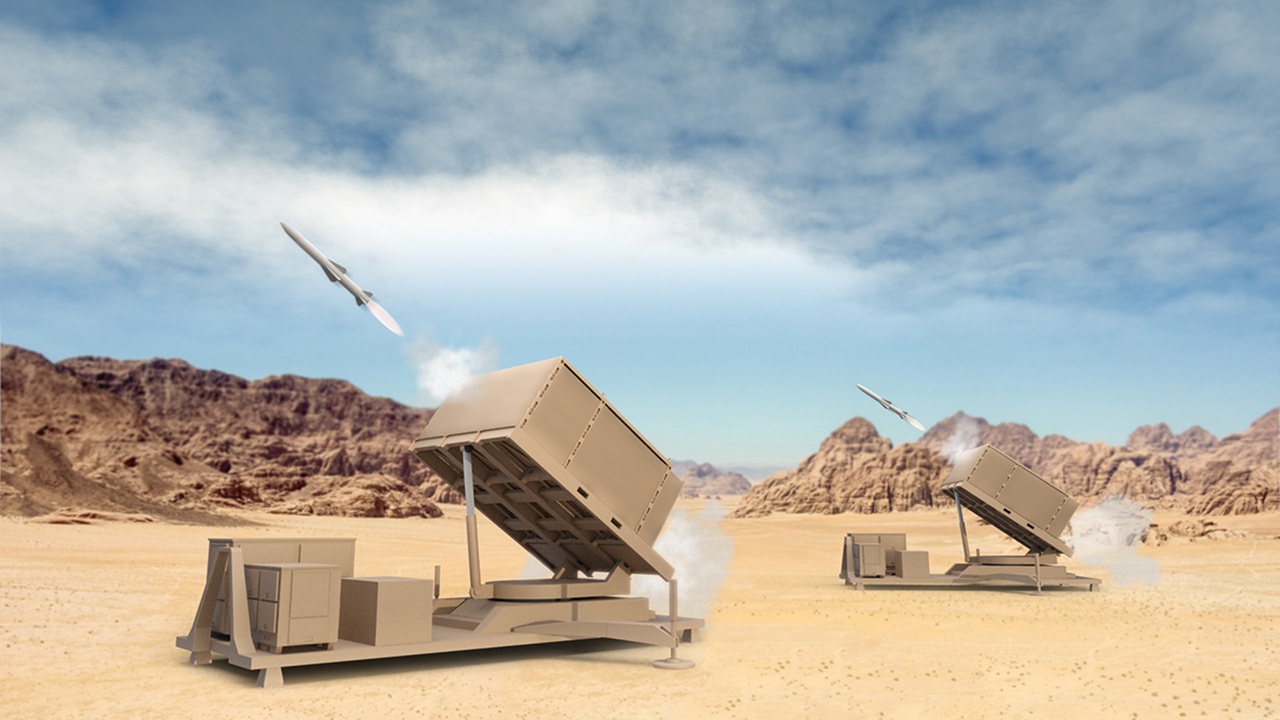
The involvement of Anduril in building solid-fuel rocket motors for the new IFPC missile is probably vital to its success.
The era of America taking their ability to launch attacks against distant foes with minimal concern about counterattack are at an end. The Ukraine War is of note, as it has demonstrated how protection of high value assets is essential—and why current defenses are wholly inadequate.
The Age of Safe Distance Warfare Is Over
That’s why the United States Army has partnered with Boeing and Anduril Industries for their Integrated Fires Protection Capability (IFPC) Increment 2 Second Interceptor.
According to recent reports, Anduril will build a solid-fuel rocket motor for Boeing’s medium-range interceptor. IFPC will protect high-value targets from incoming cruise missiles, drones, rockets, and other threats. The IFPC endeavor is part of a longer-running modernization campaign undertaken by the Army.
Boeing received an Other Transaction Authority (OTA) agreement earlier this month. The Boeing-Anduril team competed against—and defeated—a Lockheed Martin-AeroVironment team for the same contract earlier this year. There was another team competing that involved two foreign contractors, Rafael and Kratos.
Inside the US Army’s New IFPC Missile Defense Push
The Army’s IFPC is designed to fill a specific capability gap that exists between the short-range air defense (SHORAD) system and longer-range weapons, like the Patriot defense battery. IFPC will employ networked launchers, interceptors, and advanced sensors. Increment 2 expands upon this role and is designed to handle increasingly advanced threats, notably those threats posed by supersonic missiles.
Because IFPC is a networked system, it can integrate more easily with other air defense systems. This networking is done through the Integrated Battle Command System (IBCS), which links together the Sentinel-series radars, for example, to provide a more thorough defense against rockets, artillery, mortars, cruise missiles, and drones.
These advances could not come sooner. After all, Big Green was relying upon what was essentially a stopgap medium-range defense. Before the advent of the IFPC, the Army was using converted AIM-9X Sidewinder missiles for mid-range air defense. The problem with that previous arrangement, according to NextGen Defense, was that “the Sidewinder was reportedly not optimized for sustained, mid-range air defense missions.” That’s hardly surprising, given that the Sidewinder was originally conceived as an air-to-air missile.
The Rocket Motor Bottleneck No One Talks About
Anduril will build the solid-fuel rocket motors for Boeing’s interceptors in their newest Mississippi production facility. In many respects, Anduril has the heavier burden to bear when it comes to this project. The solid-fuel rocket motors will ensure that Boeing’s interceptors can fly high.
As Tectonic, another industry publication, reported recently, solid-fuel rocket motors are in short supply here in the United States. L3Harris and Northrop Grumman dominate the domestic solid-fuel rocket motor market. This has created massive inefficiencies and production bottlenecks. Tectonic reports that the rocket motor shortage “is pretty much the main reason the US has trouble producing as many missiles as it and its allies need.”
Beginning in 2023, Anduril wanted to fundamentally change that reality.
How Startups Are Finally Cracking the Pentagon’s Closed Club
Anduril’s inclusion in the project is key. For far too long, the conventional, large defense contractors have dominated the acquisitions process.
Elon Musk’s SpaceX began to undo that trend over a decade ago, when it wrangled some launch contracts from United Launch Alliance (ULA), a consortium of major defense contractors such as Boeing and Lockheed Martin. Musk believed that SpaceX’s innovative reusable rockets could fundamentally reduce the cost of launches—especially for military satellites.
That started a trend of (slowly) opening the Pentagon’s dangerously closed, costly acquisitions process to new start-ups that could do for other programs that which SpaceX did for military satellite launches: lower costs and increase innovation.
Anduril and a handful of other startups are now being incorporated into the overall acquisitions process at the Pentagon. The decision to involve Anduril in the production of small rocket motors indicates how bad the shortage for these parts is for the US military.
No longer able to rely on the bigger contractors, the Department of Defense is now looking at smaller startups, like Anduril, to fill the gaps.
It’s a necessary move. But the fact that SpaceX and Anduril continue being the exception to the rule within the Pentagon is a major problem. The United States possesses enough high-tech startups that it should have no problems maintaining its weapons and platform production. The fact that so few of these startups are incorporated into the wider Pentagon acquisitions process is a major issue. With world war just around the corner, and with the US military basically depleted, this is an awful position to find ourselves in.
Nevertheless, Anduril, like SpaceX, is proving that startups can rise to the occasion—and should be given every opportunity that the bigger players are given.
About the Author: Brandon J. Weichert
Brandon J. Weichert is a senior national security editor at The National Interest. Recently, Weichert became the host of The National Security Hour on America Outloud News and iHeartRadio, where he discusses national security policy every Wednesday at 8pm Eastern. Weichert hosts a companion book talk series on Rumble entitled “National Security Talk.” He is also a contributor at Popular Mechanics and has consulted regularly with various government institutions and private organizations on geopolitical issues. Weichert’s writings have appeared in multiple publications, including The Washington Times, National Review, The American Spectator, MSN, and the Asia Times. His books include Winning Space: How America Remains a Superpower, Biohacked: China’s Race to Control Life, and The Shadow War: Iran’s Quest for Supremacy. His newest book, A Disaster of Our Own Making: How the West Lost Ukraine is available for purchase wherever books are sold. He can be followed via Twitter @WeTheBrandon.
Image courtesy of Lockheed Martin.
The post Why the Army’s New Integrated Fires Protection Capability Matters appeared first on The National Interest.
Источник: nationalinterest.org