
«Данное сообщение (материал) создано и (или) распространено иностранным средством массовой информации, выполняющим функции иностранного агента, и (или) российским юридическим лицом, выполняющим функции иностранного агента»
 Topic: Nuclear Energy, and Oil and Gas Blog Brand: Energy World Region: Africa, Eurasia, and Europe Tags: Critical Infrastructure, Energy Security, European Union (EU), Hybrid Warfare, and Russia Are France and Germany Repeating the Same Energy Mistakes of the Past with Putin? December 30, 2025 By: Maurizio Geri, and Niccolò Comini
Share
The EU should consider Africa as a strategic alternative to Russia to avoid repeating past energy-dependence mistakes amid hybrid warfare and energy-technology risks.
Framatome, a subsidiary of the French state energy company EDF, announced that it would join a joint venture with the Russian state-owned company TVEL to produce nuclear fuel rods and assemblies for power, aiming to build a stronger French nuclear energy presence in the European market. The first presence would be in Lingen, Germany, and the Lower Saxony environment minister currently holds the final decision on approval. This is a perplexing move, given that the European Union (EU) and its allies have been trying to wean off Russian energy sources since the full-scale invasion of Ukraine.
While the United States and the United Kingdom (UK) recently signed an agreement on nuclear energy with the exact goal of ending reliance on Russian nuclear fuel by 2028, France and Germany could go in the opposite direction. They seem to confirm Georg Hegel’s famous saying: “the only thing that we learn from history is that we learn nothing from history,” as they could repeat the same mistake of the past with Putin. They would make their citizens, and the larger EU, pay for their lack of understanding of foreign policy and economic interdependence between liberal democracies and imperialistic dictatorships.
Russia’s Use of Energy Dependence as Strategic Leverage
Unlike the wishful thinking of idealist or liberalist theory, states often “weaponize” economic interdependence by leveraging foreign dependencies for strategic advantage. There is plenty of scholarly research, but for those who are not into scientific theories, the pragmatic analysis of reality should be clear. We have already seen this with the EU’s dependence on Russian oil and gas, and increasingly with its dependence on critical raw materials (CRMs) and rare earth elements (REEs). Now, this could be repeated by the ignorance of European decision-makers, leading to a new dependence: Russian nuclear fuel.
Using Russian technology, especially to fuel European nuclear plants, only invites further hybrid threats against Europe. In the energy sector, such a threat is already very present from Russia to Europe, either through the weaponization of oil smuggling or by attacking energy infrastructure.
Framatome’s argument for collaborating with Russian companies is understandable at face value. They argue that French nuclear fuel technology is years behind that of the United States, China, and Russia. With Europe stuck in its energy cost crisis for almost the fourth year running, the call for alternative energy sources is loud and unanswered. Reinvigorating nuclear energy would yield multiple dividends. It would cut dependence on Russian energy, stabilize electricity costs, and create a more competitive internal market. It would also provide the foundation for a uniquely European artificial intelligence (AI) ecosystem.
Hybrid Warfare and the Vulnerability of Europe’s Energy Infrastructure
Even though hybrid attacks on Europe do not have a specific name or face, energy independence would shield Europe from the hybrid warfare waged by the ‘Axis of Upheaval.’ These attacks were delivered through cyber-attacks, sabotage of undersea cables and rail lines, export restrictions on rare earths, and AI-enabled drones. Recently, they have come in the form of drones flying over, and closing West European military airfields, and civilian airports, both large and small. Russia is suspected, although there’s limited hard evidence beyond intent and past behavior.
By collaborating with Russian state-owned companies to produce nuclear energy components, another layer of opportunity for Russia to sabotage European energy sources is added, further increasing distrust and discontent that European citizens have with their governments. The precedent for malicious hijacking is there, albeit by another disruptive actor: China.
US officials have raised concerns about Chinese-manufactured cranes used at American ports, particularly those produced by Shanghai Zhenhua Heavy Industries Company (ZPMC), which supplies a large share of US port cranes. Investigations found that some cranes arrived with unmarked routers that were not originally listed in shipping manifests. There is no clear intention by the Chinese Communist Party (CCP) in smuggling routers onto cranes, yet there is a clear threat to port cybersecurity and surveillance. This episode highlights how technology and energy can be hijacked by malicious actors even when governments are not directly behind the actions.
Nuclear Energy, AI, and the Security Implications of the Energy Transition
Autocratic regimes use resources and technology as weapons against democratic societies. Europe, without a committed United States, must recognize that dependence on adversaries is no longer an economic inconvenience—it is a direct security threat. Especially in the decades ahead, given the two greatest transitions in human history: energy and technology. The conundrum of the energy-technology security nexus, between the gigantic amount of energy that AI and data centers will require and the impossibility of a green transition to provide that energy quickly, cannot be resolved by a new dependence on nuclear fuel from an autocratic regime.
While it is admirable that Europe wants to secure independence from the United States, the solution is not to work with Russian state-owned companies. It has been one of Putin’s goals to make Europe dependent on Russian gas exports, as it would be a political tool that could be leveraged to extort Europe, and has worked previously. Although the EU has been gradually working toward a ban on Russian liquefied natural gas (LNG) imports, even with internal resistance from Hungary and Slovakia, deepening ties for nuclear fuel would erase all the cooperation efforts thus far.
A Strategic Alternative to Russia: Africa
Instead, possible solutions must be tied to a more efficient energy transition. Europe should diversify its sources not by looking to Asia, but to Africa. Undergoing a technology transition itself, the problem in Africa is that both fossil fuels and renewable energy resources (CRM, REE, and nuclear fuel) need to be both mined and refined, as African countries lack processing capabilities.
Even with this problem, there are solutions. The Italian Mattei Plan proposes, among other measures, the technology transfer needed to develop process capabilities in Africa. But Italy cannot handle such a large endeavor by itself, as its crippling 138 percent debt-to-gross domestic product (GDP) ratio prevents it from being a development and industrial powerhouse. Yet under European guidance, there can be true value in Italy’s plan.
Will France and Germany listen to their third-most important partner in Europe, Italy, and embrace Africa—or will they go on to repeat their old mistakes and embrace Russia? Time will tell, but because of the lack of strategic thinking among European politicians, a Latin saying rings true: mala tempora currant (bad times are upon us).
About the Authors: Dr. Maurizio Geri and Niccolò Comini
Dr. Maurizio Geri is a former NATO analyst, an Italian Navy Lieutenant POLAD reservist, and a GMU postdoctoral researcher/EU Marie Curie Fellow who specializes in EU-NATO tech cooperation and Russian-Chinese hybrid warfare in the energy-resources-technology security nexus.
His research has received funding from the EU’s Horizon 2020 program under the Marie Skłodowska-Curie grant agreement No. 101105349. Views and opinions expressed are, however, those of the author only and do not necessarily reflect those of the EU or the Research Executive Agency. Neither the EU nor the granting authority can be held responsible for them.
Niccolò Comini is a graduate of Kenyon College. He writes about Italian politics and foreign policy, and has been published on CEPA’s Europe’s Edge and Foreign Policy.
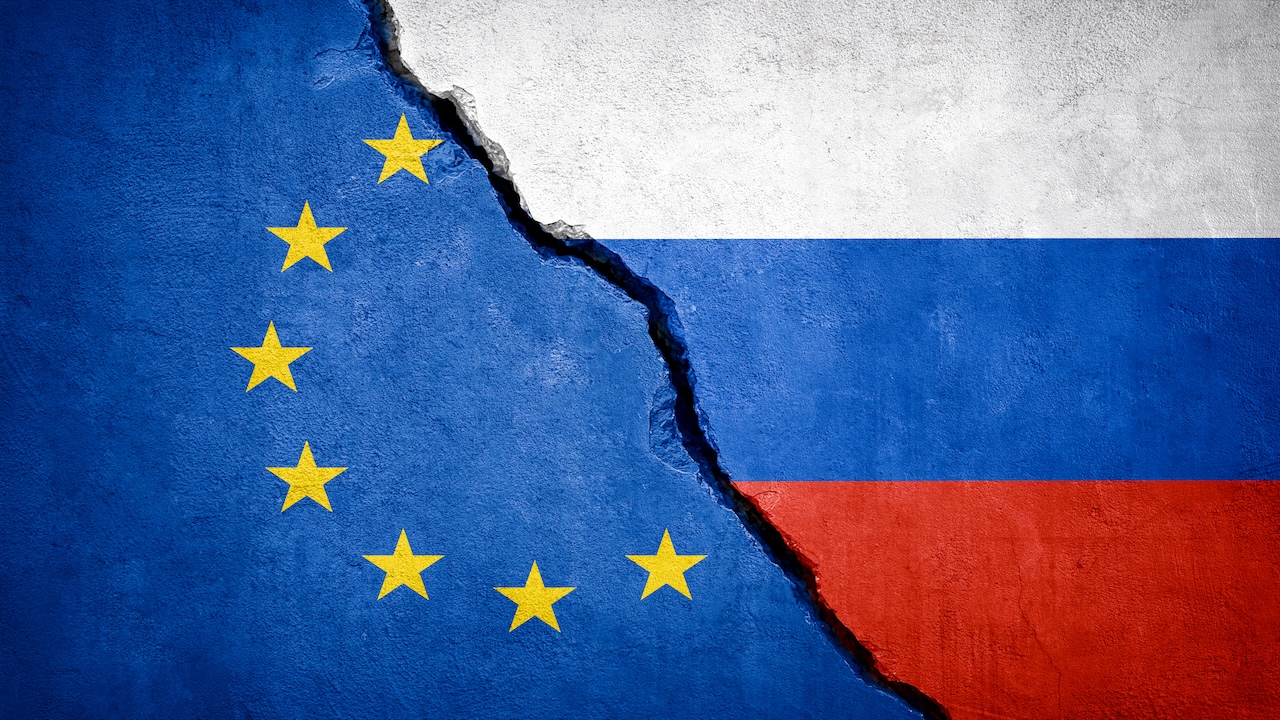
Image: ffikretow/shutterstock
The post Are France and Germany Repeating the Same Energy Mistakes of the Past with Putin? appeared first on The National Interest.
Источник: nationalinterest.org