

«Данное сообщение (материал) создано и (или) распространено иностранным средством массовой информации, выполняющим функции иностранного агента, и (или) российским юридическим лицом, выполняющим функции иностранного агента»
 Topic: Air Warfare, and Military Administration Blog Brand: The Buzz Region: Americas Tags: Aircraft, Defense Spending, Department of Defense (DoD), F-35 Lightning II, Fighter Jets, and Lockheed Martin How the Pentagon Let the F-35 Fail—but Kept Paying for It Anyway December 30, 2025 By: Brandon J. Weichert
Share
Two recent Pentagon reports illustrate the myriad deficiencies of Lockheed Martin’s F-35 program—but the company has never faced real consequences for it.
America’s defense establishment has many problems. It is not particularly good at delivering what it promises. But one thing it has continued to excel at is collecting vast sums of taxpayer dollars in the process.
The F-35 Has Never Lived Up to Its Promise
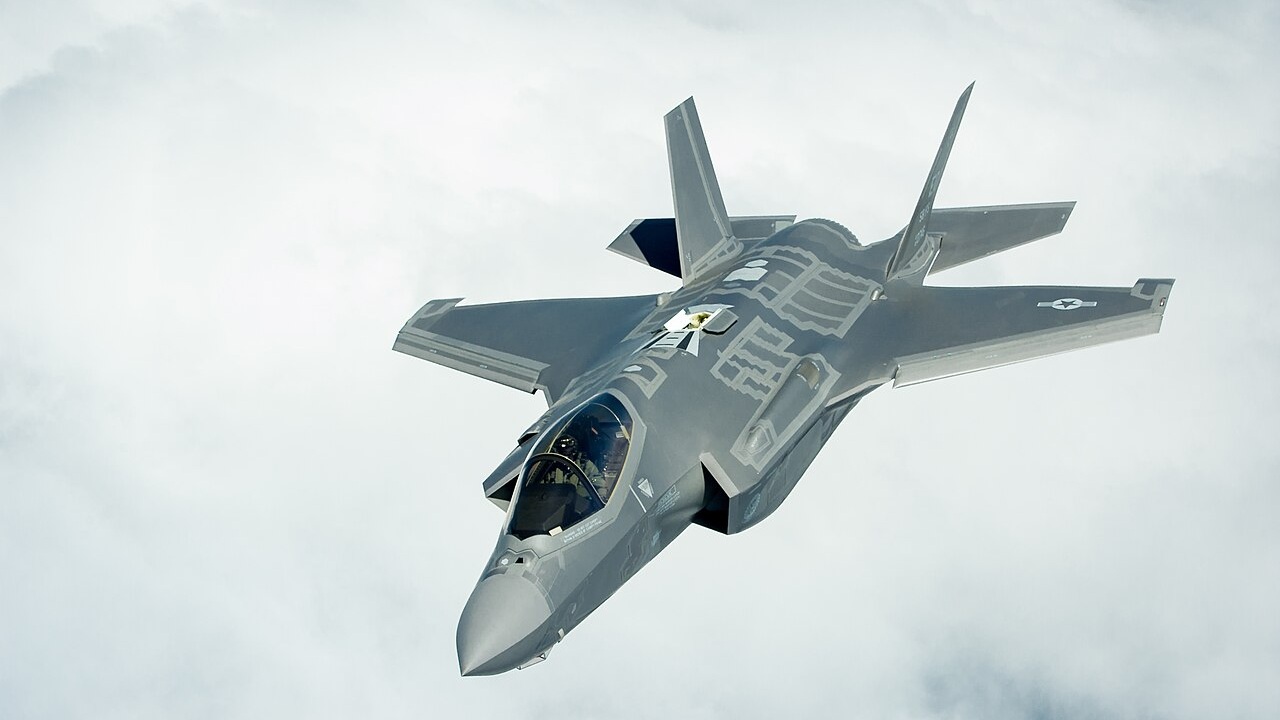
Take, for instance, the F-35 Lightning II multirole stealth warplane. Billed as America’s next-generation all-in-one warplane, this bird, built by Lockheed Martin, has been notorious in its cost overruns, missed deadlines, and unavailability. Yet Lockheed continues collecting billions of dollars from the Pentagon, despite the warplane’s obvious failures.
A recent Government Accountability Office (GAO) report released in October glazed over the fact that, after more than two decades of working on the F-35, the designers of the F-35 were planning to “reduce the scope of” the ongoing Block IV tranche of the F-35. (This is the most recent iteration of the F-35 that began its life in 2019.) In other words, the F-35 has been such a disappointment that the Pentagon, rather than simply cutting its losses, is reducing the capabilities of its newest iteration of the F-35.
Another report, this time from the Pentagon’s Office of the Inspector General (OIG), the internal watchdog for the Defense Department, determined that “the average availability rate of the F-35 was 50% partly because the Pentagon did not consistently hold Lockheed Martin accountable for poor performance related to F-35 sustainment.”
This is a polite way of saying that the Pentagon failed to enforce proper maintenance standards on one of its largest defense contractors. One might be inclined to ask why—but the report doesn’t dive into the reasoning.
Why Lockheed Was Never Held Accountable for the F-35 Fiasco
But let’s get real. The revolving door between the Pentagon and the private defense firms that populate Washington is spinning like never before. Accordingly, there is little incentive to police Lockheed Martin, since so many of the people who might be charged with overseeing its bad performance with the F-35 program could ultimately end up under the aerospace giant’s employ.
As for the implications of this failure, it goes toward the issue of readiness. That has long been a bugaboo of multiple defense secretaries, since at least the end of the Cold War. In President Donald Trump’s first term, Secretary of Defense James Mattis constantly obsessed over readiness (when he wasn’t sparring with his boss). Obama’s and Biden’s war chiefs also fretted about America’s readiness.
Today, in Trump’s second non-consecutive term in office, his current secretary of defense, Pete Hegseth, has also made the twin pillars of readiness and recruitment his raison d’être. This report from the Pentagon’s OIG should not only trigger an immediate review of the F-35 program, it must also goad Congress into taking decisive action against Lockheed Martin for its obvious failures.
At the very least, penalties must be exacted upon the lavishly paid defense contractor. Obviously, smothering them with gobs of tax dollars and not asking many questions has not created the conditions for success. The carrot hasn’t worked. It’s time for the stick.
What this new report proves is not only that the F-35 program is a failure, but it also demonstrates how utterly vulnerable the US military is to losing air dominance due to readiness failures among its primary warplane fleet.
Just imagine what might happen if the US military finds itself in a shooting war with a great power rival, such as China or Russia, when at least half of its primary warplane fleet is simply unavailable due to Lockheed Martin’s inability to properly provide maintenance for these complex and costly warplanes.
With over 600 F-35 Lightning II fighter jets of various make in the US inventory today, at least 300 are unavailable. While 600 birds sounds like a lot of planes—and, of course, it is—each of these planes is significantly more expensive to build and maintain than its Chinese or Russian rivals. More importantly, that fleet of 600 is spread across the world, divided between far too many US bases that are far removed from the US power base in the Western Hemisphere.
Even if all 600 planes were working, US airpower would be stretched thin. Now, remove 300 from the equation, and one starts to appreciate the dire position America finds itself in. Especially because the United States still does not have a firm grasp on what either the Chinese or Russians can do to stymie the normal operations of F-35s that are airborne.
Flying Computers Are Still Computers—and Have Computer Problems
We know these planes are “flying computer chips,” as Lockheed’s cheerleaders love to say. Yet computers can be hacked. They can be sabotaged. They can be fried. And with few spares on hand, the US has a problem that its war planners are either oblivious to or in denial about.
Again, this has real world implications on the readiness and combat effectives of the US military. After all, the predicate for all American military operations is an assumption that the United States Air Force, Navy, or Marine aviators will enjoy air dominance over any battlefield. Failing that, the assumption is that the Americans, thanks to the technological advancements of its warplanes, will be able to outperform any rival—including China or Russia—and US planes could assert dominance once engaged.
But this extreme weakness in America’s force readiness threatens to upend those rosy assumptions. Should the US military find itself in a war with either Russia or China, and should the military be unable to deploy the fullest warplane capabilities it is supposed to have, then air dominance is not assured and dominance on the ground and at sea will be problematic for US forces, too.
Ignoring the Readiness Problem Won’t Make It Go Away
What is the Trump administration doing to address this? Why hasn’t the Pentagon started slapping these greedy and ineffective defense contractors down until they start providing the services the American people are owed?
Donald Trump often promises to “drain the Swamp.” What is the Swamp, if not the Beltway defense contractors that have a stranglehold over the Pentagon? And Trump has the full power—as do the Republicans who have majorities in both houses of Congress—to hold these defense contractors accountable.
Instead, everyone seems to be ignoring the grim reality of the F-35 fleet, and few seem willing to take the hard steps to get Lockheed and its subpar products in line before the next great power war erupts, and the US warfighter is left at an extreme disadvantage.
Or maybe another $1 trillion will do the trick. Then again, it’ll likely just ensure no changes are ever made until it’s too late.
About the Author: Brandon J. Weichert
Brandon J. Weichert is a senior national security editor at The National Interest. Recently, Weichert became the host of The National Security Hour on America Outloud News and iHeartRadio, where he discusses national security policy every Wednesday at 8pm Eastern. Weichert hosts a companion book talk series on Rumble entitled “National Security Talk.” He is also a contributor at Popular Mechanics and has consulted regularly with various government institutions and private organizations on geopolitical issues. Weichert’s writings have appeared in multiple publications, including The Washington Times, National Review, The American Spectator, MSN, and the Asia Times. His books include Winning Space: How America Remains a Superpower, Biohacked: China’s Race to Control Life, and The Shadow War: Iran’s Quest for Supremacy. His newest book, A Disaster of Our Own Making: How the West Lost Ukraine is available for purchase wherever books are sold. He can be followed via Twitter @WeTheBrandon.
Image: Wikimedia Commons.
The post How the Pentagon Let the F-35 Fail—but Kept Paying for It Anyway appeared first on The National Interest.
Источник: nationalinterest.org