

«Данное сообщение (материал) создано и (или) распространено иностранным средством массовой информации, выполняющим функции иностранного агента, и (или) российским юридическим лицом, выполняющим функции иностранного агента»
 Topic: Land Warfare Blog Brand: The Buzz Region: Asia Tags: Cambodia, China, Main Battle Tanks, Southeast Asia, Tanks, Thailand, and VT-4 Cheap Steel, Hot Jungle: Why Thailand’s Chinese-Made VT-4 Tank Failed December 27, 2025 By: Brandon J. Weichert
Share
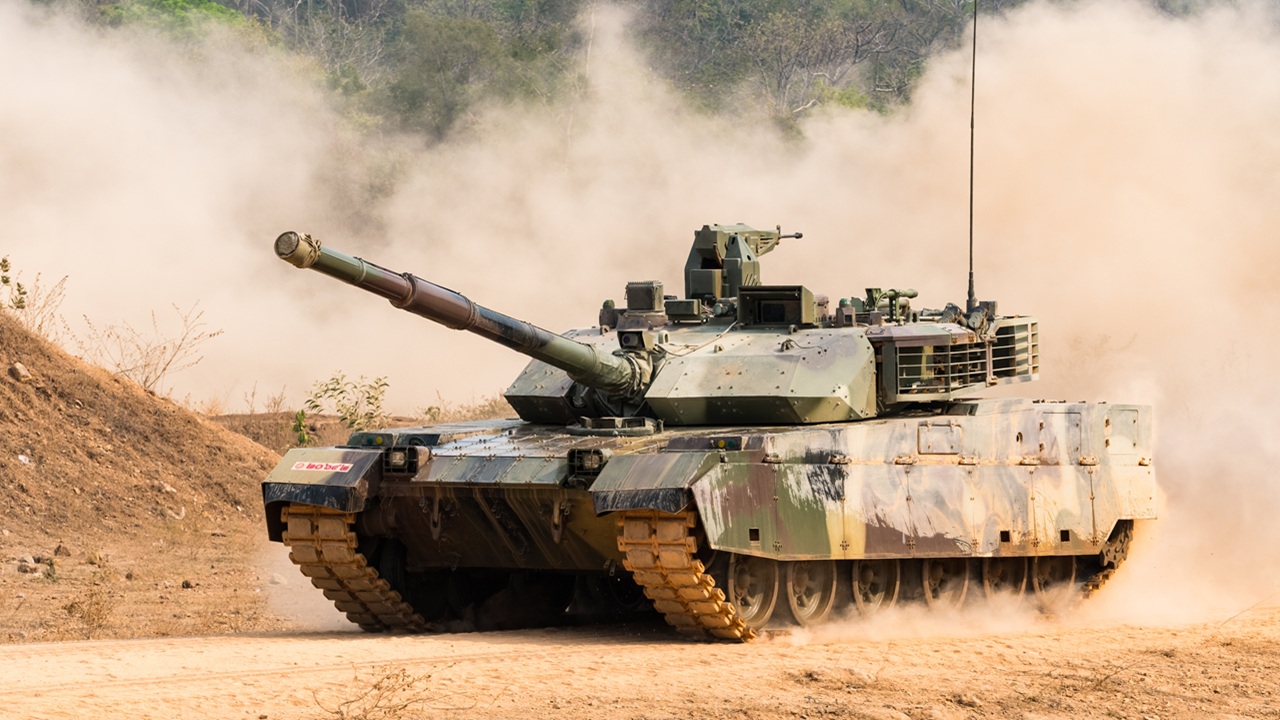
A Royal Thai Army VT-4 tank reportedly lost its main gun to an early malfunction, raising concerns about the Chinese-made tank’s quality of construction.
The Thailand-Cambodia conflict has continued apace in recent weeks. The fight is for control over the vast resources of the Gulf of Thailand and influence over the lucrative trading networks that cut across the region and the nearby Strait of Malacca, one of the most important maritime transit chokepoints in the world. Despite having significant military advantages over Cambodia, the Royal Thai Army confirms that there have been some (minor) setbacks. Among them was a recent story of a VT-4 Main Battle Tank (MBT) that was damaged during sustained heavy fighting with the Cambodian military along the contested border between Cambodia and Thailand.
The Chinese VT-4 Tank’s Specifications
- Year Introduced: 2014
- Number Built: 300-400 units globally (Thailand has 60+)
- Length: 33.1 feet (10.1 meters)
- Total Weight: Around 52 tons
- Suspensions: Torsion bars
- Engine: VT/E1 diesel engine providing 1,200 horsepower (895 kW)
- Top Speed:
- 43 mph (70 km/h) on road
- 31 mph (50 km/h) offroad
- Range: 310.7 miles (500 km)
- Armament: 125mm smoothbore cannon, coaxial 7.62mm machine gun, 12.7mm anti-aircraft machine gun
- Crew: 3 (commander, gunner, driver)
How Did the VT-4 Tank’s Main Gun Explode?
Reports suggest that the Thai VT-4 tank’s gun barrel burst after it was firing repeatedly for a sustained time. This should indicate how intense the fighting between Cambodia and Thailand has been. No official explanation has been given behind the reasoning of the damage. But one can estimate that it was from repeated—rapid—firing in combat.
Thailand’s VT-4 tanks are from China. These systems are made by Norinco and are popular around the world for their affordability. Yet, as demonstrated by this incident, affordability comes with its downsides. Namely, basic functions of the VT-4—such as firing its main gun during battle—become compromised over time.
Of course, we don’t know the conditions of the battle or under what conditions that the VT-4 in question was in at the time of the engagement. But the Royal Thai Army is a well-funded, highly disciplined, and effective military. The notion that they did not maintain these systems is ridiculous. In other words, this incident in combat with Cambodia would seem to be a significant black mark for China’s VT-4 program, which they have been pushing as the answer for the rising countries of the Global South.
A Problem for China’s Export Market
Apparently, the Thai VT-4-gun barrel rupture occurred at 40 percent of its rated life (500 rounds), which indicates to potential buyers on the global market that there are real reliability issues—especially under high stress. Other nations using this system, such as Algeria, report no problems. However, an incident at the 2024 Zhuhai Airshow had a VT-4 that was conducting a dynamic display stall, causing concern and consternation among the vehicle’s designers and prospective buyers.
Pakistan, which has become a major purchaser of most Chinese-made weapons and platforms, is currently reviewing the VT-4 for a potential large purchase. This incident along the Cambodian border is likely to now become part of that review.
China has positioned itself as the cheap, mass-produced vendor for many rising powers in the Global South. What’s more, the Chinese have deftly placed themselves as the middlemen in many conflicts, notably the Thai-Cambodia War. Chinese weapons and platforms are copiously supplied to the Cambodian military which are then used against Thai forces in the war. And Thailand, which has its own budgetary constraints, is also using at least some affordable Chinese systems.
Here we have an example, though, of when those Chinese-made systems are not so reliable. Cheap and easy only gets one so far. Being cheaply produced and easy to use while fighting in the harsh and difficult jungle terrain of the borderlands between Cambodia and Thailand adds another layer of complexity that even the best maintained vehicle, if it is poorly made, cannot endure.
About the Author: Brandon J. Weichert
Brandon J. Weichert is a senior national security editor at The National Interest. Recently, Weichert became the host of The National Security Hour on America Outloud News and iHeartRadio, where he discusses national security policy every Wednesday at 8pm Eastern. Weichert hosts a companion book talk series on Rumble entitled “National Security Talk.” He is also a contributor at Popular Mechanics and has consulted regularly with various government institutions and private organizations on geopolitical issues. Weichert’s writings have appeared in multiple publications, including The Washington Times, National Review, The American Spectator, MSN, and the Asia Times. His books include Winning Space: How America Remains a Superpower, Biohacked: China’s Race to Control Life, and The Shadow War: Iran’s Quest for Supremacy. His newest book, A Disaster of Our Own Making: How the West Lost Ukraine is available for purchase wherever books are sold. He can be followed via Twitter @WeTheBrandon.
Image: Shutterstock / sivapornphaiboon1983.
The post Cheap Steel, Hot Jungle: Why Thailand’s Chinese-Made VT-4 Tank Failed appeared first on The National Interest.
Источник: nationalinterest.org