

«Данное сообщение (материал) создано и (или) распространено иностранным средством массовой информации, выполняющим функции иностранного агента, и (или) российским юридическим лицом, выполняющим функции иностранного агента»
 Topic: History, and Naval Warfare Blog Brand: The Buzz Region: Americas, and Europe Tags: Battle Of The Atlantic, Germany, Kriegsmarine, United Kingdom, War History, and World War II Christmas 1940 Under Siege: Admiral Hipper and the Battle for the Atlantic December 25, 2025 By: Brandon J. Weichert
Share
In a narrow sense, the Admiral Hipper “won” the naval battle; it inflicted damage on the British convoy and escaped to fight another day. But it failed to destroy it.
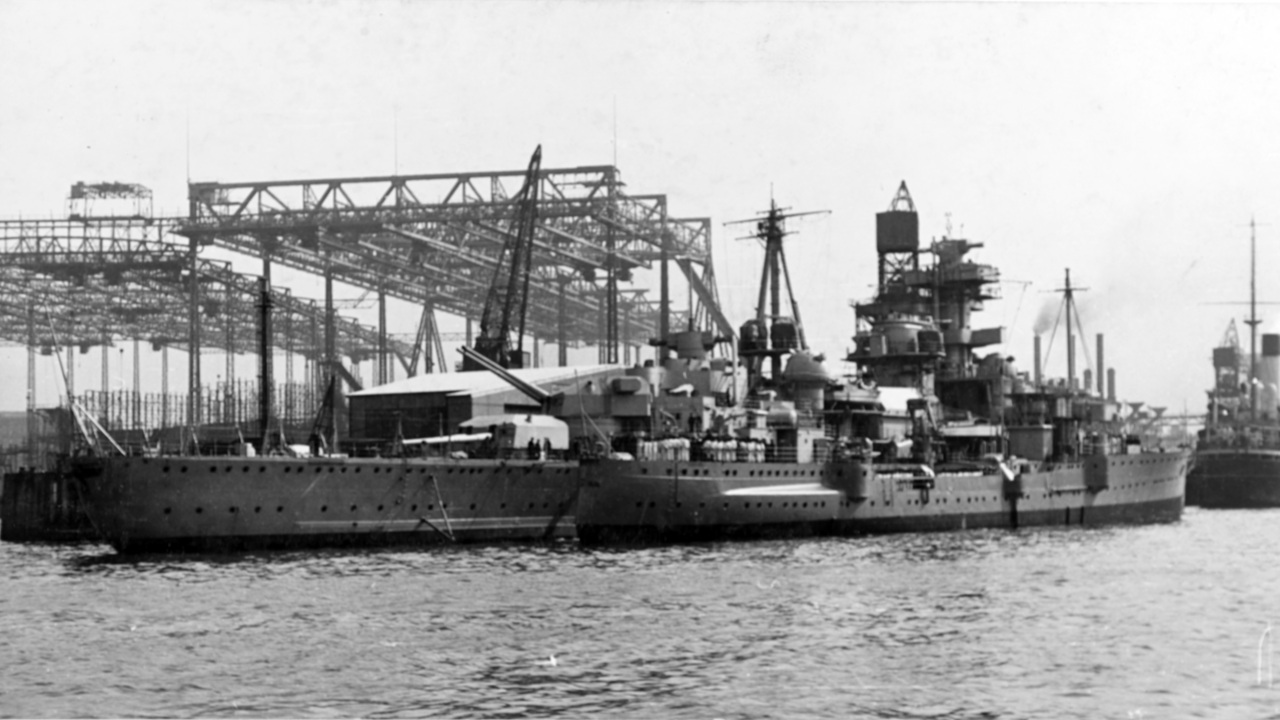
In the dawn hours of Christmas Day 1940, the German Kriegsmarine heavy cruiser Admiral Hipper, one of the most powerful surface raiders in Hitler’s navy at the onset of World War II, detected and attacked British Convoy WS-5A.
The idea was to disrupt British troop movements bound for the Middle East. At this point, much of the action in the European Theater of World War II was concentrated on the Middle East and the Mediterranean.
So, the convoy was moving large numbers of British troops to the Middle East where they would have been deployed to fight German and Italian units in the desert.
The German Attack on Convoy WS-5A
Convoy WS-5A was part of the so-called “Winston Specials”—fast convoys used to carry British forces overseas as quickly as possible. The Germans loved destroying these Winston Specials because they knew that it impeded Britain’s ability to fully resist German advances elsewhere in the world.
So Admiral Hipper attacked the convoy.
The German warship was under the command of Kriegsmarine Captain Wilehlm Meisel. The attack commenced 800 miles west of Cape Finisterre. Hipper’s first targets were two of the troop transports. Hipper’s attack landed perfectly.
A British Flower-class corvette, the HMS Clematis, was commanded that day by a rather bold leader—one, Commander York Cleeves—who decided, against all odds, to turn his tiny ship to fight the more powerful Admiral Hipper. Clematis possessed only a single 4-inch gun.
But in addition to the Clematis, three cruisers protected this Winston Special due to its importance to the overall British war effort. HMS Berwick arrived on scene, loaded for bear. This British warship matched Hipper in every way—from 8-inch guns to its high speed. Shortly after appearing through the fog and opening fire on the Hipper, the other two British cruisers joined the fight. So, too, did new Dido-class anti-aircraft cruiser, HMS Bonaventure and the D-class light cruiser HMS Dunedin. These two warships possessed 5.25-inch and 6-inch guns. The convoy scattered to make it harder for the German warships to score any more hits on the important troop transports.
Germany’s Radar Overmatch
In 1940, many of the British warships lacked radar technology. Berwick and Dunedin, therefore, had to rely upon the muzzle flashes of the Admiral Hipper. But the German crew was effective in using the bad weather to their advantage. It became another layer of active defense against the British warships charged with defending the Winston Special.
Admiral Hipper, however, did possess radar—a clear advantage over her British opponents—and proceeded to lob a fusillade from her 8-inch main battery. Captain Meisel followed that on with additional volleys from Hipper’s 4.1-inch secondary guns. Thanks to the radar overmatch, the Admiral Hipper’s attack scored direct hits on her primary opponent, the HMS Berwick. Those rounds impacted Berwick’s hull and superstructure. Berwick’s X turret was struck by the Hipper’s barrage. The X-turret was knocked out, and four Royal Marines were killed as a result.
In response to the hits, Berwick fired a fusillade at the Admiral Hipper, but failed to score any hits. Nevertheless, Berwick’s resistance drove the Hipper off, protecting the convoy from further attacks from the vicious German surface raider.
Who Really Won the Sea Battle?
Interestingly, what followed from Admiral Hipper’s attacks on Convoy WS-5A was a massive movement of British sea power that was intended to hunt down and sink the Hipper because of their dangerous actions directed against the convoy. Among the Royal Navy warships dispatched to hunt Admiral Hipper were the brand-new aircraft carrier, HMS Formidable and the cruiser HMS Norfolk.
Captain Meisel’s attack on the convoy was spectacular and bold. His surface raider dared to take on a superior British force with the hope of crippling the British war effort in the Middle East. He managed to down one of the troop transports.
Once kicking up that superior Royal Navy defense element for the convoy, Meisel methodically (and successfully) evaded being detected and sunk by the British who were hunting him down.
Yet most of the troop convoys made it to their various destinations, despite the fact that these troop transports had been under direct threat from Admiral Hipper’s firepower. And with Hipper’s radar advantage, Meisel likely could have scored many more victories over the troop transports. Ultimately, however, he skirted a greater engagement—and likely saved his crew and ship to fight another day. Still, he failed to achieve Germany’s strategic objective by attacking these Winston Specials: degrading Britain’s overall war effort against Germany.
Christmas Day 1940 was a bloody, messy, brutal day for the British and Germans. But it could have been nastier for both sides. Captain Meisel’s caution allowed for a pristine opportunity to slip his strategic grasp—and much damage was done to Germany’s war effort in the long run.
About the Author: Brandon J. Weichert
Brandon J. Weichert is a senior national security editor at The National Interest. Recently, Weichert became the host of The National Security Hour on America Outloud News and iHeartRadio, where he discusses national security policy every Wednesday at 8pm Eastern. Weichert hosts a companion book talk series on Rumble entitled “National Security Talk.” He is also a contributor at Popular Mechanics and has consulted regularly with various government institutions and private organizations on geopolitical issues. Weichert’s writings have appeared in multiple publications, including The Washington Times, National Review, The American Spectator, MSN, and the Asia Times. His books include Winning Space: How America Remains a Superpower, Biohacked: China’s Race to Control Life, and The Shadow War: Iran’s Quest for Supremacy. His newest book, A Disaster of Our Own Making: How the West Lost Ukraine is available for purchase wherever books are sold. He can be followed via Twitter @WeTheBrandon.
Image: Wikimedia Commons.
The post Christmas 1940 Under Siege: Admiral Hipper and the Battle for the Atlantic appeared first on The National Interest.
Источник: nationalinterest.org