

«Данное сообщение (материал) создано и (или) распространено иностранным средством массовой информации, выполняющим функции иностранного агента, и (или) российским юридическим лицом, выполняющим функции иностранного агента»
 Topic: Trade Blog Brand: Middle East Watch Region: Asia, Europe, and Middle East Tags: Algeria, China, Maghreb, MENA, Morocco, North Africa, Tunisia, and United States Tunisia’s Underdevelopment Problem December 24, 2025 By: Sabina Henneberg
Share
Despite US-China competition in the Middle East, Tunisia has unintentionally managed to avoid foreign investor interest.
Strategically located on the Mediterranean coast, with access to resource-rich Africa and the Middle East as well as Europe, Tunisia has long attracted foreign attention. The development of the country’s transport infrastructure—including ports, roads, highways, and bridges—is also critical to growth through trade, given its small, diverse economy. Despite these features, its ports remain severely underdeveloped—a missed opportunity not only for Tunisia but for superpowers like China and the United States looking to expand their influence.
Limited Foreign Interest and Lagging Development in Tunisia
Tunisia is home to seven commercial ports. This spring, the World Bank described Tunisia’s port infrastructure as “insufficient” to handle the levels of container shipping and the sizes of ships that dominate international trade. According to the Bank, Tunisia has “ample opportunity” to develop its ports and tap into the rapidly growing containerized shipping traffic in the Mediterranean.
The United States recognized this opportunity nearly a decade ago, when the Millennium Challenge Corporation (MCC) identified Tunisia as a partner for investments in projects such as port infrastructure improvements. The agreement jointly developed by the MCC and the government of Tunisia specifically targeted the country’s largest port, Radès. However, on July 25, 2021, MCC suspended the agreement due to “democratic governance concerns.”
Washington’s interest in contributing to Tunisia’s port infrastructure development has not entirely disappeared. Nonetheless, in the past few years, US bilateral assistance to Tunisia has been drastically reduced—primarily in connection to the same concerns over governance that led to the suspension of the MCC agreement. Members of Congress continue to call for further cuts.
Meanwhile, according to the French Observatory on the New Silk Road, China is competing with the United States for trade-infrastructure investments, such as at the northern port of Bizerte. Yet, the Tunisian government has not announced major improvement plans for the Bizerte port, instead identifying the eastern site of Infidha for the development of a deepwater port.
But progress on that port is stalled. The Ministry of Transportation recently announced the project’s legal classification and has yet to establish rights to land use fully. At both Infidha and the more complete Zarzis, the country’s southernmost port, which also hosts a Free Economic Zone, the Tunisian government is reportedly still seeking a private sector partner.
Although it outweighs US investments, evidence of massive Chinese investment in Tunisian infrastructure is thin. Although the Tunisian Foreign Investment Promotion Agency announced a 21 percent increase in levels of FDI flows between 2023 and 2024, China does not rank among the top five investors.
Beijing has shown some interest in developing Tunisia’s trade infrastructure more generally, in keeping with its objective of facilitating the export of its own goods and access to Africa’s critical minerals and other natural resources. Last year, a delegation from China’s largest shipping company, Cosco, visited Radès, reportedly to explore a shipping line linking Radès to European and Mediterranean countries.
A delegation from the Wuhan Yangluo ports company also visited the country in July to explore further opportunities for trade and investment. And in 2017, a Spanish freight company opened a shipping line linking Rades to the Chinese port of Qingdao—further facilitating the import of Chinese goods.
Most concretely, China’s Sichuan Road and Bridge Group won a $206 million contract last year to help construct a major bridge at Bizerte—a project partially financed by the European Investment Bank. Such investments have paid off for Beijing: between 2013 and 2023, bilateral trade increased by approximately $1 billion, comprised almost exclusively of Tunisian imports from China.
Tunisia Is Losing Out to Its Neighbors
While the upgrading and expansion of Tunisia’s ports has dragged on, Morocco’s Tanger Med port has become a top Mediterranean container port. China’s investment in the Mohammed VI Tanger Tech City project—part of the Tanger Med Port Complex—is projected to become the largest Chinese investment project in North Africa.
Even in Algeria, where major infrastructure projects are often delayed, progress has been made on the El Hamdania-Cherchell port project, which was supported by Chinese financing and construction. The project was shelved earlier this year, but recent reporting indicates that it may be restarted.
That Tunisia’s maritime trade infrastructure remains inadequate is largely due to problems on the Tunisian side rather than a lack of interest among foreign investors. Despite the adoption of an improved investment code in 2016 and the creation of a “one-stop shop” for investors hosted by the Agency for the Promotion of Investment and Innovation, the OECD and others cite bureaucratic and economic barriers to foreign investment. And the institutional barriers to efficient maritime trade identified by MCC more than five years ago—such as cumbersome customs procedures—remain.
If Tunisia wants to grow its economy and benefit from superpower competition, it must lower barriers to investment and eliminate unnecessary hurdles. Multilateral institutions have called for reforms to enhance competitiveness, such as increasing the independence of the Competition Council, accelerating digitalisation, and simplifying customs procedures.
And if the United States truly wants to counter Chinese influence, it should remain engaged as Tunisia addresses these challenges—whether through technical assistance on customs reform, support for port modernization feasibility studies, or diplomatic engagement that encourages improvements without abandoning strategic interests.
Even if Washington isn’t prepared to invest directly, it should coordinate with European partners and multilateral development banks to support Tunisia’s infrastructure development, ensuring that democratic allies maintain influence in this strategically vital Mediterranean state.
About the Author: Sabina Henneberg
Sabina Henneberg is a senior fellow at The Washington Institute and director of its Junior Research Program. Author of the 2020 book Managing Transition: The First Post-Uprising Phase in Tunisia and Libya (Cambridge), she has also worked as a lecturer at American University’s School of International Service. Dr. Henneberg has wide-ranging experience in the analysis of international affairs for government contractors and private industry. She has worked with Libya-Analysis LLC, Hanover Research, American Institutes for Research, and Creative Associates International. She has served as a country specialist for Amnesty International’s North Africa Coordination Group. She was previously a post-doctoral fellow in the African Studies Program at the Johns Hopkins University School for Advanced International Studies.
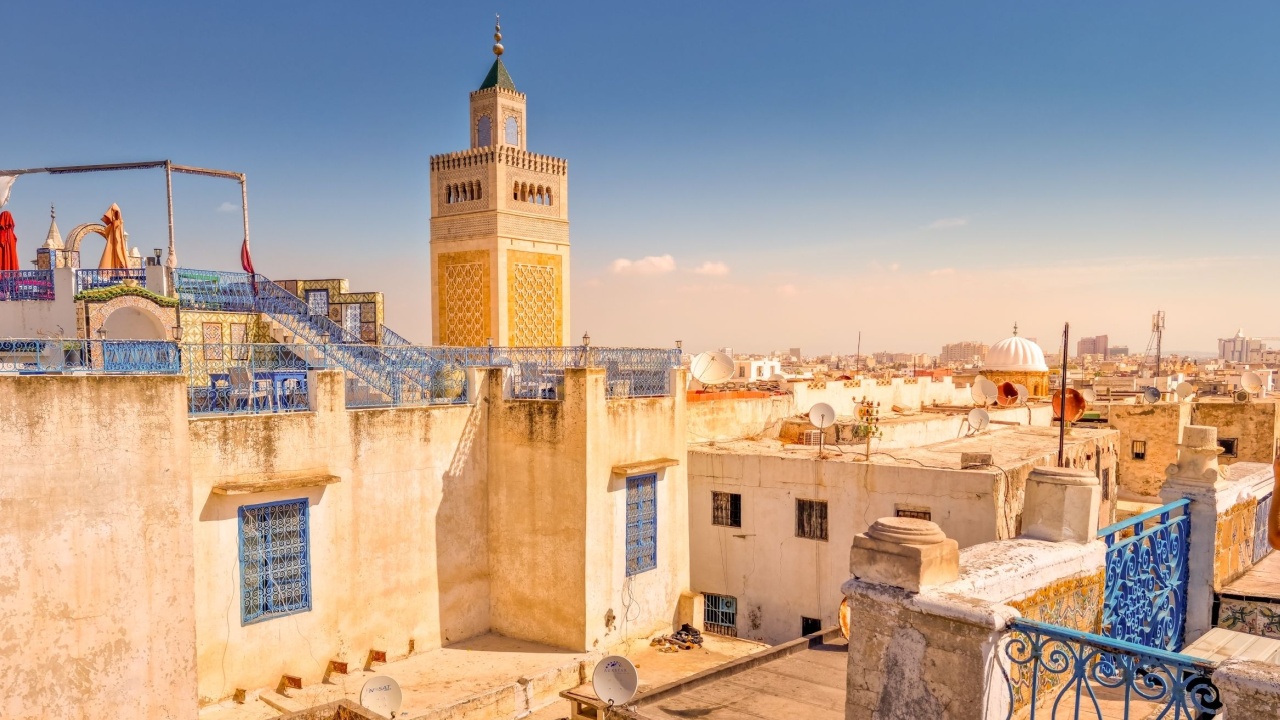
Image: Travel- FR / Shutterstock.com.
The post Tunisia’s Underdevelopment Problem appeared first on The National Interest.
Источник: nationalinterest.org