

«Данное сообщение (материал) создано и (или) распространено иностранным средством массовой информации, выполняющим функции иностранного агента, и (или) российским юридическим лицом, выполняющим функции иностранного агента»
 Topic: Artificial Intelligence (AI) Blog Brand: Techland Region: Americas, and Europe Tags: Anti-Trust, Digital Markets Act, European Union (EU), Google, and United States Why the EU’s Google Antitrust Case Is Misplaced in the AI Era December 24, 2025 By: Joseph V. Coniglio
Share
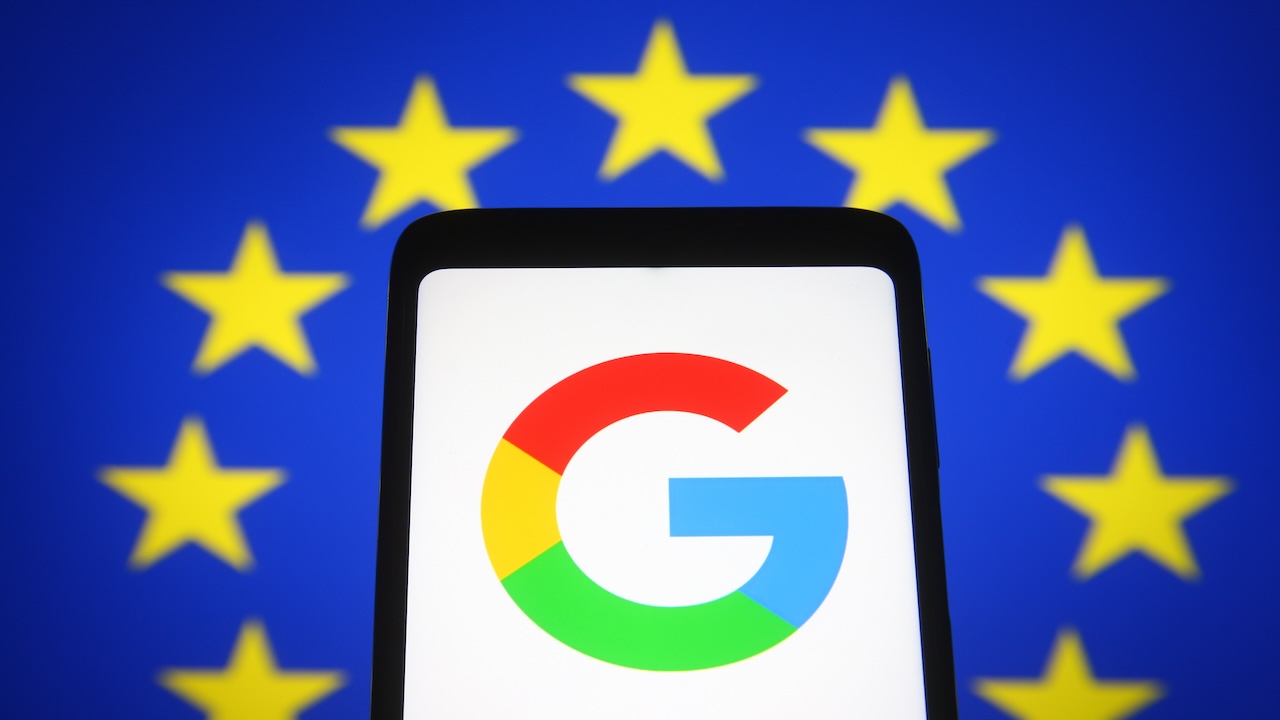
The EU’s latest antitrust investigation against Google misreads competitive AI markets, risks politicized enforcement, and could heighten transatlantic tensions amid intensifying US–China technological rivalry.
There are few real certainties in life. Two of the most famous are death and taxes. Another, less obvious verity is that every five years, the European Union (EU) opens a major antitrust investigation into Google.
In 2010, the European Commission began scrutinizing Google Search for allegedly favoring its own shopping services, an inquiry that produced a €2.42 billion penalty, as well as ultimately an investigation into Google’s search advertising business, which led to the Commission issuing a second €1.49 billion fine. Then, in 2015, the Commission launched yet another antitrust probe, this time targeting Google’s Android agreements. That case yielded a staggering over €4 billion judgment, the largest antitrust fine the Commission has ever imposed. And in 2021—after a brief delay while the Commission was busy separately reviewing Google’s acquisition of Fitbit—the EU commenced an investigation into Google’s ad tech suite, resulting in a €2.95 billion fine issued this past September.
As 2025 draws to a close, the Commission is thus right on schedule with its next Google antitrust inquiry, this time in artificial intelligence, the new hot area where the company competes.
The EU Takes Its Long-Running Anti-Google Campaign into AI
The Commission is evaluating whether Google is abusing its dominance by using content from web publishers and YouTube creators to train its artificial intelligence (AI) models. Specifically, the Commission is concerned that Google may not be adequately allowing publishers and content creators to refuse the use of their data for AI training and failing to provide “appropriate” compensation when such data is used.
At the outset, any claim that Google holds a dominant position in a market comprised of AI foundation models should raise eyebrows. Google competes not only with other large US tech firms such as Meta and X, but also with fast-growing AI developers such as OpenAI and Anthropic, along with strong European players such as Mistral AI.
That the AI space is growing and dynamic, also shouldn’t be news in Europe. A study issued earlier this year by the European Economic and Social Committee found not only that AI models are where “the largest investments are being made” but that “the enormous investments made by US-based firms does not appear to have translated into a long-term competitive advantage.”
AI is even eroding Google’s position in the very market that continues to preoccupy European regulators: search. OpenAI’s chief financial officer recently stated that AI is “blowing open the search markets,” noting that the company doubled its search share from roughly six percent to 12 percent in just six months. Indeed, the numbers speak for themselves, as in 2024, Google’s own US market share fell consistently below 90 percent for the first time since 2015, with the traditional search market predicted to shrink by 25 percent by 2026.
Google’s Conduct Is Not Anticompetitive
To be sure, there are genuine questions surrounding how third-party data is used to train AI models. In general, leveraging high-quality external data is pro-competitive, as it improves model performance and benefits users. At the same time, firms that train AI models using copyrighted material can illegally infringe intellectual property rights. Likewise, publishers and content creators that restrict the use of their data for AI training through contractual terms can pursue breach-of-contract claims if those terms are violated.
With this in mind, it’s far from clear why Google’s alleged conduct is harmful. In its press release, the Commission did not suggest Google was violating intellectual property rights. What’s more, mandating universal publisher opt-outs for AI training would only slow model development and degrade consumer-facing products. And YouTube creators voluntarily upload content under terms and conditions that allow Google to use data for AI training, foreclosing any plausible breach-of-contract claim.
More to the point, a real antitrust issue appears elusive. Competition law focuses on collusive or exclusionary conduct—behavior that allows firms to increase their market power at the expense of consumers. The Commission’s new would-be allegations against Google, however, do not fall into either category: Google is not coordinating with rivals, nor is it excluding them from the market. Rather, it is using data obtained from counterparties to improve its own products in a competitive, fast-moving market.
As a result, the Commission is invoking its rarely used authority to police “exploitative” offenses by assessing whether Google’s practices reflect “unfair terms and conditions”—a theory well beyond what US antitrust law permits under the Sherman Antitrust Act. This itself is becoming a troubling pattern when it comes to EU lawsuits against US tech firms. Just last year, the Commission imposed a €1.8 billion fine on Apple for “unfair” anti-steering rules—conduct that US courts have correctly found does not violate federal antitrust law.
Antitrust in an Age of Strategic Competition
Fortunately for Google, the geopolitical context has changed from what it was during the EU antitrust lawsuits of years past. In particular, the current US administration is actively pushing back against regulations like the Digital Markets Act(DMA) that target American technology companies such as Google, with the US Trade Representative recently warningthat it would use “every tool at its disposal to counter these unreasonable measures.”
While it is true that competition law enforcement is not regulation, here the Commission appears to be using antitrust enforcement as a substitute for the latter—positioning itself to dictate what constitutes “appropriate compensation” and acceptable terms and conditions between Google, publishers, and creators. Even the DMA generally stops short of going this far by primarily banning Google from engaging in certain forms of potentially exclusionary conduct, such as self-preferencing, not setting prices, or contractual terms.
In an era of intensifying techno-economic competition with China, preserving Western global leadership is critical, and the transatlantic alliance between the United States and Europe is more important than ever. Working together is a two-way street. By closing this latest investigation into Google without issuing a statement of objections, the EU would exercise sound enforcement discretion and send a positive signal that the reflexive targeting of Google in digital markets will not define its competition policy in the age of AI.
About the Author: Joseph V. Coniglio
Joseph V. Coniglio is the senior counsel and director of Antitrust and Innovation Policy at the Information Technology & Innovation Foundation.
Image: viewimage/shutterstock
The post Why the EU’s Google Antitrust Case Is Misplaced in the AI Era appeared first on The National Interest.
Источник: nationalinterest.org