

«Данное сообщение (материал) создано и (или) распространено иностранным средством массовой информации, выполняющим функции иностранного агента, и (или) российским юридическим лицом, выполняющим функции иностранного агента»
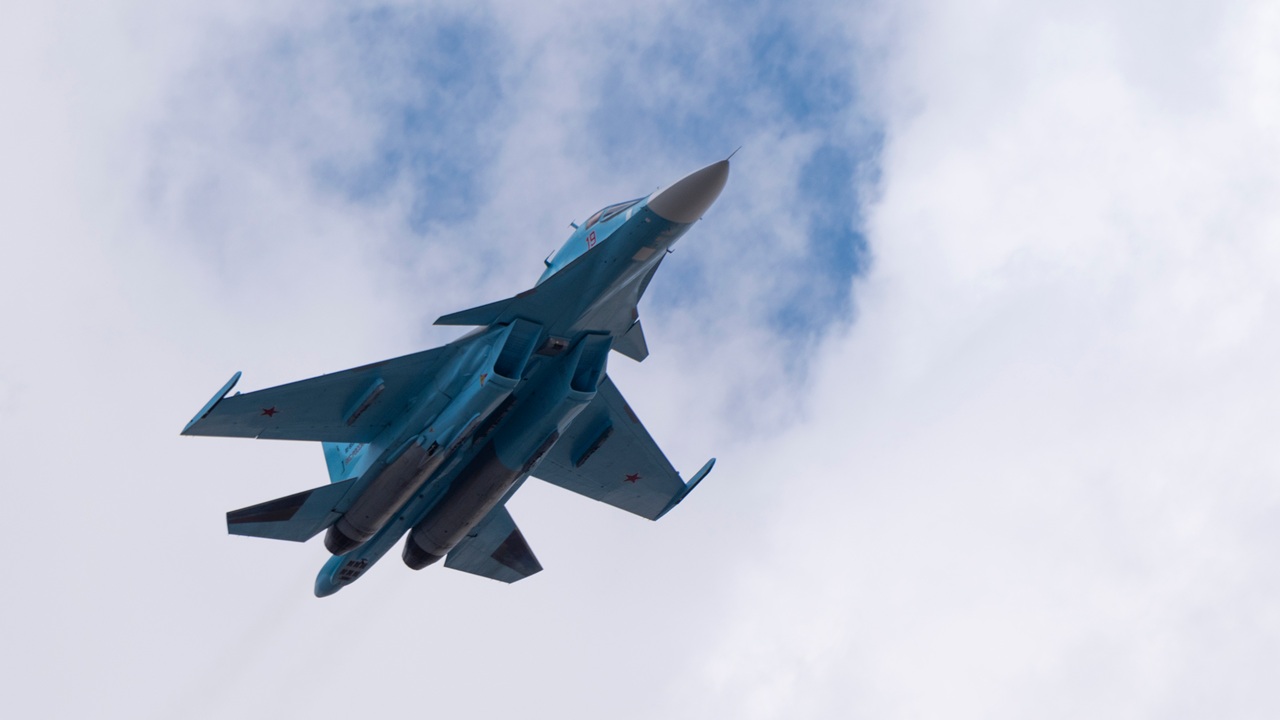 Topic: Air Warfare Blog Brand: The Buzz Region: Americas Tags: Military Readiness, Russia, South America, Su-30, US Air Force, and Venezuela Do Venezuela’s Su-30MK2 Fighter Jets Stand a Chance Against America? December 8, 2025 By: Harrison Kass
Share
On paper, Venezuela’s Russian-made Su-30MK2 fighter jets are among the finest in the world—but the country’s ongoing economic crisis has grounded most of them.
The crown jewel of the Venezuelan Air Force is the Su-30MK2 Flanker, arguably the most capable combat aircraft in all of Latin America. The government of Hugo Chavez bought the then-cutting edge fighters in the mid-2000s during its pivot towards cooperation with Russia, and Venezuela’s operation of the Flankers represents its attempt to assert themselves regionally. Yet, despite being a generally capable aircraft, Venezuela’s Flanker fleet faces serious operational challenges today.
What to Know About the Su-30MK2 Flanker Fighter Jet
- Year Introduced: 2004 (Su-30MK2 variant)
- Number Built: ~90+ (all MK2 export units; Venezuela has 24)
- Length: 22 m (72 ft 10 in)
- Wingspan: 14.7 m (48 ft 3 in)
- Weight (MTOW): ~34,500 kg (76,000 lb)
- Engines: Two AL-31F turbofans (27,500 lbf each with afterburner)
- Top Speed: 2,120 km/h (1,320 mph) / ~Mach 2.0
- Range: ~2,900 km (1,800 mi); combat radius ~1,287 km (800 mi); ferry >4,800 km (3,000 mi) with tanks
- Service Ceiling: ~17,000 m (56,000 ft)
- Loadout: 12 hardpoints; ~7,980 kg (17,600 lb) payload; supports R-27, R-77, R-73, Kh-31, Kh-59, guided bombs
- Aircrew: 2 (pilot + WSO)
Derived from the Soviet Su-27, one of the Cold War’s premier air superiority fighters, the Su-30 line is a post-Soviet aircraft developed for revenue generation on the export market. The Su-30 added a twin-seat configuration, increased range, improved avionics, and multirole strike capability. The platform generated interest abroad, securing purchases from India, China, Malaysia, Algeria, and eventually, Venezuela, who purchased the Su-30MK2, a variant optimized for maritime strike and long-range patrol.
Between 2006 and 2008, Venezuela purchased 24 Flankers; relations with the United States had deteriorated, causing Washington to cut off parts support for the F-16s shipped to Venezuela in decades past. The pivot away from the US, towards Russia, was not just operational but political and symbolic, giving Venezuela a modern heavy fighter, strengthening ties with Russia (who provided pilot training, maintenance packages, and weaponry), and signaling independence from Washington’s backyard hegemony. The Flanker fleet would become the backbone of Venezuelan air power.
For avionics, the Flanker carries the N001V radar, with strike and air-to-air modes, and IRST with a helmet-mounted sight. The Flanker is compatible with the R-77 and R-27 air-to-air missiles, Kh-31 and Kh-59 anti-ship missiles, and a variety of guided bombs, rockets, and gun pods. The powerful Flanker excels at long range, heavy payload missions, while offering respectable BVR capabilities.
Why the Flanker Won’t Save Venezuela from the US Air Force
Venezuela primarily uses their Flankers for air sovereignty patrols, especially around the Colombian border, Caribbean coastline, and the Orinoco Belt energy regions. Occasionally, the Flanker is used for intercepts of suspicious aircraft (drug trafficking, unidentified flights). But there is only limited evidence of complex multirole training. And, more ominously for Caracas’ defense, some of the aircraft are believed to be grounded due to spare-parts shortages.
Venezuela’s economic collapse has starved the Air Force of maintenance budgets, naturally. Dependence on Russia for spare parts has been unreliable, too—with slow delivery, high costs, and complications from an intensive sanctions scheme. At least two Flankers were lost in crashes (2015 and 2019), raising questions about maintenance standards. Fuel scarcity and logistical problems reduce sortie generation. Flight hours are limited, which degrades pilot skill, which lowers the proficiency needed for complex missions. Operational readiness is believed to be well below 50 percent—and perhaps even under 30 percent.
Strategically, the Flanker fleet still has value. The fleet is a prestige signal for Venezuela, unmatched in Latin America, offering deterrence against regional rivals. And the Flanker does give Venezuela the ability to monitor shipping lanes, Colombian air space, and US naval activity. But low readiness makes the fleet a paper tiger in the event of a shooting war. And with no modern enablement aircraft to support the jets, such as AWACS planes or aerial refuelers, the Flanker fleet’s potential is significantly hampered.
About the Author: Harrison Kass
Harrison Kass is a senior defense and national security writer at The National Interest. Kass is an attorney and former political candidate who joined the US Air Force as a pilot trainee before being medically discharged. He focuses on military strategy, aerospace, and global security affairs. He holds a JD from the University of Oregon and a master’s in Global Journalism and International Relations from NYU.
Image: Shutterstock / aarrows.
The post Do Venezuela’s Su-30MK2 Fighter Jets Stand a Chance Against America? appeared first on The National Interest.
Источник: nationalinterest.org