

«Данное сообщение (материал) создано и (или) распространено иностранным средством массовой информации, выполняющим функции иностранного агента, и (или) российским юридическим лицом, выполняющим функции иностранного агента»
 Topic: Human Rights, Oil and Gas, and Trade Blog Brand: Silk Road Rivalries Region: Eurasia Tags: Caucasus, Central Asia, Georgia (country), Georgian Dream, Middle Corridor, Russia, Sanctions, and Ukraine War How Georgia Became Russia’s Back Door December 5, 2025 By: Nicholas Chkhaidze
Share
Unlike the other Caucasus nations, Georgia remains in thrall to the influence of Russia and other US adversaries.
Russia’s war economy continues to survive in part due to transit routes and financial loopholes in countries not officially under Western sanctions. One such enabler is Georgia under the Georgian Dream (GD) regime, which has facilitated sanctions evasion through trade, banking, and energy corridors, allowing Moscow to bypass Western pressure and prolong the war in Ukraine. The same regime that once positioned Georgia as a beacon of democracy and a steadfast ally of the United States in the South Caucasus is now actively drifting toward the camp of America’s adversaries.
Through repressive measures, mass detentions, and the passage of legislation designed to ban pro-Western political parties and sideline opposition figures, the GD regime seeks to consolidate control while portraying itself as the guardian of “national sovereignty.” In practice, these actions represent the systematic dismantling of pluralism and the establishment of a one-party state under the pretence of rooting out so-called “foreign agents.”
As of mid-October, more than a hundred opposition activists, journalists, and demonstrators have been arrested, making Georgia one of the countries with the highest number of political prisoners per capita in Europe, surpassing even Russia. The Constitutional Court, already under the influence of the ruling party, is expected to validate these draconian laws, erasing what remains of democratic representation and cementing Georgia’s slide into authoritarianism.
What is unfolding in Georgia is not a local political crisis but a deliberate geopolitical realignment—an erosion of a former democratic ally that now enables Russia’s war machine and undermines US strategic interests at the crossroads of Europe, the Middle East, and Central Asia.
Georgia: From Western Ally to Adversary
Since its independence, Georgia has been crucial in ensuring that Washington’s strategy in the South Caucasus is executed smoothly, and in that framework, Georgia has always been considered a democratic, pro-Western ally for US influence, energy diversification, and regional security framework. However, now that foundation has eroded.
Under the Georgian Dream regime, anti-Western and specifically anti-American rhetoric has become official policy. Senior figures, including the head of Georgia’s State Security Service, have accused the United States of plotting coups, funding opposition movements, and trying to “drag Georgia into war with Russia by opening up a second front.” State-owned and government-controlled media have regularly broadcast and pushed anti-Western narratives, while civil society and Western-funded NGOs have repeatedly faced legal and political harassment, which echoes Russia’s “foreign agent” laws.
Georgian Dream’s alignment with adversaries of the United States—Russia, China, and Iran—has become stronger. Georgia and China have established a strategic partnership and expanded economic cooperation under the Belt and Road framework. At the same time, Tbilisi either abstains or makes its position soft on critical international resolutions that condemn Moscow’s aggression. Meanwhile, despite Iran’s important role in sanctions evasion, Georgia allows Tehran to use Georgian corridors and transit routes to assist Russia in commerce and trade.
As Secretary of State, Marco Rubio recently stated to the Senate Foreign Relations Committee:
“The goal of the United States is our national interest. So, we will look at that and say: Is it in our national interest to have an anti-American government governing an important part of the world? And if not, we’ll take appropriate actions to impose costs on that government.”
This question should be taken seriously by Washington, since Georgia’s current political and foreign policy vector doesn’t take into account the interests of the United States and undermines its key objectives in the South Caucasus, ranging from sanctions enforcement and energy security to countering the malign influence of Beijing, Moscow, and Tehran.
Georgia and the Middle Corridor
Democracy is not the only issue at stake. Georgia is the backbone of the Middle Corridor, a trans-Eurasian trade and energy route linking Central Asia and the Caspian Sea to Europe through the South Caucasus and the Black Sea. This corridor is crucial for bypassing both Russia and Iran, giving the United States and its allies a secure, sanction-compliant alternative to routes compromised by authoritarian regimes.
Without Georgia, the US strategy in the South Caucasus remains incomplete, a fact that has become both urgent and undeniable. Yet, anti-Western policies by the Georgian Dream government now place this vision in jeopardy. By deepening its alignment with Russia and China, the Ivanishvili regime undermines US-backed infrastructure and energy projects, including the Baku-Tbilisi-Ceyhan (BTC) pipeline, the Southern Gas Corridor, and trans-Caucasian routes for critical minerals and rare earths. It has even disregarded US sanctions policy: the Russian company Russneft has supplied its first oil cargo to a new Georgian refinery, directly weakening Washington’s energy sanctions against Moscow.
These developments must be viewed within a wider geopolitical context. Russia, Iran, and China have formed a revisionist axis, coordinating in energy, finance, and technology to evade US-led sanctions regimes. By safeguarding enforcement integrity in the South Caucasus—where Georgia is a key transit hub—the MEGOBARI Act complements the Sanctioning Russia Act, reinforcing US efforts to deny Tehran and Beijing critical access points to Russia’s energy and financial systems. It also promotes a rules-based global order by ensuring that Washington holds not only primary aggressors but also secondary facilitators accountable. This comprehensive approach strengthens the coherence and deterrent value of US sanctions, ensuring that the South Caucasus remains a corridor of freedom and stability—not a lifeline for Moscow, Tehran, and Beijing’s authoritarian ambitions.
Georgia Is out of Step with the Rest of the Caucasus
The geopolitical framework in the South Caucasus is shifting rapidly. The recently signed peace deal between Azerbaijan and Armenia has opened a unique opportunity for a regional environment that benefits US interests. Baku and Yerevan aim to have a more comprehensive cooperation structure with the West and disengage from Moscow.
Armenia, which has been considered a Russian client state for a long time, is now resisting the Kremlin, withdrawing from the CSTO, and participating, even hosting military training with its Western partners. Azerbaijan is now considered a pragmatic, trusted actor in a renewed regional framework in the South Caucasus, eager to deepen trade and energy relations with the EU and the United States.
At this point, Georgia is the only anti-Western actor in the South Caucasus, sympathetic to the influence of revisionist states, which weakens a pro-Western alliance that could be leveraged by the United States to ensure that the Iranian smuggling network is countered, energy and transit corridors are secured, and a market-positioned, democratic block at the heart of Eurasia. If Georgia is lost, then the United States not only loses a partner in the South Caucasus but a physical pathway for its broader Eurasian connectivity strategy.
How to Support Georgia’s Democracy
In his speech earlier this year in Munich, Vice President JD Vance warned that “you cannot win a democratic mandate by censoring your opponents or putting them in jail. Whether that’s the leader of the opposition, a humble Christian praying in her own home, or a journalist trying to report the news.”
Today, Georgia fits that picture perfectly. The Georgian Dream regime has transformed what was once a model of democratic progress into a laboratory of repression, silencing dissent, imprisoning opposition leaders, and aligning itself with America’s adversaries.
This is precisely why Washington must act. Passive policies toward authoritarian regimes carry tangible costs, especially when those regimes operate in regions of high strategic value. Without renewed American engagement, Russia will consolidate its control over trade and information networks in Georgia and across the South Caucasus. China will exploit its growing influence by expanding its infrastructure and debt footprint along the Black Sea, embedding itself in projects of geoeconomic and strategic importance. Iran will exploit Georgia’s permissive environment to facilitate new sanctions-evasion schemes.
To prevent this scenario, the United States should adopt a clear, assertive policy grounded in both strategic realism and democratic values:
1. Impose targeted sanctions through the MEGOBARI Act and the Global Magnitsky framework against Georgian officials responsible for political persecution, corruption, and the erosion of democratic institutions. The MEGOBARI Act, designed to complement the Sanctioning Russia Act, would close sanctions-evasion loopholes in the South Caucasus and hold accountable those enabling Moscow, Tehran, and Beijing through trade, finance, or energy cooperation.
2. Invest strategically in the Middle Corridor alongside Georgia’s democratic forces, prioritizing logistics, energy, and digital connectivity projects that bypass Russia and Iran.
3. Deepen coordination with Armenia and Azerbaijan through trilateral or quadrilateral cooperation frameworks that include Georgia’s democratic representatives, conditional on a pivot away from authoritarian influence and toward transatlantic alignment.
4. Engage and empower Georgia’s pro-Western alternative, providing diplomatic recognition and tangible political support.
It is vital that the Trump administration and policymakers in Washington recognize that the Georgian Dream does not represent the will of the Georgian people. A vibrant and visionary alternative exists within Georgia’s pro-Western coalition. These democratic actors seek stronger transatlantic cooperation, the rule of law, and regional stability consistent with US interests.
By standing with these forces and investing in Georgia’s democratic future, the United States will reaffirm that it stands with its natural allies in the struggle for freedom. Doing so will not only secure Georgia’s place within the free world but also anchor American strategic influence in the South Caucasus, ensuring that the region remains part of a transatlantic order built on liberty, stability, and strength.
It is crucial to show strength and not allow this small, yet pivotal democracy at Russia’s doorstep to fall into the anti-American, revisionist camp, since if Georgia falls, it will send a signal far beyond Tbilisi, from Kyiv to Taipei, that the United States is no longer able to defend its partners on several fronts, when they’re most needed.
About the Author: Nicholas Chkhaidze
Nicholas Chkhaidze is a research fellow at the Topchubashov Center, a think tank based in Baku. His research focuses on Russia, Ukraine, the South Caucasus, and Russian private military companies. He obtained his bachelor’s degree in International Relations with honors from the International Black Sea University.
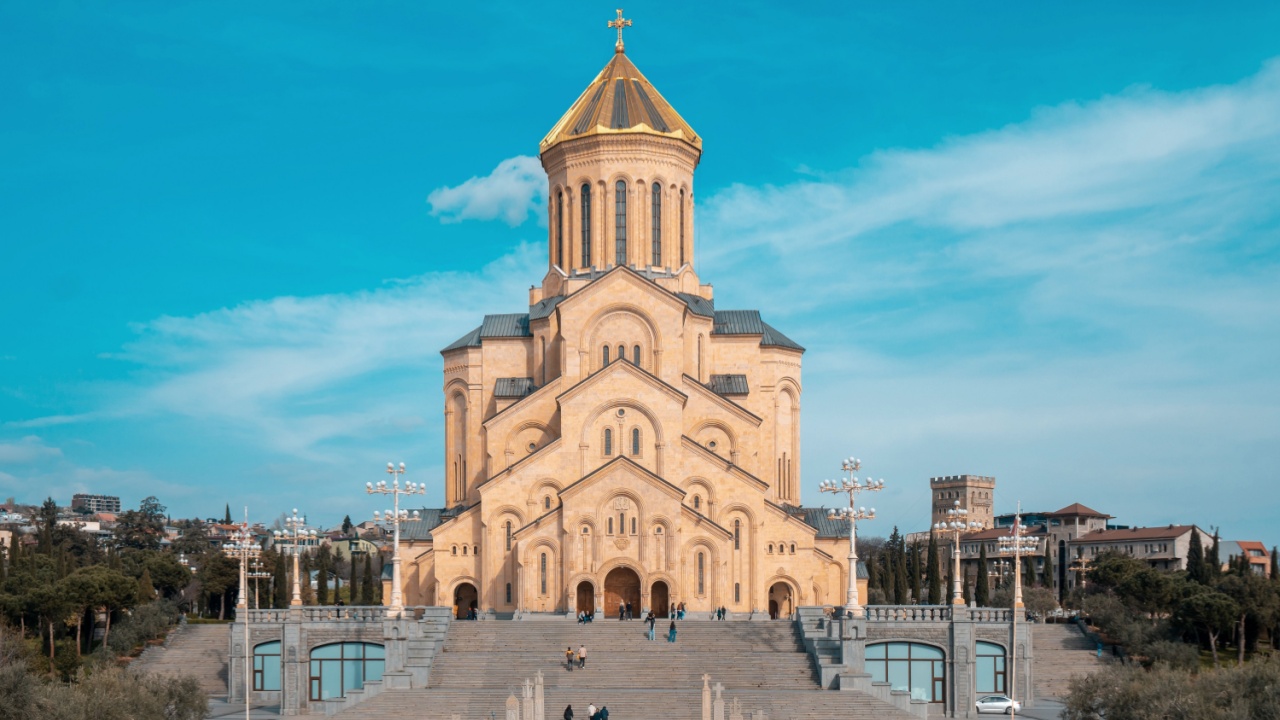
Image: k_samurkas / Shutterstock.com.
The post How Georgia Became Russia’s Back Door appeared first on The National Interest.
Источник: nationalinterest.org