
«Данное сообщение (материал) создано и (или) распространено иностранным средством массовой информации, выполняющим функции иностранного агента, и (или) российским юридическим лицом, выполняющим функции иностранного агента»
 Topic: Artificial Intelligence (AI), Critical Minerals, Oil and Gas, and Rare Earth Minerals Blog Brand: Techland Region: Americas, and Asia Tags: China, Data Centers, Energy Security, Great Power Competition, North America, United States, US-China Relations, and Yttrium The Hidden Supply Chain Risk in AI: US Reliance on China’s Yttrium April 9, 2026 By: Morgan Bazilian, Jahara Matisek, and Macdonald Amoah
Share
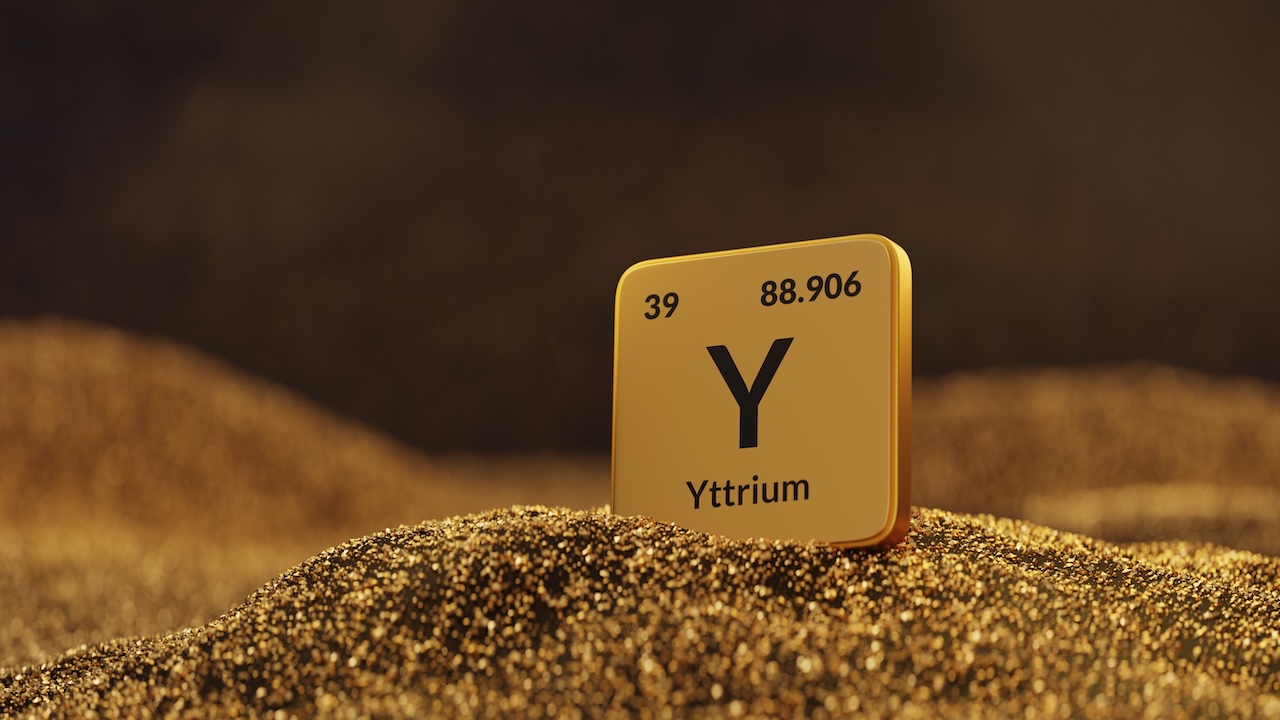
The future of the AI race will be shaped by control over obscure, high-performance materials, such as yttrium, essential for the buildout.
The biggest consequence of the artificial intelligence (AI) buildout, aside from the water, electrical, and mineral demands, is the scramble for gas turbines. Data centers, especially hyperscale AI centers, need power at an immense scale that many local grids cannot deliver, forcing developers to build their own large-scale natural gas generation in a race for compute. In the United States, natural gas production hit record highs in 2025, and turbine lead times are now five to seven years. What began as an electricity bottleneck becomes a manufacturing bottleneck, and ultimately, a materials bottleneck.
The vulnerability is within the machine itself. Modern turbines depend on material systems that can handle extreme thermal stress, and yttrium is the critical element in the coating architecture that makes this possible. Yttrium is also used to create yttria-stabilized zirconia (YSZ), the ceramic thermal-barrier coating that protects underlying metal from intense heat. In fact, the National Aeronautics and Space Administration (NASA) has noted that YSZ has become the dominant formulation for these applications, used in every new aircraft and ground-power turbine engine. This criticality of yttrium reveals an underlying industrial logic: small-volume materials can be major bottlenecks when they sit in a performance-critical layer with few substitutes and limited supply diversity.
This demand from hyperscale computing is now compounding the pressure on yttrium, as the element is also critical for high-temperature superconductors. In March 2026, Microsoft, Chevron, and others announced massive gas-fired projects to support new data-center developments. The growing demand for AI translates directly into more turbine orders, more advanced coatings, and greater pressure on the obscure material systems embedded within them.
China’s Yttrium Chokepoint in America’s AI and Defense Supply Chains
This supply chain is a national security issue. Yttrium’s market is unusually concentrated even by rare-earth standards. The US Geological Survey reports that for 2020 through 2023, 93 percent of yttrium-compound imports came from China. This is not a broad, liquid commodity market; it is a narrow chokepoint of minerals with an adversarial state controlling the mine, processing, refining, and distribution.
Beijing then took that concentration of rare earths and weaponized them in April 2025 when it imposed export controls, which led to US-bound shipments of yttrium products falling from 333 tons to just 17 tons over eight months. For commercial turbine manufacturers such as GE Vernova, already managing multi-billion-dollar backlogs, this poses an existential threat to production timelines. A sustained yttrium shortage does not just delay future orders, but also puts existing, high-value contracts for data centerand utility projects at risk, threatening a key sector of American advanced manufacturing.
This vulnerability extends directly to the defense industrial base and military readiness. The engines and certain parts of the F-35 and F-22 fighters, as well as the turbines of US Navy destroyers, all rely on the same yttrium-based coatings. A cutoff of yttrium undermines sustainment and military readiness. Every engine overhaul requires that turbine blades be inspected and recoated with YSZ powders. A shortage of this material would create a critical bottleneck at maintenance depots, grounding combat aircraft and extending naval shipyard periods for months. The readiness of America’s frontline military forces would be directly degraded not by combat, but by a decision made by China to withhold a single, obscure mineral.
Hitting the Physical Limits of Digital Power
This is a structural vulnerability embedded inside the very infrastructure of the AI economy.
There are, in principle, ways to reduce this exposure, but the timeline to solve them takes years, not months. While the Defense Production Act (DPA) has been invoked to spur domestic rare-earth projects, and companies such as ReElement Technologies plan to begin yttrium-oxide production, upstream output alone is insufficient. The real hurdle is downstream. Qualifying a new material for performance-critical applications like a jet engine turbine blade is a difficult and bureaucratic, multi-year process of proving its durability under thousands of hours of extreme stress. Supply chain resilience is more than just opening a new mine. It is a functioning, end-to-end industrial chain (from mine to processor to coating manufacturer) that can absorb a geopolitical shock without stalling critical production. America no longer has one.
The broader lesson is simple. The contest over computing power will not only be decided by who can finance the next data center or reserve the next turbine slot. It will also be shaped by who controls the obscure, high-performance materials without which those turbines cannot operate. The AI power race may look digital from the outside. Under the hood, it runs on ceramics, coatings, and a mineral supply chain that leads directly back to Beijing.
About the Authors: Morgan Bazilian, Jahara Matisek, and Macdonald Amoah
Morgan D. Bazilian is the director of the Payne Institute and professor at the Colorado School of Mines, with over 20 years of experience in global energy policy and investment. A former World Bank lead energy specialist and senior diplomat at the UN, he has held roles at NREL and in the Irish government, and advisory positions with the World Economic Forum and Oxford. A Fulbright fellow, he has published widely on energy security and international affairs.
Lt. Col. Jahara “Franky” Matisek (PhD) is a US Air Force command pilot, nonresident research fellow at the US Naval War College and the Payne Institute for Public Policy, and a visiting scholar at Northwestern University. He is the most published active-duty officer currently serving, with over 150 articles on industrial base issues, strategy, and warfare.
Macdonald Amoah is an independent researcher with interests across critical mineral supply chains, advanced manufacturing gaps, the industrial base, and the geopolitical risks in the mining sector.
DOD Disclaimer: The views of Lt. Col. Matisek are his own.
The post The Hidden Supply Chain Risk in AI: US Reliance on China’s Yttrium appeared first on The National Interest.
Источник: nationalinterest.org