
«Данное сообщение (материал) создано и (или) распространено иностранным средством массовой информации, выполняющим функции иностранного агента, и (или) российским юридическим лицом, выполняющим функции иностранного агента»
 Topic: Diplomacy Blog Brand: The Buzz Region: Americas, and Europe Tags: Donald Trump, Greenland, Iran War, NATO, Operation Epic Fury, Pete Hegseth, and United States Is NATO Headed for a Crack-Up? April 13, 2026 By: Peter Suciu
Share
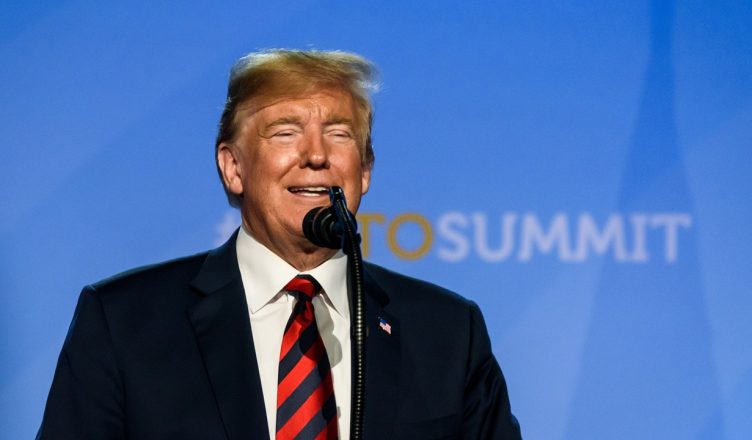
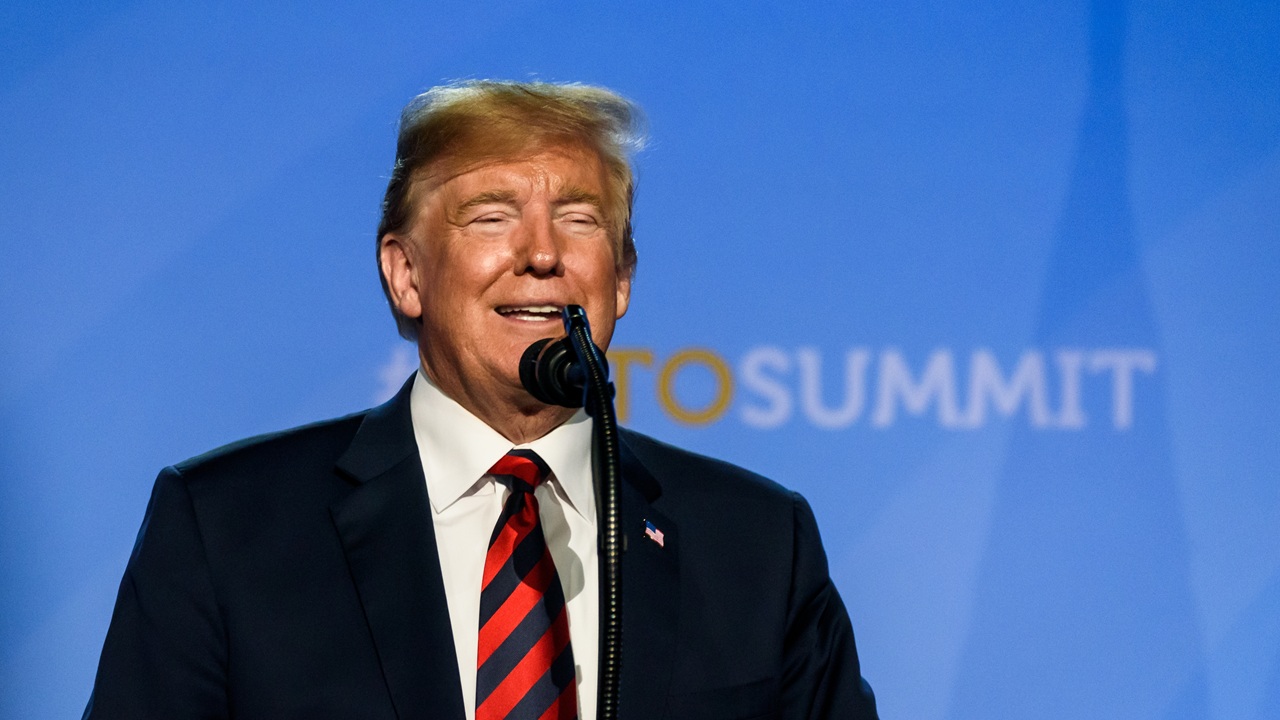
The Iran war has deepened long-running divisions between President Donald Trump and the European members of NATO—though US withdrawal from the alliance is in neither side’s interests.
Just 38 percent of Republicans and GOP-leaning independents believe the United States benefits from NATO, down from 49 percent last year, according to a new Pew Research Center survey. The poll also found that 60 percent of Americans don’t think they benefit much, or at all, from the international alliance.
The findings come as President Donald Trump and several of his key cabinet members have criticized European NATO members for refusing to support the US combat mission in Iran. It has been nearly six weeks since the start of Operation Epic Fury, and while Trump continues to send mixed messages about how long the war will last, America’s aims in the war, and even whether Iran has been truly defeated, Tehran has remained defiant.
The Strait of Hormuz, where roughly 20 percent of the world’s oil passes through, has remained largely closed since the beginning of the conflict, causing a massive spike in global energy costs. Trump has repeatedly called on Europe and Asia to help open the waterway.
On Tuesday evening, Trump announced that a deal had been reached, wherein the United States would suspend military operations for two weeks and Iran would reopen the strait during that time. However, there are concerns that the conflict could resume at any time.
Trump Has Always Disliked NATO—for Good (and Bad) Reasons
Trump has been critical of NATO for years, arguing that alliance members didn’t pay their fair share of defense costs. In fairness to Trump, this part is largely true. NATO members collectively agreed to spend 2 percent of their GDP on defense in 2014, but dragged their heels on doing so for years.
After Trump returned to office in 2025, defense spending increased across the board; every NATO nation except one agreed to raise that benchmark to 5 percent, and many European countries are on their way to achieving it—albeit sometimes through creative accounting based on an overly broad understanding of “defense spending.”
However, Trump has added insult to injury by incorrectly suggesting that NATO has never come to America’s aid. In fact, the only time that the Article 5 provision, which calls an attack on one to be an attack on all, was ever invoked was after the 9/11 terrorist attacks on New York City and Washington, DC. NATO troops bravely supported the US mission in Afghanistan, and more than 1,000 of them made the ultimate sacrifice in that effort.
Even as NATO members have criticized Trump’s words, the 47th president doubled down this winter, suggesting that NATO could not be relied upon. With the onset of Operation Epic Fury, he is now playing the “I told you so” card—implying that NATO should be aiding the United States, even as he made no effort to consult with the alliance or other US allies before launching the strikes on Iran.
Beyond the alliance not supporting the war in Iran, on Monday, Trump suggested it started with Denmark’s refusal to come to a deal over the transfer or sale of Greenland to the United States.
“It all began with, if you want to know the truth, Greenland,” Trump said during a White House press conference. “We want Greenland. They don’t want to give it to us. And I said, ‘Bye, bye.’”
Since returning to the office, Trump has repeatedly called for the United States to take control of the semi-autonomous island, even as its citizens have largely refused offers to become American citizens.
Trump has said on past occasions that Denmark is unable to adequately protect Greenland, which has prompted NATO to increase its presence.
Whose War Is Operation Epic Fury, Anyway?
During the 2025 election campaign, Trump vigorously opposed new foreign wars, claiming that presidential rival Kamala Harris was inclined to start them and he would attempt to stop them. Trump claimed, for instance, that he would end the conflict in Ukraine within “24 hours” if elected—a claim that he later backtracked from, claiming it was hyperbole.
Given Trump’s hostility to foreign wars, how did the United States end up in a war with Iran? Trump may have been persuaded to pursue the war after a meeting with Israeli prime minister Benjamin Netanyahu in February, in which Netanyahu argued that Iran was historically weak and US military strikes could easily overthrow the regime. After Netanyahu made his “hard sell,” according to The New York Times, other White House officials reportedly attempted to convince Trump that Israel was overstating the ease of the campaign, without success.
Attacking the Islamic Republic may have also been a longtime goal of Secretary of Defense Pete Hegseth, who carries distinct views that reflect his Christian faith—and sports many tattoos linked to the Crusades of the Middle Ages. The Jerusalem Cross on his chest, and the crusader slogan “Deus Vult” (God wills it), have sparked controversy due to ties to Christian nationalist and far-right extremist symbols.
Some commentators have accused Hegseth of seeking to stoke a crusade-like conflict—accusations hardly rebutted by his 2020 book American Crusade, which depicted Islam as the natural historic enemy of the West. (Another of Hegseth’s tattoos declares himself to be a “kafir,” or “infidel” in Arabic.) The defense secretary has called upon US troops to “lean into their faith” and to rely on God. In advance of the conflict, he prayed during a religious service in March at the Pentagon, stating that there will be “overwhelming violence of action against those who deserve no mercy.”
What Would NATO Look Like Without the US?
Even as Trump has suggested the US could withdraw from NATO, it wouldn’t be that simple. Under the 2024 National Defense Authorization Act (NDAA), Section 1250A, which was passed into law in 2023, withdrawal from NATO would require either a two-thirds vote in the Senate or an act of Congress.
The law explicitly prohibits a president from suspending, terminating, or withdrawing from the alliance.
Of course, there are many ways that Trump could effectively withdraw the United States from active participation in NATO without formally leaving.
“[Trump] could simply decide to bring troops home, cease supplying NATO commands and institutions with personnel—some of which is already happening—and even, to be very dramatic, decide not to staff the position of Supreme Allied Commander Europe, a military post that always goes to an American,” German public broadcaster Deutsche Welle (DW) wrote.
Europe has already considered what Trump’s comments mean for its future defense. The United States is the largest NATO member and has the most advanced and capable weapons.
Many European nations are already increasing their defense spending and cooperating even more closely than during the Cold War. The alliance has also seen expansion, with Finland and Sweden joining, despite being non-aligned nations throughout the Cold War.
Still, the US would suffer too if it were to leave NATO. Its standing in the world would be diminished, and it would lose access to key bases in Europe. Moreover, there is no guarantee that the US would stop at NATO; it might decide to pull its troops from other nations, including those in the Middle East and Asia, as well. Without bases in Europe and Asia, it would be hard, if not impossible, for the US military to conduct combat missions, including those underway in Operation Epic Fury.
The US might also lose foreign markets for its modern main battle tanks (MBTs), combat aircraft, and other platforms. That would be bad news for the US aerospace and defense industry, which remains the world’s largest. Without the advantages provided by economies of scale, some of the platforms would become more expensive for domestic use.
The F-35 Lightning II is a global success because of foreign partnerships, notably in NATO—whereas the US Air Force couldn’t really afford the F-22 Raptor, as it wasn’t offered for sale abroad.
Can NATO Survive Without the US—or Vice Versa?
Europe might be weaker without the United States in NATO, but the US would be weaker without allies. Beyond the economic reasons, there are other considerations.
The world hasn’t seen a truly major conflict in 80 years, but it was an alliance system and the threat of mutually assured destruction that kept the peace.
Europe suffered deeply through two World Wars, and might not want to take part in a third one, where Russia and China decide to knock the United States off its perch as the top dog. Without allies, the US doesn’t have the reach to fight numerous threats at once, as it can barely handle the strain from a sustained air campaign against Iran.
About the Author: Peter Suciu
Peter Suciu has contributed to dozens of newspapers, magazines and websites over a 30-year career in journalism. He regularly writes about military hardware, firearms history, cybersecurity, politics, and international affairs. Peter is also a contributing writer for Forbes and Clearance Jobs. He is based in Michigan. You can follow him on Twitter: @PeterSuciu. You can email the author: Editor@nationalinterest.org.
The post Is NATO Headed for a Crack-Up? appeared first on The National Interest.
Источник: nationalinterest.org