
«Данное сообщение (материал) создано и (или) распространено иностранным средством массовой информации, выполняющим функции иностранного агента, и (или) российским юридическим лицом, выполняющим функции иностранного агента»
 Topic: Oil and Gas, and Trade Blog Brand: Energy World Region: Americas, Asia, and Middle East Tags: China, Donald Trump, Iran War, Liquefied Natural Gas (LNG), North America, United States, US-China Relations, and Xi Jinping How China’s Energy Needs Are Driving Its Push for Peace in the Middle East April 13, 2026 By: Scott B. MacDonald
Share
China’s push for stability in the Middle East reflects energy dependence and economic pressure, as Beijing seeks to manage trade tensions and reset relations with the United States.
China has been critical of the US war against Iran and remained aloof from the diplomacy taking place in Islamabad—until very recently. In early April, China officially entered the talks, such as they are, alongside other concerned parties, including Saudi Arabia, Turkey, and Egypt. China’s role soon became apparent as it emerged as a force in helping broker a two-week ceasefire between Iran and the United States, something strongly suggested by President Donald Trump. Although China would probably prefer its US archrival bogged down in another war, Beijing has its own reasons for seeing the Persian Gulf at peace. The usual platitudes about the need for dialogue and negotiations aside, China needs some type of stability in the Persian Gulf for its economic supply chains, and if relative calm can be restored, it could help reset relations with the United States.
China’s Dependence on Middle East Oil and LNG
Oil looms large in Chinese geoeconomic considerations. The Asian giant is heavily dependent on imported oil and natural gas. According to Columbia University’s Center on Global Energy Policy, in 2025 China imported close to half of its crude oil and one-third of liquified natural gas (LNG) from the Middle East. The three major Middle Eastern sources of oil are Saudi Arabia, Iran, and Iraq. Although Iran has been under US economic sanctions for the sale of its oil, the analytics firm Kpler estimates that China imported 1.38 million bpd of crude oil from Iran in 2025. Indeed, China is Iran’s biggest customer for its oil (buying 90 percent of its exports) and overall, its lead trade partner.
The inability of regular commerce to transit the Strait of Hormuz and the damage to oil and gas facilities in the United Arab Emirates (UAE), Kuwait, Saudi Arabia, and Qatar are not just inconveniences; they are issues of Chinese national security. China has a substantial oil stockpile, estimated at 1.2 billion barrels as of early January, around a four-month supply, according to Kpler. However, a prolonged dislocation in the Persian Gulf and the knock-on effects on the Chinese economy could force changes in energy policy, including reduced use of liquefied natural gas (LNG) and oil, greater use of coal for power generation, and more pressure to advance faster on using renewables.
Another option would be to impose greater conservation, an easy option in an authoritarian political system.
China’s sensitivity to energy issues came up in the March 2026 meetings of the National People’s Congress. In the country’s latest Five-Year Plan, starting in 2026, the government plans to increase its oil reserves by adding and expanding national storage bases.
China-US Trade Tensions, Tariffs, and Export Declines
There is also a China-United States angle to Beijing’s involvement in the peace talks. Simply stated, China needs a reset in its relations with the United States. In 2022, China’s exports to the United States stood at $536.3 billion; in 2025 Chinese exports fell to $309.4 billion. The US balance of trade deficit with China also dropped from a high of $418 billion in 2018 to $202.1 billion in 2025. Tariffs implemented by both the Biden and Trump administrations have had a sting.
This has left the landscape more challenging for Beijing. US trade is important for economic growth, and the United States could use cheaper Chinese goods to help with the affordability issue. At the same time, it appears that the Chinese government prefers trying to sell more exports to the United States than undertaking the more arduous tasks of cleaning up the real estate sector, bolstering the domestic safety net, contending with youth unemployment (16.9 percent in November 2025), and freeing up the private sector. The real estate sector is a massive problem as it encompasses the Chinese banking sector, construction companies, local governments, and homeowners. Considering the above, China does not need a prolonged energy problem or the loss of important Middle Eastern markets. While President Xi Jinping is no doubt aware of the need to address these issues, they are politically complicated, raising the potential for social unrest, something deeply feared by the Communist Party.
US Economic Pressures: Inflation, Tariffs, and Political Constraints
For his part, President Donald Trump faces the potential for rising inflation due to higher energy costs, the possibility of slower economic growth, and disconnect among a sizable part of the population over the Iran War. While the Trump tariffs have succeeded in reducing the trade deficit with China and have given the US government a substantial source of revenue, 66 percent of Americans believe tariffs reduce the affordability of everyday items, including food, healthcare, and transportation, according to Gallup. A reset with China might provide the Trump administration a little more leeway in continuing to reduce the trade imbalance, but also provide some flexibility on certain key consumer items. It is worth noting that the reset with China is being led by the US Secretary of the Treasury Scott Bessent, not a national security official.
The Upcoming Xi-Trump Summit
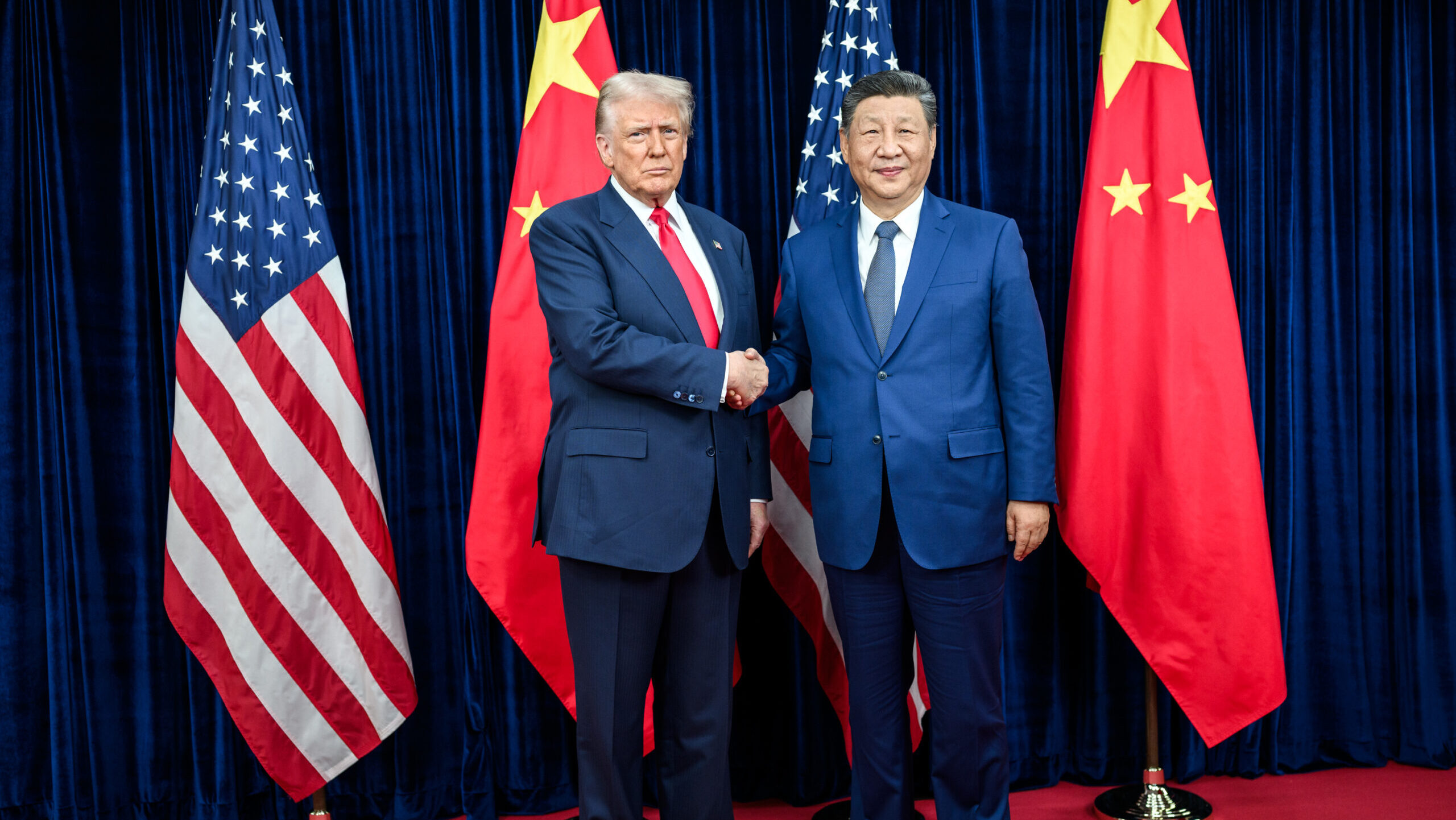
In mid-May, Presidents Xi Jinping and Donald Trump will hold a summit. Tough issues are on the menu, including trade, Taiwan, rare earth minerals, and China’s heavy engagement in Latin America and the Caribbean, a region seen by the Trump White House as its sphere of influence. Venezuela, another source of Chinese oil, may also be on the table, given the US ouster of the pro-Chinese President Nicolás Maduro and the development of stronger US-Venezuelan ties, including the export of Venezuelan crude to US refineries and US oil companies active in the country. In this, China has been displaced as Venezuela’s “significant other”.
China and the US will find the May 2026 discussions easier if the Iran War is not hanging over their heads. China-US relations have had considerable ups and downs in recent years; a less volatile relationship between the world’s two largest economies would benefit them as well as the rest of the world. This does not mean that the Sino-American relationship abandons its rivalry, but the discourse and economic interaction could be smoother. In this context, China’s willingness to play a constructive role in the Iran War is a positive step with larger consequences.
About the Author: Scott B. MacDonald
Dr. Scott MacDonald is the chief economist for Smith’s Research & Gradings and a fellow with the Caribbean Policy Consortium. Prior to those positions, he worked for the Office of the Comptroller of the Currency, Credit Suisse, Donaldson, Lufkin and Jenrette, KWR International, and Mitsubishi Corporation. His most recent book is The New Cold War, China and the Caribbean (Palgrave Macmillan 2022).
The post How China’s Energy Needs Are Driving Its Push for Peace in the Middle East appeared first on The National Interest.
Источник: nationalinterest.org