
«Данное сообщение (материал) создано и (или) распространено иностранным средством массовой информации, выполняющим функции иностранного агента, и (или) российским юридическим лицом, выполняющим функции иностранного агента»
 Topic: Air Warfare, and Diplomacy Blog Brand: Silk Road Rivalries Region: Asia, and Middle East Tags: Afghanistan, Iran, Iran War, Israel, MENA, Pakistan, Persian Gulf, Qatar, South Asia, Strait of Hormuz, and United States Can Pakistan Mediate the Iran War? April 2, 2026 By: Qamar-ul Huda
Share
Pakistan will struggle to reassure deep Iranian doubts about the credibility of US diplomacy in negotiating a ceasefire.
After three-and-a-half weeks of war between Iran and the United States as well as Israel, both sides rejected peace plans proposed by the other. The US plan offered by Special Envoy Steve Witkoff and Vice President JD Vance on March 25 demanded that Iran shutter its nuclear program, end ballistic missile production, and open the Strait of Hormuz in return for discussing the potential reduction of sanctions. Pakistan delivered this plan to its Iranian counterparts.
Iran not only rebuked the US plan but also offered a counter plan, which demanded an end to acts of aggression, payment of war damages, an end to strikes on its proxy groups across the region, and recognition of Iranian sovereignty over the Strait of Hormuz.
During these diplomatic talks, the United States sent 2,000 paratroopers from the 82nd Airborne Division and 2,500 Marines aboard several Navy ships to the region. The deployment has fueled speculation that the United States will attack and seize Kharg Island, which is vital to Iran’s oil production and distribution. On March 13, the United States bombed the Persian Gulf island, hitting its military defenses, but leaving the energy infrastructure intact.
Since March 2025, Iran has engaged in two significant diplomatic processes with the United States, with each abruptly ending due to US-Israeli military actions. Accordingly, Tehran no doubt heavily distrusts direct negotiations with the United States and, by extension, the Gulf states that host US military infrastructure.
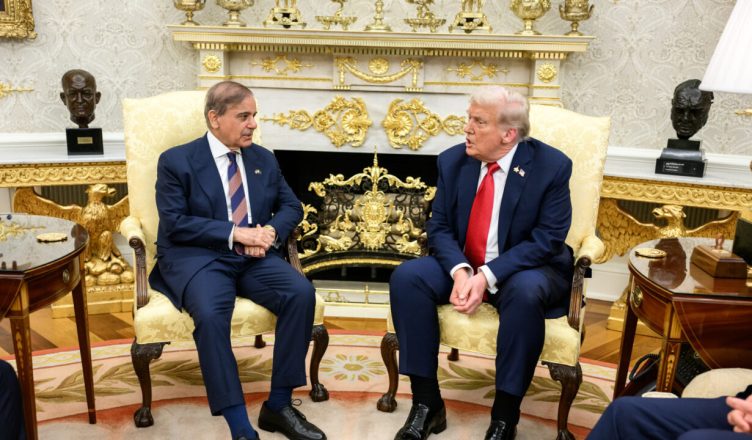
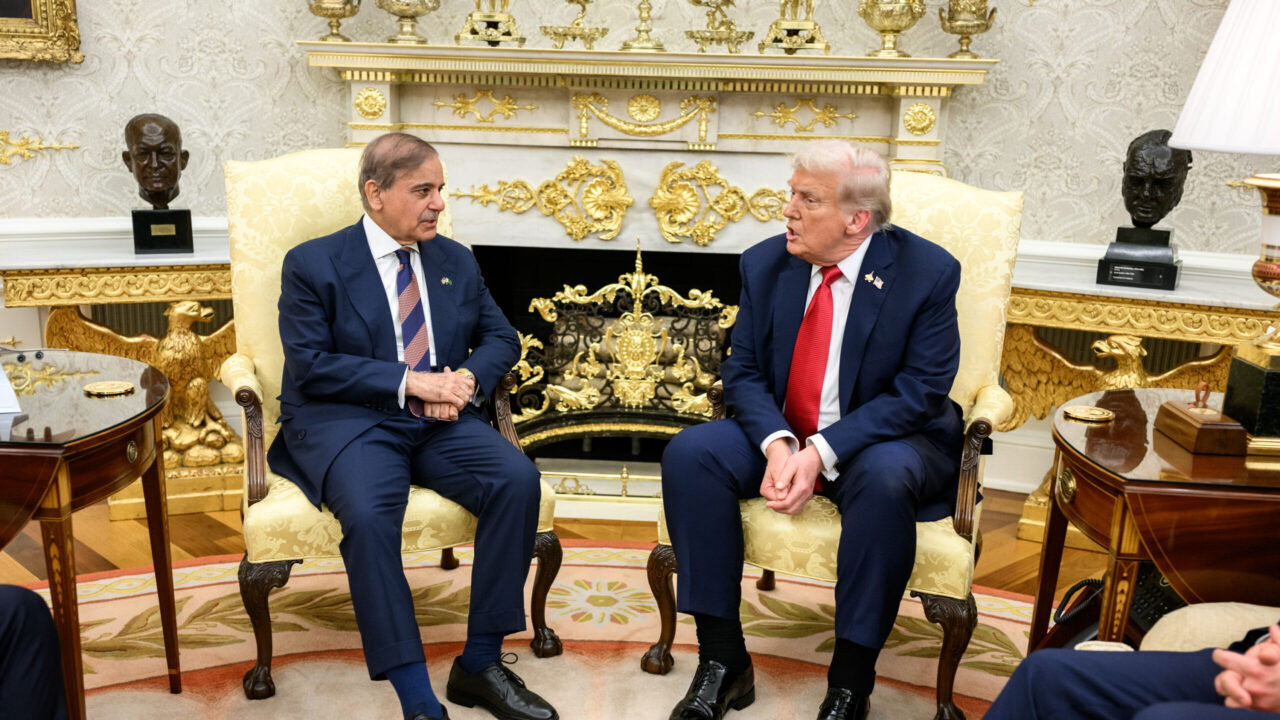
In this crisis, Iran’s neighbor, Pakistan, has emerged as a potential mediator capable of finding common ground and ending the conflict. For Pakistan, serving as a mediator within this complex environment poses a substantial short-term challenge: Islamabad must contend with Iran’s diminished confidence in the credibility and durability of any proposed ceasefire.
Pakistan Is Under Pressure from Within
Pakistan is contending with serious domestic and border security pressures of the Tehreek‑e‑Taliban Pakistan (TTP) terrorism, cross‑border tensions with Afghanistan, and the persistence of separatist violence in the province of Balochistan. Since 2021, these dynamics have intensified, producing a multidimensional crisis that blends domestic fragility with regional geopolitical strain.
Pakistan argues that the Taliban government in Kabul gives the TTP sanctuary, funding, and weapons, and the terrorist group has expanded its operational lethality. According to the Global Terrorism Index (GTI), TTP is the deadliest militant group in the area, and Pakistan experienced 1,709 terrorist incidents in 2025, resulting in nearly 4,000 deaths, making it the most violent year since the Taliban’s return to power in Afghanistan in 2021.
The GTI report states that TTP, as a group, has absorbed more than 100 local jihadist factions, enhancing its organizational capacity and geographic spread. Its attacks have targeted security forces, courts, and urban centers, including a suicide bombing outside a district court in Islamabad. Pakistan’s military operations in Afghanistan, combined with rising violence from TTP, even complicate domestic terrorist groups like the Balochistan Liberation Army (BLA).
The Iran War Mediation Puzzle
A mediator is accepted by two opposing parties not because of its neutrality but because of its ability to unblock the process to produce an acceptable solution. Pakistan will not only need to directly coordinate communications between the conflicting parties but also reinforce confidence-building measures at each step of the process and maintain trust with Iran, the United States, and Israel.
In the field of conflict resolution, mediation is intended to influence conflict behavior and move actors toward conflict de-escalation and a negotiated settlement. The mediator aims to build an acceptable new architecture among the parties to the existing conflict to prevent the crisis from further spiraling into violence. Some experts have argued that establishing a precise, transparent process is essential to any mediation. However, third-party mediators are more involved in preventative mediation, which focuses on minimizing escalation, defining and framing the agenda around shared interests, constructing practical solutions with a timeline, and maintaining multiple levels of confidence and cooperation throughout the engagement.
Mediators need to be not only superb communication experts who know the nuances of language, but they must also understand how strategic dialogue can be used to restrain and shift paradigms of thinking and perceptions of threats. For example, when states use negotiators to engage with violent extremists, engagement aims to ensure that the use of violence is in check, to transform their ends from destruction to participation and dialogue.
Pakistan’s Role as Mediator in the Iran War
Pakistan’s prospective mediation role will first need to address Iran’s diminished confidence in the durability of ceasefire arrangements and its belief that its opponents will honor any signed agreement. This skepticism is not merely a diplomatic hurdle but a structural impediment rooted in Iran’s view that the United States, Western powers at large, and the Arab powers are bent on undermining the sovereignty of Iran. The Iraq-Iran war, international sanctions, diplomatic isolation, and the external focus on the nuclear program have only served to enflame these sentiments.
Tehran’s skepticism reflects a rational assessment of past negotiations that collapsed under external military pressure, reinforcing the belief that its enemies will instrumentalize negotiations and ceasefires rather than uphold them. Consequently, Pakistan must operate in an environment where its assurances will carry limited credibility with Iranian decision-makers.
Moreover, Iran’s skepticism interacts with broader regional security dilemmas: Tehran views ceasefires not as stabilizing mechanisms but as potential pauses that adversaries may exploit. Ironically, the potential pause is viewed by the United States and Israel in a similar light (ie, Iran will restock ballistic missiles and mass-produce drones for the next wave of attacks). For Pakistan’s mediation efforts, this means that any diplomatic initiative must address not only the immediate cessation of hostilities but also the underlying security concerns that drive Iran’s reluctance.
Qatar, Turkey, Egypt, and China as Mediators: Too Many Cooks?
Another primary challenge facing Pakistan in mediating the Iran conflict will be deciding whether to serve as the sole lead mediator or to include Turkey, Egypt, and China with specific roles in the process.
Pakistan will lean on its strong ally, Qatar, for strategic planning and the execution of the mediation efforts. In the past 25 years, Qatar has emerged as an international mediator in Lebanon (2008), Sudan (2011), Libya (2022), Afghanistan (2019), and Gaza (2025). However, at this time, Qatar cannot be an active mediator because Iran views Qatar, which hosts CENTCOM’s headquarters at the Al-Udeid Air Force base, as an accomplice to the war. Moreover, Iran targeted Qatar’s Ras Laffan Industrial City, the world’s largest liquefied natural gas (LNG) hub, and the Mesaieed Petrochemical Complex.
On the one hand, if Pakistan forms a coalition of mediators, it will have more leverage and mediation power to reach an agreement through the combined political, diplomatic, and economic weight. Pakistan and the coalition of mediators could lean hard on Iran to seek rewards in the form of political or economic incentives, as well as receive security assurances of no further attacks from the United States and Israel.
On the other hand, forming a coalition of mediators could pose significant coordination challenges, as each participating state brings its own strategic priorities, normative commitments, and preferred end states to the table. These divergent ambitions can produce intra‑coalition competition, inconsistent communications, and rival frameworks for settlement, all of which complicate the coherence of the mediation effort. When such differences become obvious, coalition members may pursue unilateral initiatives, privilege their geopolitical interests, or selectively support particular parties to the conflict, thereby undermining collective credibility.
The resulting misalignment creates openings for spoilers, in which individual mediators—intentionally or inadvertently—disrupt negotiations, dilute agreed‑upon principles, or incentivize conflict parties to align themselves in unexpected ways.
Pakistan will need to design a mediation framework capable of overcoming entrenched distrust through incrementally sequenced, credible mechanisms of engagement that can recalibrate adversarial perceptions and orient the parties toward a solutions-based dialogue. Pakistan will, above all, need to convince all sides that a ceasefire and a stable, peaceful Middle East can serve its long‑term strategic interests.
About the Author: Qamar-ul Huda
Qamar-ul Huda is the Michael E. Paul chair in International Affairs at the United States Naval Academy’s Political Science Department and a former senior advisor to the US Department of State. Previously, he served as an associate adjunct professor at Georgetown University’s School of Government. Dr. Huda co-founded and was the vice president of the Center for Global Policy (CGP). The views expressed in this essay are his own and do not reflect any views of the USNA.
The post Can Pakistan Mediate the Iran War? appeared first on The National Interest.
Источник: nationalinterest.org