
«Данное сообщение (материал) создано и (или) распространено иностранным средством массовой информации, выполняющим функции иностранного агента, и (или) российским юридическим лицом, выполняющим функции иностранного агента»
 Topic: Space Blog Brand: Techland Region: Americas Tags: Artemis Program, Commercial Space, Federal Communications Commission (FCC), Low-earth Orbit, NASA, Permitting, and Satellites Artemis II Is Our Chance to Revolutionize Consumer Tech in Space April 13, 2026 By: James Czerniawski
Share
Outdated regulations are slowing satellite innovation, limiting broadband access, and weakening US leadership in space-driven technologies that could transform connectivity, security, and economic opportunity.
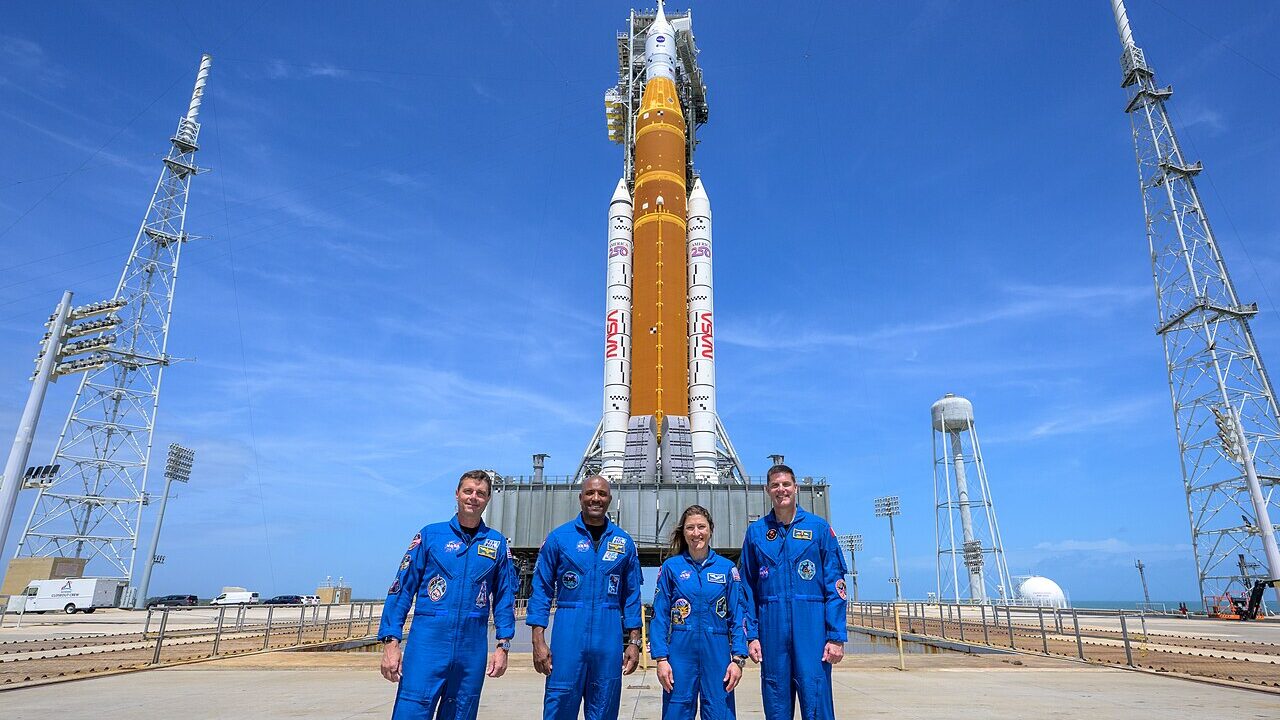
When President Donald Trump called the Artemis II crew, the signal took several seconds to reach them. At 250,000 miles out—farther from Earth than any human beings have gone in history—there was a delay, and the call went quiet for a full minute. Someone eventually asked if the President was still there as the conversation traveled through the National Aeronautics and Space Administration’s (NASA) Deep Space Network of massive dish antennas. Here on Earth, we still have connectivity problems that the era of space innovation could solve—if Washington would let it.
Commercial Space Innovation Can Close the Digital Divide
The commercial space sector has spent the last decade proving that spaceflight can be cheaper, faster, and more frequent than the government-only model ever managed. Exploration beyond the moon is exciting, but the key for policymakers is to make space technology as beneficial to everyday Americans as possible, and that’s as simple as providing a stronger WiFi connection.
Millions of Americans remain cut off from reliable broadband, including rural families, young workers in smaller towns competing in a remote work economy, and patients seeking telehealth services in areas where a specialist’s office is hours away. Connectivity matters, and Low Earth orbit (LEO) satellite services, such as Starlink and Amazon’s Project Kuiper, represent the most credible path to closing that gap.
Regulatory Barriers Are Slowing Satellite Broadband Expansion
Unlike ground-based cable infrastructure, LEO satellites don’t require laying fiber through thousands of miles of terrain that private companies have never found worth the investment. They just require a government willing to get out of the way.
This is, unfortunately, harder than building satellites. An ocean of red tape governs how LEO satellites can be licensed and deployed within a given period, compounded by regulatory frameworks written for an entirely different era of spaceflight. If you’ve found yourself wondering why this week’s Artemis II mission is America’s first crewed lunar voyage in over fifty years, bureaucratic complexity deserves a substantial share of the blame.
The same institutional inertia that turned a projected $500 million rocket program into a $4.1 billion-per-launch endeavor doesn’t disappear when the subject changes from NASA to the Federal Communications Commission (FCC). Government bloat always finds new outlets.
Federal policy shouldn’t be in the business of slowing technologies that are actively closing the socioeconomic gaps that the government never could. Yet that is precisely what outdated licensing schemes and deployment caps risk doing. Washington has throttled consumer choice in connectivity and unwittingly kept prices artificially high for everyone, especially those who wish to live outside of major metros.
LEO Satellites Are Critical for National Security and Disaster Response
Of course, the case for getting this right extends well beyond household Wi-Fi and phone calls. LEO satellite infrastructure is already reshaping defense communications, artificial intelligence (AI) data logistics, and the broader telecommunications sector in ways that will compound over time. American leadership in space is upstream of all other emerging capabilities that the United States has for military action, something China understands well, which is why President Xi Jinping isn’t hamstringing the pace of satellite deployment whatsoever.
Another obvious good of reform around LEOs is keeping communities safe when the worst happens. During storms or outages that can take other infrastructure offline, LEO satellite broadband can serve as a safety net. We recently saw the role of LEO satellite connectivity in keeping Americans connected during a crisis, including during Hurricane Helene, which devastated western North Carolina. Despite the hurricane leaving behind widespread damage to physical infrastructure, LEO technology enabled coordination with emergency responders and residents in Asheville to contact one another.
Policy Reform Can Unlock Competition and Lower Costs in Space Technology
The good news is that at least some corners of Washington want to keep up. FCC Chairman Brendan Carr declared last October the beginning of a “Golden Age of innovation in space, where US businesses are going to dominate.”
More competition in the satellite broadband market means cheaper service, more reliable connections, and faster response when something goes wrong. The chairman is correct. Now the rest of the regulatory apparatus needs to catch up, precisely the aim of the bipartisan Satellite and Telecommunications Streamlining Act (SAT), which removes regulatory bottlenecks in space innovation. Advancing these types of policies will unleash competition, lower prices, and keep America leading the new space race.
With NASA’s Artemis II now headed back from its lunar orbit mission, and excitement around the world at an all-time high for the possibilities for human life to be improved by space technology, now is the perfect time to clear the hurdles and revolutionize space.
About the Author: James Czerniawski
James Czerniawski is the head of emerging tech for the Consumer Choice Center, where he focuses on tech regulation, AI innovation, and consumer protection. Czerniwski has testified before Congress on technology issues, and his commentary has been featured in the New York Post, Newsmax, Politico, Newsweek, and more. Follow him on X @jamescz
The post Artemis II Is Our Chance to Revolutionize Consumer Tech in Space appeared first on The National Interest.
Источник: nationalinterest.org