
«Данное сообщение (материал) создано и (или) распространено иностранным средством массовой информации, выполняющим функции иностранного агента, и (или) российским юридическим лицом, выполняющим функции иностранного агента»
 Topic: Air Warfare Blog Brand: The Buzz Region: Americas Tags: Air Defense Identification Zone, Alaska, Canada, E-3 Sentry, F-22 Raptor, F-35 Lightning II, KC-135, NORAD, North America, Russia, Tu-95 Bear, and United States Why Did the US Just Send a Dozen Planes After Two Russian Bombers Near Alaska? March 11, 2026 By: Stavros Atlamazoglou
Share
NORAD’s disproportionate response to the Russian incursion is a clear message to the Kremlin: even though America is occupied in Iran, it remains strong at home.
While the US military is engaged in the largest conflict since the invasion of Iraq in 2003, Russia is provoking in Alaska.
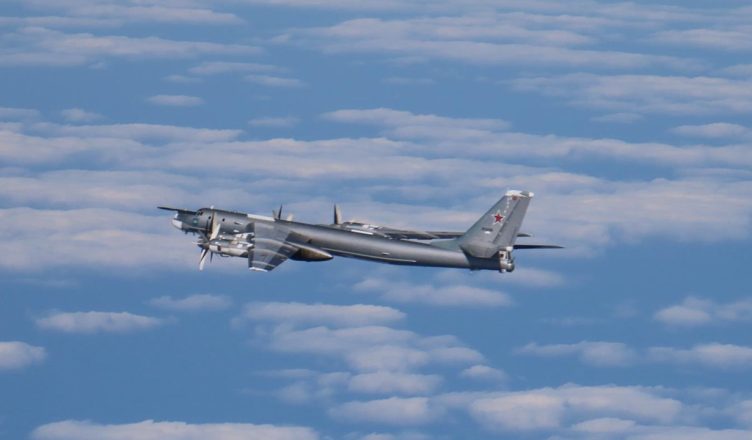
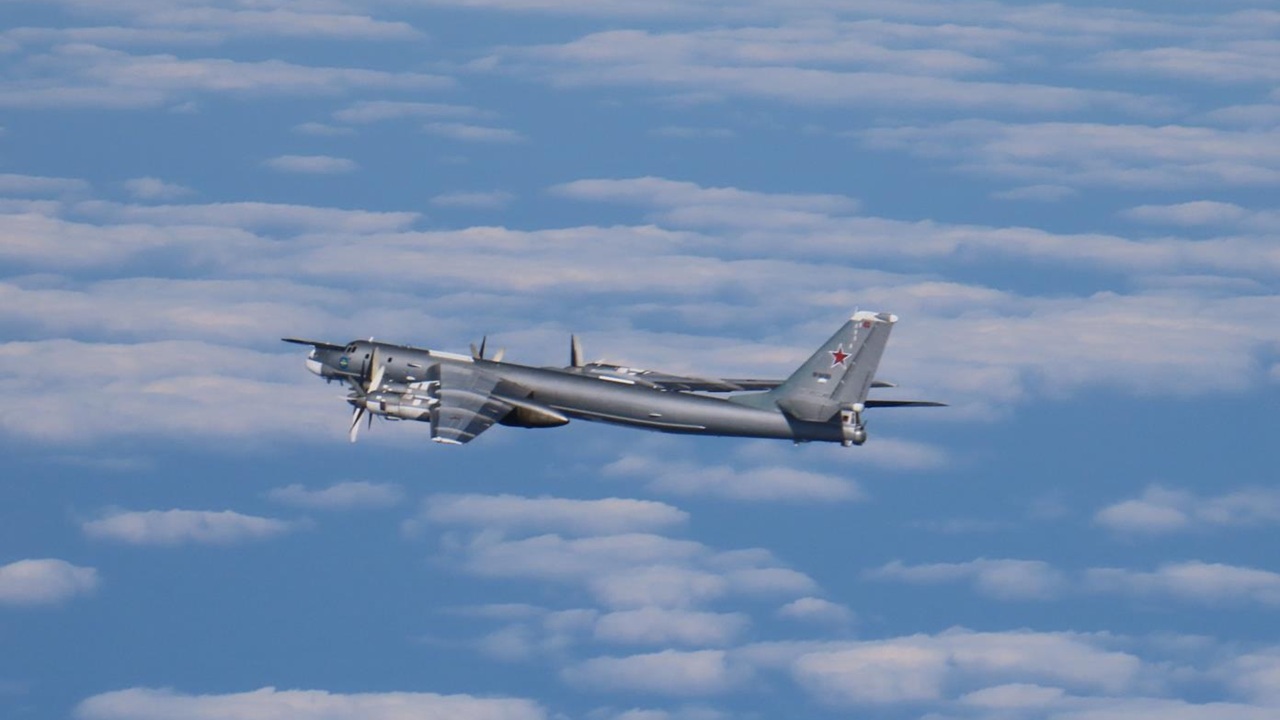
Last week, the US military scrambled several stealth fighter jets to intercept two Tu-142 “Bear” Russian surveillance aircraft near Alaska.
NORAD Is Intercepting Russian Bombers Near Alaska
The US Air Force, with assistance from the Canadian Air Force, deployed an overwhelming response to positively identify, monitor, and intercept the Tu-142 Bear surveillance aircraft.
The North American Aerospace Defense Command (NORAD) deployed overwhelming force against the two Russian aircraft: two US Air Force F-35A Lightning II fighter aircraft, two F-22 Raptor fighter aircraft, four KC-135 Stratotanker air tankers, one E-3 Sentry Airborne Warning and Control System (AWACS), two Canadian CF-18 Hornet fighter jets, and one CC-150 Polaris air tanker.
The Russian surveillance aircraft were not allowed to enter US or Canadian airspace.
“The Russian aircraft remained in international airspace and did not enter American or Canadian sovereign airspace. This Russian activity in the Alaskan and Canadian ADIZ [air defense identification zones] occurs regularly and is not seen as a threat,” NORAD stated in a press release.
The US and Canadian Air Forces work closely together in securing the airspace of both countries.
“NORAD employs a layered defense network of satellites, ground-based and airborne radars and fighter aircraft to detect and track aircraft and inform appropriate actions. NORAD remains ready to employ a number of response options in defense of North America,” the agency wrote in a press statement.
The US military response was probably so disproportionate—a pair of F-22s could easily deal with the Russian surveillance aircraft—in order to carry the message to Moscow that in spite of the war with Iran, the US military was more than capable of responding in force elsewhere in the world.
What Is an “Air Defense Identification Zone”?
A country’s air defense identification zone, or ADIZ, is not the same thing as its sovereign airspace.
The US Air Force would not allow adversary aircraft to enter America’s sovereign airspace—and if they did, absent mitigating circumstances, it would likely shoot the offending aircraft down. Instead, an air defense identification zone begins where sovereign airspace ends—typically 12 miles away from a nation’s coastline. The ADIZ is a defined stretch of international airspace, spanning from 12 to 300 nautical miles away from the coastline, that requires the ready identification of all aircraft entering it. The zone essentially offers a buffer between a country’s sovereign airspace and any incoming aircraft, giving them time to intercept and identify those aircraft before they enter the country’s actual airspace.
It is relatively common for hostile countries to probe each other’s air defense identification zones, both to force them to scramble fighters in response and to test their reaction times in preparation for eventual kinetic action. In particular, Chinese fighter jets have regularly crossed into the ADIZ of neighboring Taiwan in recent years, a source of considerable frustration for Taipei.
Russia’s Tu-142 bomber is a maritime reconnaissance and anti-submarine warfare aircraft derived from the Tu-95 turboprop strategic bomber. The “MR” version of the Tu-142 specializes in communications with ballistic missile submarines.
This is the second time this year that US and Canadian fighter jets have scrambled to intercept Russian aircraft in the US and Canadian air defense identification zones. In the past, such incursions by Russian surveillance aircraft and strategic bombers were somewhat more common. However, it is likely that the Kremlin does not currently wish to provoke the Trump administration with military activity, given President Donald Trump’s disinterest in the Ukraine War—a disinterest that is favorable to Russia’s strategic objectives—and his unpredictable responses to perceived slights by other nations.
About the Author: Stavros Atlamazoglou
Stavros Atlamazoglou is a seasoned defense journalist specializing in special operations and a Hellenic Army veteran (national service with the 575th Marine Battalion and Army HQ). He holds a BA from the Johns Hopkins University and an MA from the Johns Hopkins’ School of Advanced International Studies (SAIS). His work has been featured in Business Insider, Sandboxx, and SOFREP.
The post Why Did the US Just Send a Dozen Planes After Two Russian Bombers Near Alaska? appeared first on The National Interest.
Источник: nationalinterest.org