
«Данное сообщение (материал) создано и (или) распространено иностранным средством массовой информации, выполняющим функции иностранного агента, и (или) российским юридическим лицом, выполняющим функции иностранного агента»
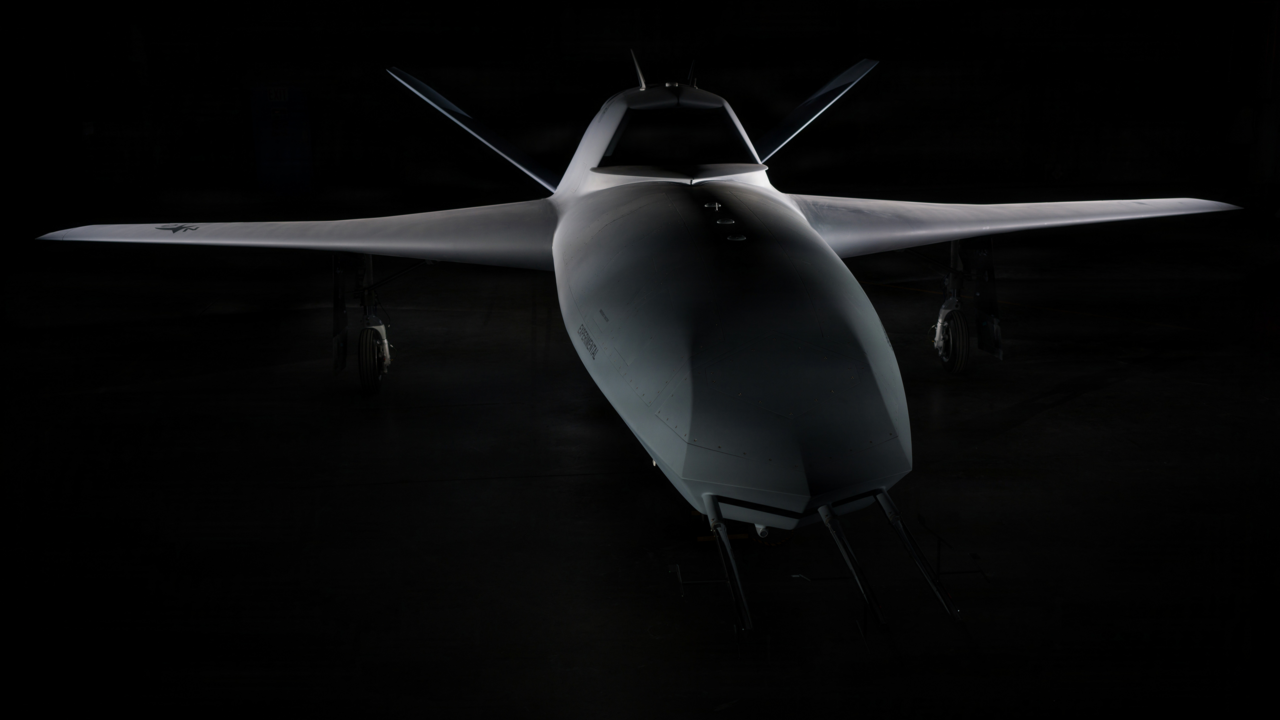
Northrop Grumman’s YFQ-48A drone. The Air Force did not select the YFQ-48A for the Collaborative Combat Aircraft program, but Northrop Grumman has continued to develop it anyway. (Northrop Grumman)
Topic: Air Warfare Blog Brand: The Buzz Region: Americas Tags: Collaborative Combat Aircraft, Drones, North America, Northrop Grumman, United States, US Air Force, YFQ-42A Dark Merlin, YFQ-44, and YFQ-48A Talon Blue “Talon Blue”: Understanding Northrop Grumman’s Deadly YFQ-48A Combat Drone March 2, 2026 By: Harrison Kass
Share
The YFQ-48A’s major advantage over its YFQ-42A and YFQ-44 competitors is its simpler manufacturing process—lowering costs and allowing Northrop Grumman to put more drones in the air.
Northrop Grumman has named its modified YFQ-48A drone the “Talon Blue,” positioning it for future CCA increments. Of course, Talon Blue was not in the first tranche of CCA selections for the Air Force, losing out to the Anduril YFQ-44A “Fury” and General Atomics YFQ-42A Dark Merlin. But Northrop is playing the long game—making an industrial strategy adjustment after the earlier loss, with an eye towards future drone contracts.
CCA, which stands for Collaborate Combat Aircraft, represents the Air Force’s push for increased combat mass through manned-unmanned teaming. CCA drones are expected to be paired with the F-35 Lightning II and its sixth-generation F-47 NGAD successor, extending their sensor reach, carrying extra missiles, and taking high-risk missions off the hands of human operators. Essentially, CCAs are force multipliers—attributable, scalable, and cheaper than crewed fighters. And while the first batch of CCA programs selected did not include Northrop, the Talon Blue is making a refined comeback bid.
What Makes the Talon Blue So Different?
Talon Blue is 1,000 pounds lighter than prior concepts with a 50 percent part-count reduction. Using modular composite manufacturing, Talon Blue has a 30 percent production timeline reduction claim. In essence, Northrop Grumman simplified the airframe and reduced costs in accordance with the realities of industrialism—a corporate reflection and reset based on lessons learned from the first CCA round.
Northrop Grumman is betting that, as the flaws in the US defense industrial base become clearer and demand to keep up with China intensifies, the Air Force will look to invest in affordable combat mass, rather than a boutique high-end platform. Talon Blue represents a manufacturing philosophy shift away from Northrop’s historical programs like the B-2 Spirit and B-21 Raider, which feature high-end stealth and immense complexity.
The new aircraft incorporates advanced composites and modular sections and can be assembled at scale. The result is supply chain simplification and a product with fewer touchpoints and faster throughput. With these refinements, Northrop is signaling its industrial capability—and an emphasis on simplicity, ease of maintenance, and cost-effectiveness relative to traditional fighter programs.
What Role Will the Talon Blue Play in Future Air Combat?
Talon Blue is designed to serve as a loyal wingman to the F-35 or F-47. Accordingly, Talon Blue will operate as a missile truck, ISR extender, and EW supporter, among other roles—operating ahead of manned fighters and absorbing risks while complicating adversary targeting calculus. These functions are ideal for the vast distances of the Indo-Pacific, where A2/AD penetration and distributed ops are key. In concept, the pilot of a manned fighter will assign a task, and the AI-driven CCA will execute the task, theoretically within set guardrails.
Northrop Grumman’s move back to the drawing board also suggests that the CCA program is not a one-off, or two-off program, but rather a sprawling program with multiple increments planned—possibly with hundreds and hundreds of aircraft procured. Northrop Grumman is strategically positioning itself for follow-on tranches and possibly an export market.
The Air Force is shifting from exquisite to scalable—and Talon Blue suggests that the industry is responding. Manufacturing speed is now a selection factor and air power is becoming a network of nodes rather than the single most dominant platform.
About the Author: Harrison Kass
Harrison Kass is a senior defense and national security writer at The National Interest. Kass is an attorney and former political candidate who joined the US Air Force as a pilot trainee before being medically discharged. He focuses on military strategy, aerospace, and global security affairs. He holds a JD from the University of Oregon and a master’s in Global Journalism and International Relations from NYU.
The post “Talon Blue”: Understanding Northrop Grumman’s Deadly YFQ-48A Combat Drone appeared first on The National Interest.
Источник: nationalinterest.org