
«Данное сообщение (материал) создано и (или) распространено иностранным средством массовой информации, выполняющим функции иностранного агента, и (или) российским юридическим лицом, выполняющим функции иностранного агента»
 Topic: Air Warfare Blog Brand: The Buzz Region: Eurasia Tags: Hypersonic Missiles, Kinzhal, MiG-31 Foxhound, Missiles, Russia, and Ukraine War Russia’s MiG-31 Fighter Jets Are Flaunting the “Kinzhal” Hypersonic Missile March 25, 2026 By: Stavros Atlamazoglou
Share
The Kinzhal has seen limited operational service in Ukraine, but it is still unclear if it lives up to the Kremlin’s hype.
Russian fighter jets carrying one of Russia’s most advanced weapon systems were recently spotted near Japan.
MiG-31s and Kinzhal Hypersonic Missiles
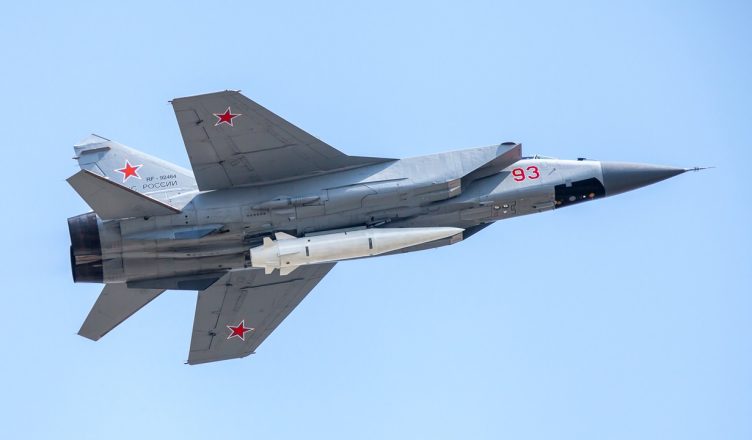
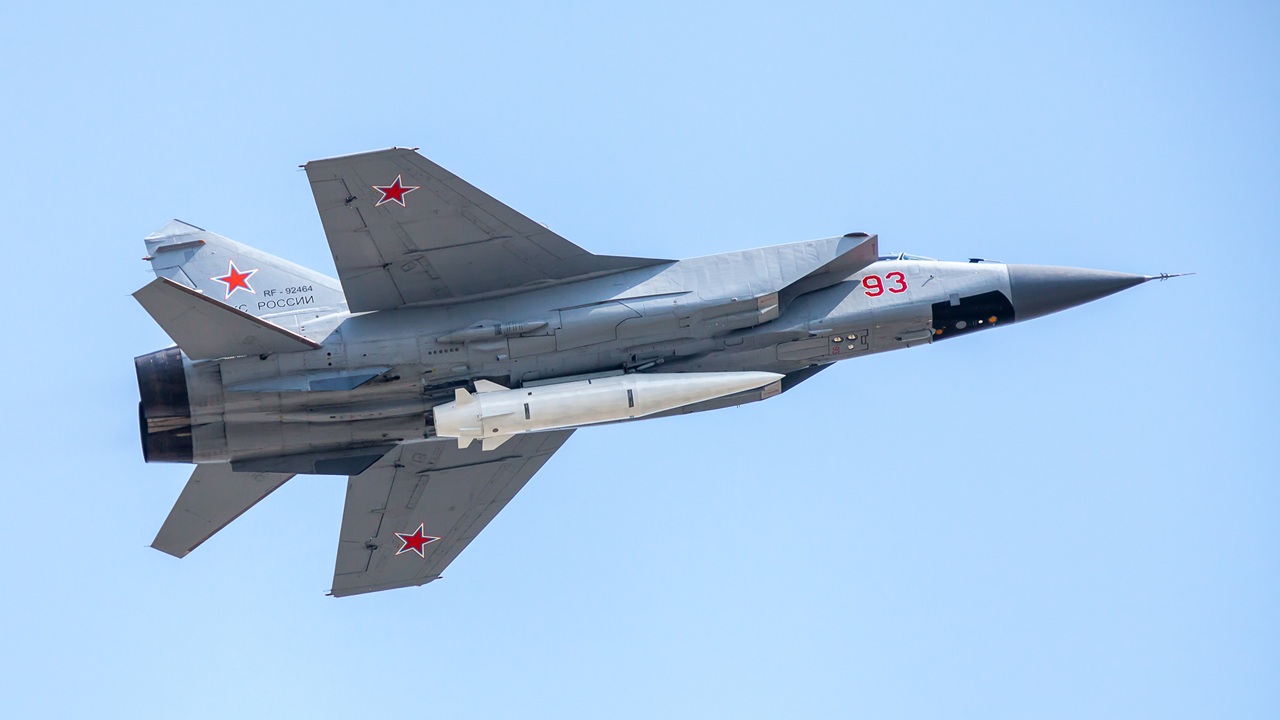
In a video released by the Russian Ministry of Defense, several Mikoyan MiG-31 Foxhound fighter jets can be seen flying over the Sea of Japan. One of the fighter jets is carrying the Kh-47M2 Kinzhal hypersonic missile.
The Kinzhal hypersonic missile—nicknamed “Killjoy” under NATO designations—is an air-launched ballistic missile. It has a reported speed of nearly 8,600 miles per hour (12,231 km/h), a range of approximately 1,250 miles (2,000 km), and the ability to make in-flight maneuvers. The Russian military has already used the Kinzhal against a variety of targets in Ukraine, using a conventional warhead, but it is also nuclear-capable in the event of catastrophe.
Russian combat aircraft often deploy in the region as part of a joint air patrol agreement with China’s People’s Liberation Army Air Force (PLAAF). As part of these joint air patrols, the Russian Aerospace Forces most often deploy Tu-95 Bear strategic bombers, Su-30 Flanker fighter jets, and A-50 Mainstay airborne early warning and control aircraft. MiG-31s are relatively rare in this role, and MiG-31s carrying Kinzhal missiles are rarer still—meaning that the video release was intended as a statement to the United States and Japan.
“Wonder Weapons” Rarely Work as Well as Intended
Hypersonic munitions have the ability to penetrate even the most capable air defense umbrellas. Their combination of extremely high speed, trajectory, and ability to change flight path makes them unpredictable and extremely difficult to deal with.
On the other hand, hypersonic weapons are still relatively new, and many countries claiming a full-fledged hypersonic capability—including Russia—may not really have it. Indeed, there have been questions about the actual capabilities of the Kinzhal, and whether it is a hypersonic weapon or merely a capable air-launched cruise missile.
The Kinzhal munition has echoes in the “wunderwaffe” program of Nazi Germany, a concept introduced by the Third Reich during the waning years of World War II that promised to defeat the advancing Allied forces from the West and the Soviet armies from the East. As the war turned against Germany and its allies, Nazi leaders invested progressively greater sums in superweapons such as the V-1 “buzz bomb” and V-2 rocket. These weapons helped advance the science of rocketry after the war ended, but they did little to change its course, and the historical consensus is that Berlin would have been better served by investing in more conventional platforms instead.
In the present day, Russia has sought to counter America’s and NATO’s superior technology through a series of weapon systems that could evade current US defenses. These weapons include the Sarmat intercontinental ballistic missile, Avangard hypersonic glide vehicle, Kinzhal hypersonic missile, Skyfall nuclear-powered missile, Poseidon nuclear-powered underwater vehicle, and the Peresvet anti-satellite, directed energy weapon.
If these weapons can live up to their fame, these weapons would essentially render US and NATO air defense systems obsolete. However, so far, only the Kinzhal has seen limited operational service, while the Avangard is currently being deployed.
To be sure, as the ongoing conflict with Iran teaches, few air defense umbrellas are impenetrable. The key is to limit as much of the incoming threat as possible and limit damage to areas and targets of lesser importance. But high-impact weapons like the Kinzhal are always the top priority for an air defense umbrella and the ones that are more likely to be intercepted.
Notwithstanding the effectiveness or ineffectiveness of these high-end weapons, the Russian armed forces possess a capable ballistic and cruise missile arsenal—an arsenal has been on tragic display over the past four years in the war in Ukraine.
About the Author: Stavros Atlamazoglou
Stavros Atlamazoglou is a seasoned defense journalist specializing in special operations and a Hellenic Army veteran (national service with the 575th Marine Battalion and Army HQ). He holds a BA from the Johns Hopkins University and an MA from the Johns Hopkins’ School of Advanced International Studies (SAIS). His work has been featured in Business Insider, Sandboxx, and SOFREP.
The post Russia’s MiG-31 Fighter Jets Are Flaunting the “Kinzhal” Hypersonic Missile appeared first on The National Interest.
Источник: nationalinterest.org