
«Данное сообщение (материал) создано и (или) распространено иностранным средством массовой информации, выполняющим функции иностранного агента, и (или) российским юридическим лицом, выполняющим функции иностранного агента»
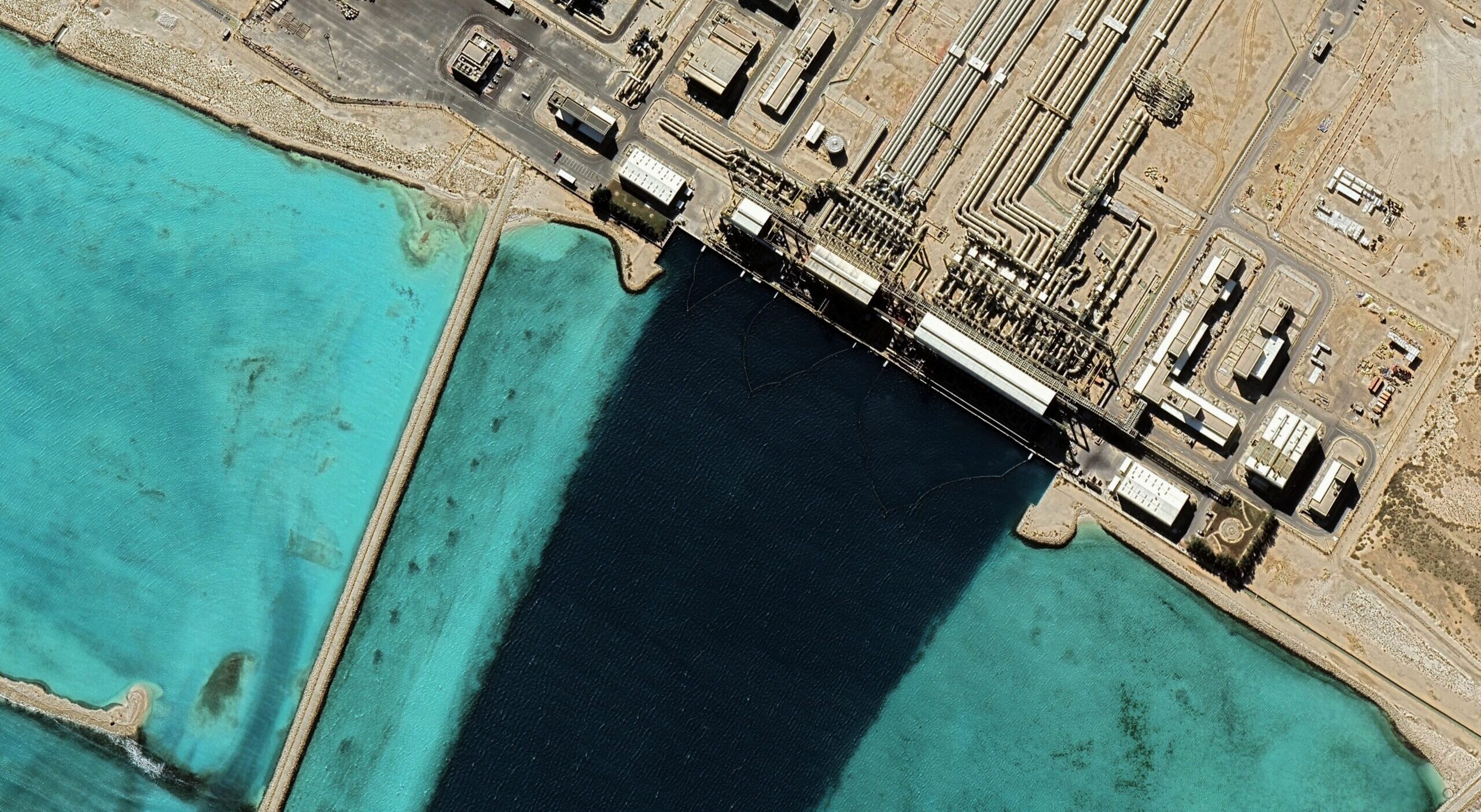
An aerial view of Qatar’s Ras Laffan Oil Refinery, which is directly connected to the North Field. Qatar has become a strong LNG player behind the United States. (Shutterstock/PaPicasso)
Topic: Oil and Gas, and Trade Blog Brand: Energy World Region: Americas, Asia, and Middle East Tags: China, Iran, Liquefied Natural Gas (LNG), Persian Gulf, Qatar, and United States How the South Pars North Field Basin Is Driving LNG Geopolitics March 4, 2026 By: Gökçe Nur Ataman
Share
The North Field–South Pars basin holds immense reserves, yet LNG power today depends on contract design, not untapped potential.
Beneath the waters of the Persian Gulf lies the world’s largest non-associated natural gas reservoir, known as North Field on the Qatari side and South Pars on the Iranian side. The same geological structure under the same sea contains the same gas reservoir shared by two countries. One has placed this reserve at the center of the global liquefied natural gas (LNG) system. The other has yet to fully transform its potential into economic power.
The same rock, the same pressure, the same gas. But not the same outcome. Why? Because this is a non-associated gas field. In other words, it is not linked to oil production. Gas is not produced as a byproduct of oil; gas itself is the primary product.
This technical detail may seem minor, but in fact, it creates a major strategic difference. Production in such fields does not fluctuate according to oil prices. Gas supply can be planned directly according to demand. It provides an ideal foundation for long-term LNG contracts.
The Differences Between Qatar and Iran in the South Pars North Field Basin
Qatar did exactly that. It combined the production stability provided by the reservoir with a long-term contract architecture. It was able to sign 27-year agreements with China because there was geological confidence behind it. For an LNG investor, the most critical question is this: Can this field produce uninterrupted volumes for 20 to 30 years? North Field’s answer was clear.
On the Iranian side, however, the picture is more complex. The geological advantage is the same, and South Pars is the continuation of the same reservoir. Yet due to sanctions, difficulties in accessing finance, the inability to establish LNG infrastructure, and restrictions on technology transfer, this potential has not been transformed into global LNG capacity.
The gas exists, but access to the global market is limited. The reserve is large, but there is no liquidity. For this reason, the two countries draw from the same source but do not generate the same economic outcome.
Proven Reserves in the South Pars North Field Basin and Market Asymmetry
According to the Organization of the Petroleum Exporting Countries’ (OPEC) annual statistics, Iran holds approximately 32 to 34 trillion cubic meters of proven natural gas reserves, a significant portion of which is concentrated in the South Pars field in the Persian Gulf. Qatar possesses approximately 24 to 25 trillion cubic meters of proven natural gas reserves, nearly all of which are located in the North Field. In reality, these two fields constitute two national sections of a single giant gas condensate reservoir, the South Pars North Field basin.
Therefore, the weight of Iran and Qatar in global natural gas reserves largely depends on their respective shares within this shared reservoir.
Qatar markets its North Field reserves globally through a strong and expanded LNG infrastructure, which has positioned it as a major player in LNG markets in Asia and Europe after the United States. This position is not only the result of the size of its reserves but also of the flexibility of its infrastructure and the diversity of its export capacity. Qatar can integrate its resources into the market quickly and securely, giving it a measurable influence over global energy security and price formation.
Iran, by contrast, despite possessing South Pars, cannot use this advantage as it wishes. In particular, energy and financial sanctions imposed by the United States significantly restrict Iran’s LNG production and export capacity. Infrastructure is also limited compared to Qatar or the United States. Without sufficient liquefaction capacity, transporting such a vast gas reserve to the global market is nearly impossible.
What is interesting here is this: if sanctions on Iran were eased or if energy became part of a negotiated framework, South Pars could suddenly enter the global LNG equation. In that case, the geological stability advantage that Qatar enjoys today would turn into a structure with two active players. This could significantly affect price dynamics in a potential post 2030 LNG oversupply scenario. The decisive question, however, is how China would position this additional supply.
Qatar’s Oil-Indexed LNG Model vs. US Henry Hub–Based Contract Architecture
The natural gas reservoir shared by Qatar and Iran is not only a geological asset but also the center of global LNG competition. Qatar’s production and capacity expansion strategy through the North Field directly confronts the long-term LNG contract model developed by the United States over the past decade. Following the shale gas revolution, the United States rapidly expanded its LNG export capacity and by 2023 became the world’s largest LNG exporter.
This rise should be explained not only by increased volumes but also by the transformation in contract structures. US LNG projects are largely based on long-term sales agreements ranging from 10 to 20 years. These contracts are generally structured around Henry Hub-based pricing and provide flexibility to buyers. This structure differs clearly from Qatar’s traditional oil-indexed long-term LNG contract model. While Qatar positions North Field production around large-scale and stable export volumes, US LNG offers a more market-linked and commercially flexible model.
Once the North Field East and North Field South expansion projects are completed, Qatar’s LNG capacity is expected to increase from 77 million tons to 126 million tons. This expansion represents a structural increase in global LNG supply. However, during the same period, new liquefaction terminals are coming online in the United States, and its long-term contract portfolio continues to expand. Therefore, the possibility of an LNG oversupply risk in the global market is an issue that Qatar must manage carefully.
Henry Hub-based pricing offers a more transparent and market-responsive mechanism compared to oil-indexed models. For some buyers in Europe and Asia, this model has become attractive in terms of cost predictability. This may create pressure for greater flexibility within Qatar’s traditional contract structure. In addition, the destination flexibility embedded in US LNG contracts has led Qatar to reassess the strict delivery conditions it applied for many years.
In recent years, Qatar’s introduction of more flexible contractual provisions has been an indirect result of this competition. Global LNG competition is increasingly becoming a competition of contract architecture rather than reserve size.
China’s LNG Contract Strategy and Post-2030 Asian Demand Dynamics
Despite recent high-level contacts between the United States and China, uncertainty in the energy sphere continues. US LNG is technically an attractive supply source for China because the Henry Hub-based pricing model offers a different risk distribution compared to oil-indexed contracts. However, political uncertainties and trade tensions have made China cautious about signing new long-term LNG agreements with the United States. This creates uncertainty for US LNG projects toward 2030 in terms of Asian demand.
At this point, Qatar enters the equation. LNG relations between Qatar and China have deepened in recent years. The 27-year-long term LNG agreements signed between Chinese energy companies and QatarEnergy are among the longest contracts in the global gas trade. These agreements are directly linked to the North Field East expansion project. China is not only a buyer but has also become an investment partner in certain projects.
From Qatar’s perspective, these agreements provide financial security for North Field expansion projects and position Doha as a long-term supply anchor in the Asian market.
Although the United States maintains its position as the world’s largest LNG exporter in the short term, a major demand center such as China creating distance in its contract strategy could, in the long run, anchor US LNG more firmly toward Europe. This could deepen regional segmentation in the market. US LNG may become more closely tied to the transatlantic security axis, while Qatari LNG may align more firmly with an Asia-centered demand bloc.
LNG Geopolitics, Market Segmentation, and the Emerging Energy Order
The issue is not only Qatar’s long-term contracts or Iran’s potential production. Another decisive factor is how China structures its LNG contracts and which geopolitical axis it places its energy trade upon. Beijing’s choice will determine far more than supply and demand balances in the LNG market. It will shape the power centers around which the global energy order evolves.
China may, for portfolio diversification purposes, return to US LNG. That remains a possibility. In such a case, while long-term contracts with Qatar would form the backbone of China’s core supply security, US LNG could become a complementary source.
About the Author: Gökçe Ataman
Gökçe Ataman is an energy analyst and columnist specializing in natural gas, LNG markets, hydrogen economics, and US energy markets. She conducts academic research on the impact of hydrogen on industrial transformation, with a particular focus on Europe and Turkey. Her work analyzes global LNG trade dynamics, contract architecture, energy security, and geopolitical risk, particularly in relation to US LNG strategy, Henry Hub pricing structures, and transatlantic energy relations. Ataman’s research explores the intersection of energy markets and strategic policy, with a focus on supply security, long-term contracting models, and the evolving global energy order.
The post How the South Pars North Field Basin Is Driving LNG Geopolitics appeared first on The National Interest.
Источник: nationalinterest.org