
«Данное сообщение (материал) создано и (или) распространено иностранным средством массовой информации, выполняющим функции иностранного агента, и (или) российским юридическим лицом, выполняющим функции иностранного агента»
 Topic: Critical Minerals, and Military Administration Blog Brand: The Buzz Region: Americas Tags: Defense Industry, Missiles, North America, Supply Chains, and United States How Chemistry and Rocket Motors Constrain American Warfighting March 7, 2026 By: Macdonald Amoah, Morgan Bazilian, and Jahara Matisek
Share
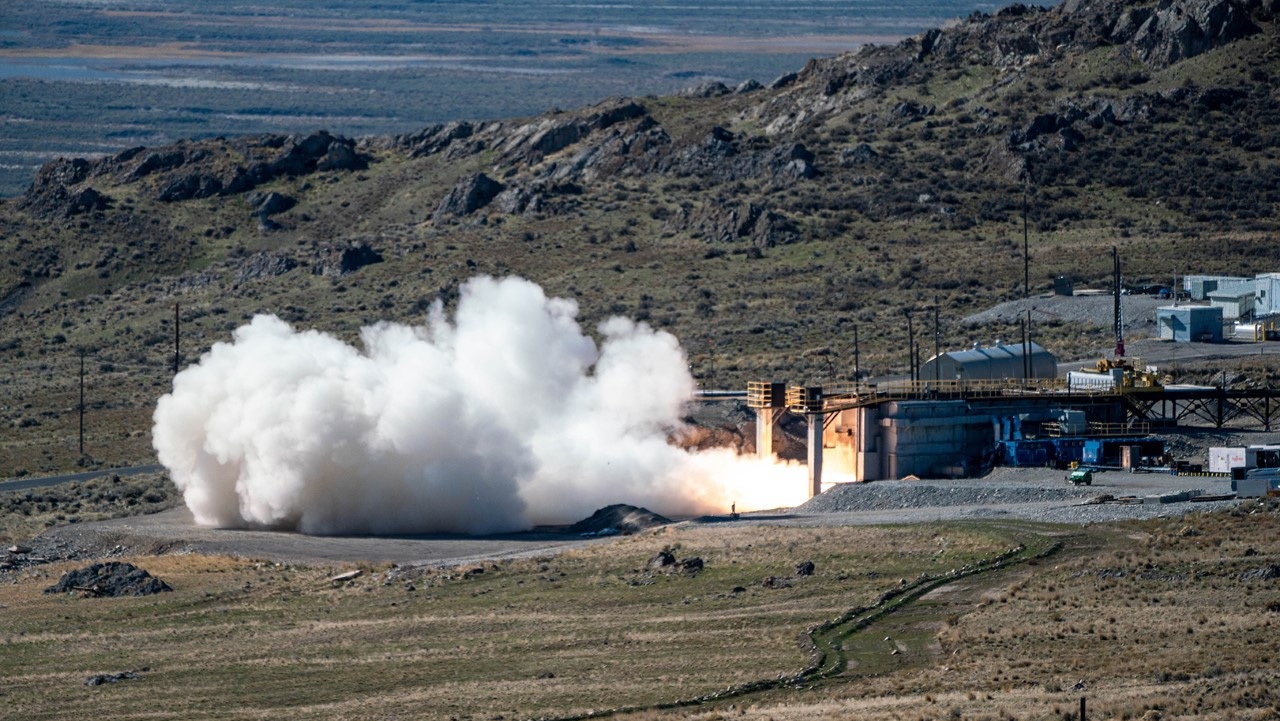
Solid rocket motors—and the chemicals that fuel them—are a major limitation on America’s missile stockpiles, and one that cannot be solved by additional funding alone.
In late February 2026, reports surfaced that America’s top general opposed striking Iran—not because of the fog and friction of war, but because it would drain valuable precision-guided munitions from already-exhausted stockpiles. US munitions stocks, and the industry that builds them, are not built for a world where demand can spike, as seen in the US defense of Israel with missile interceptors. Replenishment timelines are measured in years—and long before the current Iran crisis, the US Navy had already been firing missiles in Red Sea operations at a far faster rate than they could be built and replaced.
Adversaries like China are watching US stockpiles closely because their status shapes those nations’ risk calculus. It has become well-known that the United States would run out of missiles within a week of trying to defend Taiwan.
One might assume the Congress could throw more money at America’s defense industrial base to get the missile production it needs. However, this is an industrial-physics story: time and processes trump money.
Understanding the Mine-to-Missile Chain
Start at the finished missile and trace backward. Final assembly is rarely the binding constraint. Instead, the weak link in the Pentagon’s supply chain is propulsion. Propulsion depends on solid rocket motors, and solid rocket motors hinge on a narrow slice of specialty chemistry, a small number of certified production nodes, and qualification regimes that cannot be rushed without trading speed for safety and reliability.
Before that, we need to start in the mines, because advanced missiles require rare earth minerals that show up in the parts that make a missile work. Elements like neodymium and samarium enable high-performance permanent magnets used in guidance and control systems, including fin actuators that steer missiles under heat and vibration. Dense metals like tungsten show up where designers need mass and penetration, including in kinetic penetrator designs that rely on ultradense tungsten alloys. Beryllium oxide ceramics are used in high-performance electronics environments, including missile guidance and radar applications. And the sensor stack requires semiconductors and optics: gallium is used in key RF electronics (e.g., GaN/GaAs) central to radar and precision-guided systems, while germanium is a critical material for infrared optics and imaging.
It is well-known by now that China dominates the rare earths industry. Beijing’s leverage in the mine-to-missile chain is not the ore itself, but in processing, refining, and downstream manufacturing, where chokepoints can be tightened quickly through export controls and licensing. Beijing has already demonstrated a willingness to weaponize niche materials and processing leverage as a tool of economic statecraft.
This is why the munitions problem keeps reappearing. The system is structurally thin in the middle, and it cannot be thickened by slogans about a “high-low mix” of exquisite and mass-produced munitions. A better high-low mix will help at the margins, but it does not solve the binding constraint: propulsion and energetics scale slowly, and they scale through facilities, qualification, and labor, not wishful thinking or sudden infusions of cash. One CSIS analysis captures the deeper mechanism: efficiency-optimized capacity and surge credibility do not coexist by accident.
The mine-to-missile chain is therefore more than a convenient metaphor. It is the operating reality of deterrence and military readiness. Industrial capacity now sets the pace of wartime endurance and the ability of the US military to operate in multiple theaters.
Solid Rocket Motors: Where Scale Meets Industrial Physics
Over the past two decades, America’s solid rocket motors (SRM) industry consolidated sharply, shrinking from six US manufacturers to two primary domestic ones, with additional complexity from foreign-owned entrants and overseas production for certain systems.
Consolidation matters because SRMs are not a commodity component you can “surge” with overtime and weekend shifts. SRM production is governed by a sequence that looks simple on paper and is remarkably stubborn in real life: propellant mixing, casting, curing, case fabrication, integration, and then test and qualification under stringent safety regimes. Even when money is available, throughput expands in lumpy increments because it depends on specialized facilities, safety clearances, environmental permitting, and trained workers who can operate in an environment where mistakes are not recoverable.
That is what “industrial physics” means in practice. Output is constrained by physical throughput: casting pits and tooling, cure cycles, propellant processing capacity, and test infrastructure that is both scarce and difficult to duplicate quickly. A missile program can place more orders tomorrow, but the SRM base cannot simply compress curing time or skip qualification without compromising on safety standards. This is why the emerging SRM crunch has a “ripple effect” across the broader missile portfolio: the same motor capacity underwrites multiple programs, so strain in one area propagates elsewhere, especially when demand rises across multiple lines at once.
Washington is starting to pay attention. Recent moves implicitly acknowledge SRMs as a binding constraint rather than a peripheral supply-chain nuisance. In January 2026, the Pentagon announced it would make a rare $1 billion direct investment tied to L3Harris’ rocket motor business to secure propulsion supply for missiles such as Tomahawk and Patriot interceptors, with the investment structured as a convertible security connected to a planned IPO.
That kind of missile supply chain investment is important, but it is not a full solution on its own. SRM capacity can be expanded with facilities and capital, but propulsion scale still rests on what sits one layer upstream: the specialty chemical inputs that enable solid propellant to exist in the first place.
Ammonium Perchlorate: The Single Point of Failure
If solid rocket motors are the pacing item, ammonium perchlorate (AP) is the quiet chokepoint that can throttle the entire propulsion ecosystem. AP is the oxidizer that makes solid rocket propellant work without atmospheric oxygen, and it is a major share of the propellant mix by weight. Without AP, there is no SRM production at scale.
This is not a hypothetical vulnerability. Indeed, the United States has already experienced what a catastrophic disruption in AP production looks like. In May 1988, the PEPCON facility in Henderson, Nevada was destroyed in a major industrial disaster. The accident eliminated a huge portion of domestic AP production capacity in a single event, forcing cascading adjustments across dependent programs for months afterwards.
Nearly four decades have passed since the PEPCON disaster, but the structural risk remains. AP is a specialized chemical node, tied to constrained production capacity, safety regimes, and qualification processes that are hard to replace quickly. In practical terms, that means a disruption at the AP node risks simultaneous shocks across multiple production lines, precisely because the same upstream input underwrites multiple downstream programs.
Strategic vulnerability is amplified by the reality that perchlorates and their precursors move through global supply networks that adversaries can influence. In 2025, it was reported that two Iranian cargo ships were carrying more than 1,000 tonnes of sodium perchlorate from China back to Iran—a key precursor used to manufacture ammonium perchlorate and solid-fuel missile propellant. This is the type of dependency the defense industrial planning is now trying to identify and reduce. Since 2024, the Pentagon has been trying to address vulnerabilities in production inputs and sub-tier supply chains through strategies in hopes of reducing reliance on adversarial sources, which can create coercive leverage or supply disruption risk.
Scaling production is also just as difficult for other munitions. When Russia invaded Ukraine in 2022, the US Army was producing 14,000 artillery shells a month, while Russia expended 10,000 to 80,000 shells a day versus Ukraine’s 2,000 to 9,000 shells a day. Despite a $6 billion investment to achieve a monthly production rate of 100,000 shells, American production is still well short of that goal, with only 56,000 shells being made per month as of February 2026. Lack of energetic, tooling, and trained personnel are the biggest bottlenecks preventing the military from achieving its goal even after four years of trying to surge production.
Fix the Chain: Redundancy, Demand Signaling, and People
Three major steps are needed to secure the mine-to-missile supply chain.
First, build redundancy at the energetics and specialty-chemicals layer. The PEPCON disaster remains the clearest reminder that a single accident can erase enormous portions of domestic ammonium perchlorate capacity, with ripple effects across multiple programs that depend on solid propellant. Redundancy means qualifying second sources, hardening critical facilities, and treating oxidizer capacity as strategic infrastructure rather than as a commercial afterthought. This also means working with allies and partners to ensure multiple supply chains exist for the ability to surge missile production to match expenditure rates.
Second, create demand signals that industry can finance. The sub-tier will not invest in capacity if demand is volatile, procurement is stop-start, and program quantities are perpetually renegotiated. Multi-year procurement, predictable lot sizes, and stable contracting are not bureaucratic preferences; they are the conditions that make capital formation rational for the firms that actually expand throughput. This is why “surges” fail in practice when the system is optimized for peacetime efficiency rather than wartime endurance.
Third, treat the workforce as a binding production constraint. Energetics manufacturing depends on skilled technicians, engineers, quality assurance specialists, and safety-trained workers who operate under clearance and compliance regimes. New facilities and new funding do little if there are not enough trained people to run casting pits, manage cure cycles, execute hazardous-material protocols, and sustain test and qualification throughput. The National Defense Industry Association 2025 Vital Signs report highlights workforce and sub-tier fragility as central constraints on defense industrial base resilience.
The broader lesson for Washington policymakers is structural: grand strategy is ultimately constrained by what the industrial base can deliver, at speed and at scale. In a zero-sum munitions environment, the mine-to-missile chain is the new operating reality for America—one that appears to hinder military action, while signaling weakness to adversaries that the US military may not have enough missiles to follow through on its commitments to defend certain regions and countries. A better way forward must be found.
About the Authors: Macdonald Amoah, Morgan Bazilian, and Jahara Matisek
Macdonald Amoah is an independent researcher with interests across critical mineral supply chains, advanced manufacturing gaps, the industrial base, and the geopolitical risks in the mining sector.
Morgan D. Bazilian is the director of the Payne Institute and professor at the Colorado School of Mines, with over 20 years of experience in global energy policy and investment. A former World Bank lead energy specialist and senior diplomat at the UN, he has held roles at NREL and in the Irish government, and advisory positions with the World Economic Forum and Oxford. A Fulbright fellow, he has published widely on energy security and international affairs.
Lt. Col. Jahara “Franky” Matisek (PhD) is a US Air Force command pilot, nonresident research fellow at the US Naval War College and the Payne Institute for Public Policy, and a visiting scholar at Northwestern University. He is the most published active-duty officer currently serving, with over 150 articles on industrial base issues, strategy, and warfare.
DOD Disclaimer: The views of Lt. Col. Matisek are his own.
The post How Chemistry and Rocket Motors Constrain American Warfighting appeared first on The National Interest.
Источник: nationalinterest.org