
«Данное сообщение (материал) создано и (или) распространено иностранным средством массовой информации, выполняющим функции иностранного агента, и (или) российским юридическим лицом, выполняющим функции иностранного агента»
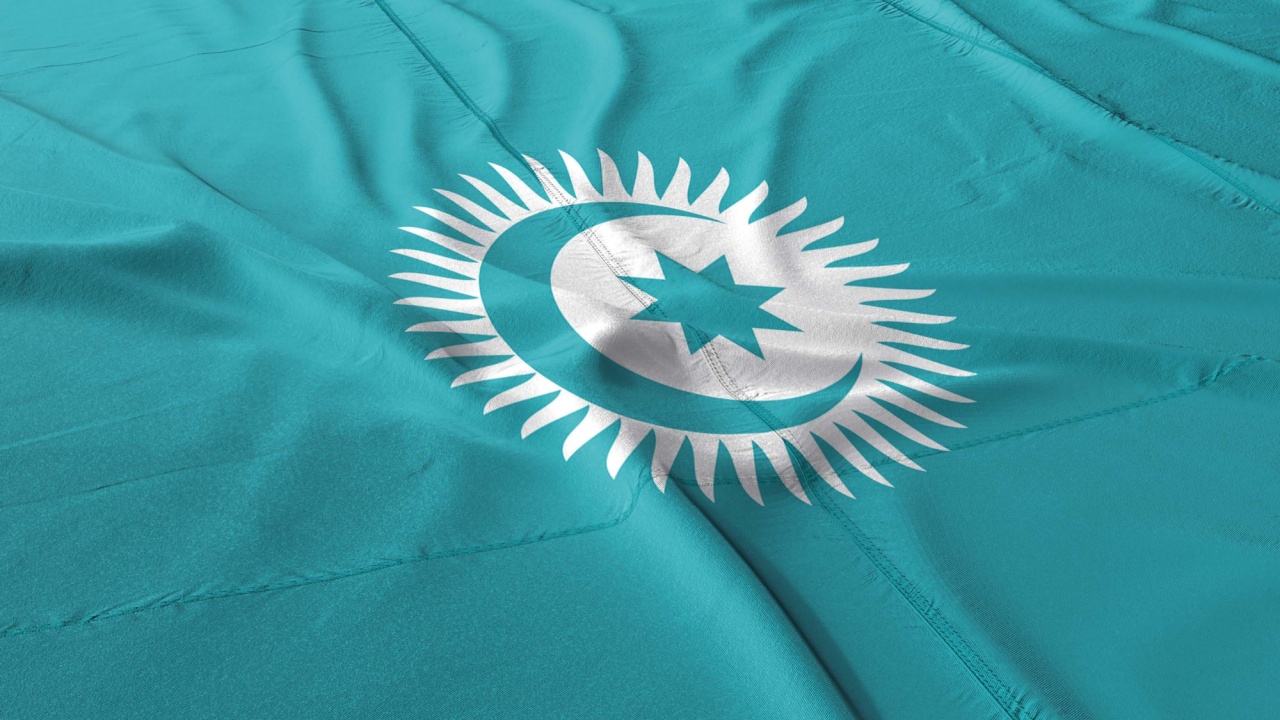 Topic: Diplomacy Blog Brand: Silk Road Rivalries Region: Eurasia Tags: Azerbaijan, Central Asia, China, Kazakhstan, Kyrgyzstan, Organization Of Turkic States, Recep Tayyip Erdogan, Russia, Turkey, and United States Why the US Must Include the Organization of Turkic States in Its Central Asia Policy January 13, 2026 By: Luke Coffey
Share
The Organization of Turkic States is quickly becoming a crucial mode of engagement in the Central Asian region.
Last month, the Secretary General of the Organization of Turkic States, Kubanychbek Omuraliev, arrived in the United States for a series of meetings with US government officials. Regrettably, the visit did not receive the attention it deserved. If the United States wants to be competitive in this era of great power competition, then groupings like the Organization of Turkic States need to be engaged with far more seriously.
What Is the Organization of Turkic States?
The Organization of Turkic States is an intergovernmental body connecting the various ethnic Turkic countries of Eurasia to promote a shared identity, culture, and aligned geopolitical interests.
The original idea to establish the body emerged in 2006, when then-Kazakh president Nursultan Nazarbayev first proposed closer cooperation among Turkic states. Three years later, the Turkic Council—the predecessor to today’s organization—was established by Turkey, Kazakhstan, Kyrgyzstan, and Azerbaijan. In 2019, Uzbekistan joined as a full member. In 2021, the current name under which it is known today was adopted. In addition to the five member states, Turkmenistan, Hungary, and the de facto Turkish Republic of Northern Cyprus participate as observers.
Why the Organization of Turkic States Matters
The countries associated with the Organization of Turkic States are located in one of the most geopolitically important regions of the world. Collectively, OTS members and observers represent well over 160 million people across roughly 1.6 million square miles, with a combined gross domestic product approaching $2 trillion. These states also possess significant natural resources, including substantial oil and natural gas reserves and important deposits of rare earth minerals.
Furthermore, they sit astride some of the world’s most important trade choke points and transit routes, including the Turkish Straits, the Middle Corridor, and the Ganja Gap in Azerbaijan. Through these corridors run major oil and gas pipelines, fiber-optic cables, and highway networks connecting Central Asia to European markets while bypassing Russia and Iran.
The informal influence of the Organization of Turkic States extends well beyond the borders of its member states and observers. Tens of millions of additional ethnic Turkic people live across Eurasia, stretching from the Balkans to western China and north deep into Russia’s Arctic. These communities often look toward major Turkic states, particularly Turkey, and are strongly influenced by its soft power, especially through television, cinema, and music. Turkish television dramas, for example, are watched by hundreds of millions of people worldwide, many of whom are virtually unknown to American audiences. In music, one of the most widely shared songs of 2025 was “Homay” by the ethnically Bashkir group in Russia, Ay Yola, which outperformed Kendrick Lamar and Lady Gaga on some global charts.
The Bashkirs are a Turkic ethnic group located inside the Russian Federation, underscoring how Turkic cultural influence extends far beyond the borders of independent states. As Turkic identity continues to resurge, groupings such as the Organization of Turkic States are likely to become more influential among ethnic Turkic populations across Eurasia. This helps explain why, despite its relatively modest combined GDP in global terms, the OTS plays an outsized role in Eurasian geopolitics.
The integration, coordination, and cooperation among the Turkic states reflect a broader post-imperial reawakening of Turkic political, cultural, and strategic identity. All of the countries that are members of the Organization of Turkic States, other than Turkey, were oppressed for decades by Imperial Russia and later the Soviet Union. The use of local Turkic languages was restricted, and populations were forced to adopt Cyrillic scripts. As in other regions subjected to Russian colonization, Russification was used as a tool of political control across much of the Turkic world, suppressing local languages, histories, and cultures in places where Turkic identity had existed for centuries.
For example, before Imperial Russia arrived on the scene in 1731, the Kazakh Khanate—covering much of what is now modern-day Kazakhstan—had already existed for roughly 300 years. During Soviet times, Kazakh became a secondary language to Russian. Advancement in one’s career was difficult without using Russian, and Kazakh speakers became a minority within the Kazakh Soviet Socialist Republic.
Following independence after the collapse of the Soviet Union, the Turkic countries of Central Asia sought to re-establish the prominence of their language, culture, and way of life. This included renewed efforts to move away from Cyrillic toward Latin-based scripts, including a 34-letter Common Turkic alphabet proposal endorsed under the OTS framework in 2024, as well as prioritizing national languages in education over Russian. Uzbekistan is undertaking a process to replace Russian language military terms commonly used in its armed forces with Uzbek equivalents.
Until relatively recently, the level of ambition among the Turkic states remained modest, with most cooperation focused on cultural and economic issues.
That began to change in 2020. During the Second Karabakh War between Armenia and Azerbaijan, Turkic solidarity had a geopolitical impact not seen in years. Even though Kazakhstan and Kyrgyzstan are members of the Russian-led Collective Security Treaty Organization alongside Armenia, both signaled clear sympathy for fellow Turkic state Azerbaijan and avoided backing Armenia during the fighting in the fall of 2020. This marked the beginning of Russia’s loss of influence in a region where it once held considerable sway. Moscow’s war against Ukraine has since further diminished Russia’s clout across its former imperial space. In this part of the world, as Russian influence has waned, Turkic influence has risen.
What Is the Goal of the Organization of Turkic States?
In parallel, the Organization of Turkic States has begun expanding its ambitions. In addition to the cultural issues that initially brought the organization together, there is now discussion in policy circles about deeper economic integration—potentially even steps toward a customs-union-like arrangement—building on existing initiatives such as the Simplified Customs Corridor. For the first time, the OTS summit held this year in Gabala, Azerbaijan, placed a renewed emphasis on security cooperation, with Azerbaijan proposing to host the first-ever OTS military exercise sometime in 2026. This would represent a significant shift for the organization, but one that appears increasingly inevitable given the geopolitical realities of the region.
Today, Russia and China—and to a lesser extent India and Iran—continue to drive geopolitics across the Eurasian landmass. But as coordination and cooperation among Turkic states deepen, the Organization of Turkic States is increasingly establishing itself as another center of power in Eurasia. This is why it is in America’s interest to engage with the OTS now.
There is no better time for President Donald Trump to do so. In his first year back in office, he has demonstrated an interest in advancing US interests in this region. By brokering a peace deal between Armenia and Azerbaijan, President Trump helped bring an end to one of the deadliest conflicts in the South Caucasus. This breakthrough has the potential to unlock a new transport route, the so-called Trump Route for International Peace and Prosperity, that will better connect Turkey to the Turkic countries of Central Asia. If realized, this would lead to new trade, transit, and economic opportunities that could benefit the entire region, including Armenia.
President Trump has also expanded US engagement with Central Asia by hosting a historic C5-plus-1 summit at the White House to mark the platform’s tenth anniversary and by signing new business, trade, and critical minerals agreements with countries in the region. Recognizing Kazakhstan and Uzbekistan’s growing importance, President Trump also invited both of these Turkic countries to the G20 meeting in Miami later this year.
At the same time, President Trump maintains a strong personal relationship with his Turkish counterpart, President Recep Tayyip Erdoğan. The motor of the organization today is Turkey, and its headquarters are based in Istanbul. Given Turkey’s importance within NATO and President Erdoğan’s role in advancing the OTS, the United States is well-positioned to deepen its engagement with the organization.
While visiting Washington, DC, Secretary-General Kubanychbek Omuraliev met with the Assistant Secretary of State for South and Central Asian Affairs, S. Paul Kapur. Of course, engagement at this level is better than no engagement at all; the leader of an organization as geopolitically significant as the Organization of Turkic States should be engaging at a more senior level in the United States. This should lead to a regular drumbeat of meetings between US officials and their counterparts in the OTS, eventually culminating in a foreign-ministerial-level meeting and, ultimately, President Trump himself attending a heads-of-state OTS summit.
The members of the Organization of Turkic States pursue balanced foreign policies among the major powers. Greater American engagement would strengthen its ability to maintain that balance. At the same time, the Organization of Turkic States itself is emerging as one of a small number of geopolitical poles on the Eurasian landmass that, from Washington’s perspective, serves as a balancing force against countries like Russia and China.
Even though the countries of the OTS would never describe themselves in these terms, this is the reality as viewed from Washington. The US-OTS relationship, however, will not build itself. It will require deliberate effort and sustained attention. Failing to engage with the Organization of Turkic States would amount to geopolitical negligence and would not serve America’s interests in this era of great power competition.
About the Author: Luke Coffey
Luke Coffey is a senior fellow at the Hudson Institute. His work at Hudson analyzes national security and foreign policy, with a focus on Europe, Eurasia, NATO, and transatlantic relations. Mr. Coffey was previously director of the Allison Center for Foreign Policy Studies at the Heritage Foundation from 2015 to 2022. In that role, he oversaw and managed a team covering most of Heritage’s foreign policy and international affairs work. From 2012 to 2015, he was the Margaret Thatcher fellow at Heritage, focusing on relations between the United States and the United Kingdom and on the role of NATO and the European Union in transatlantic and Eurasian security. Before joining Heritage, Mr. Coffey served at the UK Ministry of Defence as senior special adviser to then-British defence secretary Liam Fox.
Image: Shutterstock.com.
The post Why the US Must Include the Organization of Turkic States in Its Central Asia Policy appeared first on The National Interest.
Источник: nationalinterest.org