
«Данное сообщение (материал) создано и (или) распространено иностранным средством массовой информации, выполняющим функции иностранного агента, и (или) российским юридическим лицом, выполняющим функции иностранного агента»
 Topic: Space Blog Brand: The Buzz Region: Americas Tags: Artemis Program, Jared Isaacman, Moon, NASA, North America, and United States Why NASA’s Return to Lunar Orbit Is a Strategic Nightmare for China January 30, 2026 By: Brandon J. Weichert
Share
The Artemis II mission will merely orbit the moon and return—but it helps lay the groundwork for an eventually permanent return to its surface.
Set aside all the crazy, unfortunate events happening in the world today. The United States is about to do something that it hasn’t done in decades. For the first time since the 1960s, NASA is about to orbit four astronauts around the moon.
America Is Quietly Preparing a Historic Lunar Comeback
Of course, we don’t know exactly when this will happen yet. But we do know that the launch window is in February, next month.
Nor is this mission placing boots on the moon—which is what NASA eventually needs. But it’s a necessary step toward returning Americans to the lunar surface, and to creating permanent manned settlements there. What’s more, it’s a clear kick in the geopolitical backside to the Chinese—who, until recently, appeared to be on the brink of beating the Americans back to the moon.
This is merely an intermediary step, proof of concept for a later mission. Yet it is a vital movement toward the goal of getting back to the moon permanently.
For all those looking down on this high point of US space power in the 21st century, understand that this was precisely the same pattern that NASA did during their first moon missions. They must first test their spacecraft and all the equipment by going around the moon. After that, the next mission will be to the lunar surface. This is more than the Chinese, America’s greatest challenger for space dominance, will be decisively behind the Americans in the race for the moon. Basically, NASA is now finally moving the proverbial ball forward after decades of false starts and missteps.
For this, one must thank the presence of the former SpaceX astronaut, Jared Isaacman, who is running America’s space agency.
Artemis II Is Proof-of-Concept for a Permanent Lunar Presence
This mission is part of NASA’s Artemis program. A key element of this orbit around the moon will be the maintaining of communications with the lunar spacecraft.
To achieve this, the American spacecraft will rely upon the Near Space Network (NSN), which provides tracking, telemetry, and command when Orion (the spacecraft) is near Earth and during final mission phases.
Alternatively, there is the Deep Space Network (DSN). That system takes over from the NSN once the American spacecraft approaches the moon. DSN employs large radio antenna complexes in California, Spain, and Australia to maintain nearly continuous contact with the crew.
Key mission data, voice traffic, and even video will be transmitted through these global networks. Meanwhile, NASA is experimenting with laser (optical) communications as part of the Artemis II mission to increase data rates for deep-space missions. Interestingly, both the US and Chinese militaries have been racing with each other to deploy laser communication satellites in orbit.
So, this proof of concept for a lunar mission will have second and third order impacts on ongoing military technology competition between the US and China.
Wet Dress Rehearsal: The Final Hurdle to Overcome Before Launch
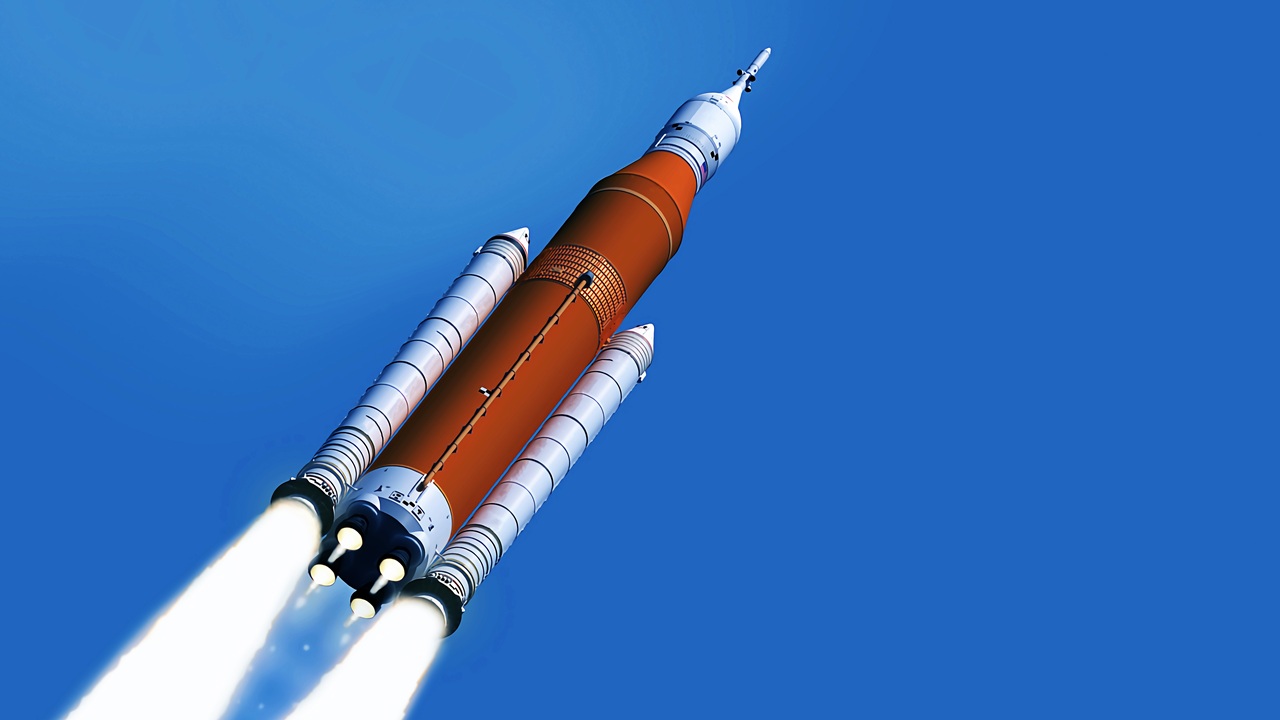
Another key element of this vital mission—taking place later today—involves what’s known as the “Wet Dress Rehearsal.” This is a critical fueling test and simulated launch. NASA wants to ensure that their Space Launch System (SLS) super heavy-lift rocket is in working order and that the Orion spacecraft that will take the astronauts around the moon and back is also ready for the mission.
To do that, NASA’s team at Launch Complex 39B is loading upwards of 700,000 gallons of cryogenic propellant into the rocket.
NASA will then be conducting countdown operations; the space agency will then practice holds and recycles, just as what happens during a real launch. The key difference is that this will be done without the astronauts onboard the spacecraft. Indeed, the countdown will move all the way down to a simulated “T minus zero” point before shutting the process down.
Testing the readiness of the launch hardware and procedures before committing to an actual crewed liftoff is the safest method for ensuring that the launch later this week is successful.
Ahead of this historic mission, all four Artemis II astronauts entered the pre-launch health stabilization quarantine back in Houston, Texas, to minimize their risk of illness prior to launch. This, too, is similar to what was employed by the successful Apollo moon program. Back then, astronauts in the program who were about to be lifted into space on their way to the moon, were placed in quarantine typically 14 days before liftoff.
Failure Is Not an Option (Again)
As mentioned, that Wet Dress Rehearsal will be conducted today. At that point, if the test checks out, NASA will decide about when the mission will take place. Keep in mind that NASA has already stated that the mission launch window is February. Once approved, the mission will last ten days.
If, for any reason, the mission is scrubbed—which, given the geopolitical implications, is unlikely—it will be a major setback not only for the United States and NASA, but for a Trump administration that is desperately looking for wins.
So, unless there is something catastrophically wrong detected during the final tests of the SLS and Orion space capsules, this mission will be going up soon. And America will be that much closer to permanent manned settlements on the moon…before the Chinese can get there.
About the Author: Brandon J. Weichert
Brandon J. Weichert is a senior national security editor at The National Interest.Weichert is the host of The National Security Hour on iHeartRadio, where he discusses national security policy every Wednesday at 8pm Eastern. He hosts a companion show on Rumble entitled “National Security Talk.”Weichert consults regularly with various government institutions and private organizations on geopolitical issues. His writings have appeared in numerous publications, among them Popular Mechanics, National Review, MSN, and The American Spectator. And his books include Winning Space: How America Remains a Superpower, Biohacked: China’s Race to Control Life, and The Shadow War: Iran’s Quest for Supremacy. Weichert’s newest book, A Disaster of Our Own Making: How the West Lost Ukraine, is available for purchase wherever books are sold. He can be followed via Twitter/X @WeTheBrandon.
Image: Shutterstock / Artsiom P.
The post Why NASA’s Return to Lunar Orbit Is a Strategic Nightmare for China appeared first on The National Interest.
Источник: nationalinterest.org