
«Данное сообщение (материал) создано и (или) распространено иностранным средством массовой информации, выполняющим функции иностранного агента, и (или) российским юридическим лицом, выполняющим функции иностранного агента»
 Topic: Diplomacy, and Terrorism Blog Brand: Silk Road Rivalries Region: Eurasia, and Middle East Tags: Board of Peace, Central Asia, Donald Trump, Gaza, Israel, Kazakhstan, MENA, Palestine, United States, and Uzbekistan Why is Uzbekistan Joining Donald Trump’s Board of Peace? January 27, 2026 By: Eldar Mamedov
Share
The Central Asian nation has long had a stake in global counter-terrorism efforts.
The news of Russia’s full-scale invasion of Ukraine in February 2022 reached me while I was in Tashkent, as part of a European Parliament delegation. The Uzbek officials we met on that fateful day appeared to be in utter shock, yet their remarks were meticulously cautious—a graphic demonstration of the geopolitical tightrope walk that defines Central Asia today.
That combination of alarm and restraint foreshadowed the region’s strategic response to that major geopolitical earthquake: a determined diversification of its foreign partnerships.
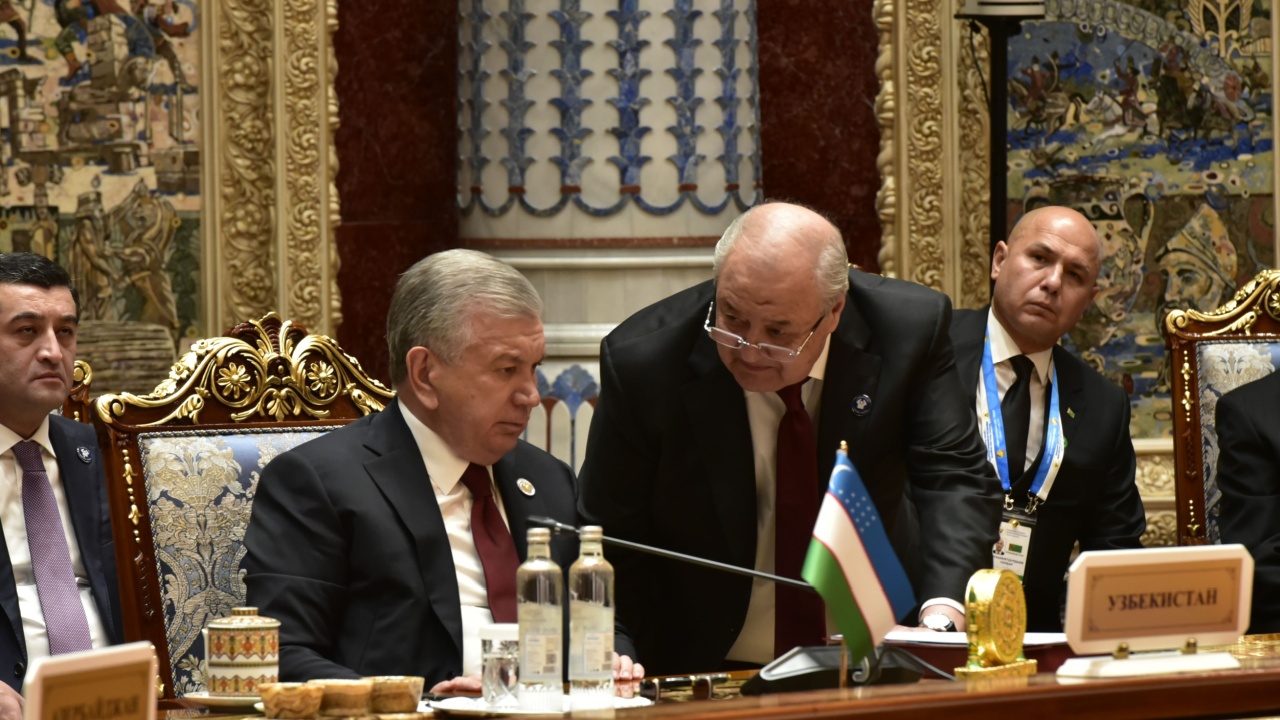
Uzbekistan’s recent decision to join the “Board of Peace,” an initiative spearheaded by President Donald Trump on the sidelines of the World Economic Forum in Davos, primarily to address the situation in Gaza, is the latest move in this high-stakes game. For Tashkent, this was not an act of improvisation. The official rationale, as articulated by senior presidential advisor and former foreign minister Abdulaziz Kamilov, showcases a pragmatic foreign policy: it aligns with national security, upholds Tashkent’s declared foreign policy principles, and addresses Uzbekistan’s “vital interests” in the Middle East’s stability.
Those interests are primarily linked to countering radicalization and violent extremism. Uzbekistan’s historical adversary has been the UN-designated terrorist Islamic Movement of Uzbekistan, which long operated from sanctuaries in neighboring Afghanistan. However, the importation of Salafist ideologies from the Persian Gulf and the wider Middle East, and the proselytizing activities of the radical Hizb-ut-Tahrir, a movement that seeks the establishment of a global caliphate, are other major concerns.
This foreign religious influence strikes at the heart of a delicate domestic balance. Under President Shavkat Mirziyoyev, the state has relaxed some of the draconian restrictions on religious expression imposed by his predecessor, the late Islam Karimov. However, this liberalization is carefully managed. The government actively promotes what it sees as a distinctly Uzbek, “national” form of Islam—one anchored in traditional Sunni Hanafi teachings (akin to the model in Turkey) and firmly contained within a secular state framework. In this context, practices deemed “alien,” such as wearing the niqab (face veil) and associated with Salafism, are viewed not merely as religious differences but as direct threats to social cohesion and state sovereignty.
But to view Uzbekistan’s accession to the “Board of Peace” merely through the lens of the Middle East, or Gaza in particular, is to miss its broader strategic implications. Tashkent’s move is a deliberate signal in Central Asia’s complex “multi-vector” diplomacy, building on the 2025 summit with the United States in Washington. It is a bet on further diversification, a bid for elevated global stature, and a maneuver within a region increasingly courted by major powers.
Uzbekistan’s foreign policy doctrine, as declared by its own Ministry of Foreign Affairs, is “open, mutually beneficial and constructive,” aimed at creating a “belt of security, stability and good neighborliness.” Crucially, it declares a policy of non-alignment with military-political blocs. In practice, this has evolved into a strategy of carefully balancing relations with Moscow, Beijing, and Washington.
Historically, Uzbekistan has participated in Russia-led structures like the Commonwealth of Independent States (CIS) and China-led Shanghai Cooperation Organization (SCO), where it even hosts the Regional Anti-Terrorist Structure (RATS) . Uzbekistan, however, did not sign onto membership in the Russia-led Collective Security Treaty Organization.
Simultaneously, it has cultivated a “multi-dimensional strategic partnership” with China. Relations with the United States, framed by a 2002 Declaration on Strategic Partnership signed by Secretary of State Colin Powell and Abdulaziz Kamilov, then Uzbekistan’s foreign minister, have focused on areas such as supporting Uzbekistan’s modernization and security, with the anti-Taliban and anti-Al Qaeda war in Afghanistan serving as a backdrop.
Joining the Board of Peace intends to inject new energy into this American vector. As analyst Catherine Putz noted, Central Asia’s largest states (apart from Uzbekistan, its neighbor, Kazakhstan, has also joined) have actively sought to “court the famously temperamental and transactional US president,” hoping to lure a presidential visit—a diplomatic milestone to highlight the region’s growing geopolitical relevance.
In line with this status-driven ambition, Kamilov framed the invitation itself as an “important political signal” and a recognition of Uzbekistan as a “serious, responsible player.” A seat at a new table, chaired by the United States, is a diplomatic asset, reaffirming the country’s role as an acknowledged actor on an issue of global relevance, such as the peace in Gaza.
Yet, for all its strategic logic, Tashkent’s bet on the Board of Peace remains, for now, just that—a calculated gamble on a new and untested mechanism. The critical question now is whether this American-led forum can deliver tangible benefits that align with Uzbekistan’s core interests of elevated diplomatic status, security, investment, and enhanced sovereignty.
Will the board evolve beyond a symbolic platform for Gaza reconstruction to address the transnational ideological and security threats that concern Tashkent? In that context, will it secure the lasting and just peace in Palestine that would remove the drivers of radicalization of Muslims worldwide, including in Central Asia? Can it facilitate the kind of concrete economic cooperation and technology transfer to Uzbekistan that was promised at the 2025 Washington summit, or will it remain a talking shop with little material heft? Most importantly, will this new vector of Western-centric engagement provide enough strategic value to justify the delicate diplomatic balancing act it requires with Moscow and Beijing?
Uzbekistan’s participation is a pragmatic step within its multi-vector strategy, demonstrating its agency on the world stage. But the true measure of success will be whether this new seat at the table translates into real diplomatic and security dividends, economic opportunities, and enhanced autonomy for Tashkent.
About the Author: Eldar Mamedov
Eldar Mamedov is a Brussels-based foreign policy expert. He has degrees from the University of Latvia and the Diplomatic School in Madrid, Spain. He has worked in the Ministry of Foreign Affairs of Latvia and as a diplomat in Latvian embassies in Washington and Madrid. Since 2009, Mamedov has served as a political advisor for the Social Democrats in the Foreign Affairs Committee of the European Parliament (EP) and is in charge of the EP delegations for inter-parliamentary relations with Iran, Iraq, and the Arabian Peninsula. Find him on X: @EldarMamedov4.
Image: Rdaxtiyor1234 / Shutterstock.com.
The post Why is Uzbekistan Joining Donald Trump’s Board of Peace? appeared first on The National Interest.
Источник: nationalinterest.org