
«Данное сообщение (материал) создано и (или) распространено иностранным средством массовой информации, выполняющим функции иностранного агента, и (или) российским юридическим лицом, выполняющим функции иностранного агента»
 Topic: Diplomacy Blog Brand: The Buzz Region: Americas, and Arctic Tags: Denmark, Donald Trump, Greenland, NATO, Rare Earth Minerals, and United States Why Does Greenland Matter, Anyway? January 21, 2026 By: Harrison Kass
Share
Donald Trump appears willing to destroy NATO over a frozen island in the Arctic. Why?
The Trump administration’s overtures towards Greenland cut against popular conceptions of the territory—remote, sparsely populated, peripheral. Yet Greenland does hold undeniable strategic importance, sitting at the crossroads of North America, Europe, and the increasingly relevant Arctic. Trump’s interest in Greenland isn’t simply about real estate, but about military positioning, Arctic access, and resources—and the preparation for great power competition.
Greenland’s Strategic Geography
Greenland occupies a critical position in the GIUK gap (Greenland-Iceland-UK), a corridor central to monitoring Russian naval and air activity. The GIUK gap sits between Russia’s Northern Fleet and the North Atlantic; control or access allows for early warning, interception, and sea-lane monitoring. And as Arctic ice races, Greenland’s location grows only more important. Indeed, geography alone makes Greenland strategically invaluable for America’s homeland defense.
China and Russia Are Interested in Greenland, Too
Given Greenland’s importance, Russia views it as a core strategic theater, as demonstrated by the Kremlin’s massive investments in icebreaker vessels. The Northern Fleet operates from the Kola Peninsula in northwest Russia, and the Arctic provides a bastion for nuclear submarines. Greenland therefore sits directly across Russia’s main access routes to the Atlantic, meaning that a US and NATO presence in Greenland would complicate Russian planning and increase exposure to adversarial monitoring. With respect to Russia, the US wants Greenland for the sake of detection and deterrence.
China has designs on the Arctic, too—for the sake of shipping routes, scientific research, and resource access. While China’s claim is less intuitive than Russia’s or America’s, Beijing has nevertheless sought infrastructure investments in Greenland. Naturally, the US views China’s outreach as strategic encroachment, skeptical of even civilian infrastructure like ports and airfields, which can have military implications. In effect, Greenland has become a test case for limiting Chinese influence in the Arctic.
Greenland’s Military Importance
Greenland hosts Pituffik Space Base (formerly Thule Air Base), which conducts critical missions, including missile warning, space surveillance, and Arctic operations. Importantly, the base anchors US early-warning systems against Russian ICBMs and offers a forward presence without relying on continental Europe. Pituffik will become more relevant as Arctic routes open and air and naval traffic increase. Maintaining (or expanding) a military presence on Greenland enables power projection and domain awareness. And because basing options in the Arctic are so scarce, Greenland gives nations a unique opportunity to establish themselves in the region.
Greenland Is Rich with Rare Earth Minerals
Greenland is loaded with rare earth elements and critical minerals—which are vital for defense technologies and clean energy. China currently dominates rare earth supply chains, giving the US incentive to diversify their sources; Greenland offers a potential alternative supply. So Greenland’s resource access relates not just to economics but national security, as mineral independence is strategic power.
Bottom Line: America Has Real Strategic Interests in Greenland
So, while Trump’s overtures towards Greenland are without tact, and threaten to harm US alliances, the strategic incentive behind his want is obvious. Greenland offers a meaningful counter to Russia and China, a way to secure Arctic access, and materially improve US posture. As the Arctic becomes more accessible, it will become more contested. Greenland sits at the center of this shift; great power competition will envelop the territory, shaping control of the high north, and impacting global security as a result. So Trump’s basic desire for influence on the island is rational—if poorly expressed, and likely to do more harm than good.
About the Author: Harrison Kass
Harrison Kass is a senior defense and national security writer at The National Interest. Kass is an attorney and former political candidate who joined the US Air Force as a pilot trainee before being medically discharged. He focuses on military strategy, aerospace, and global security affairs. He holds a JD from the University of Oregon and a master’s in Global Journalism and International Relations from NYU.
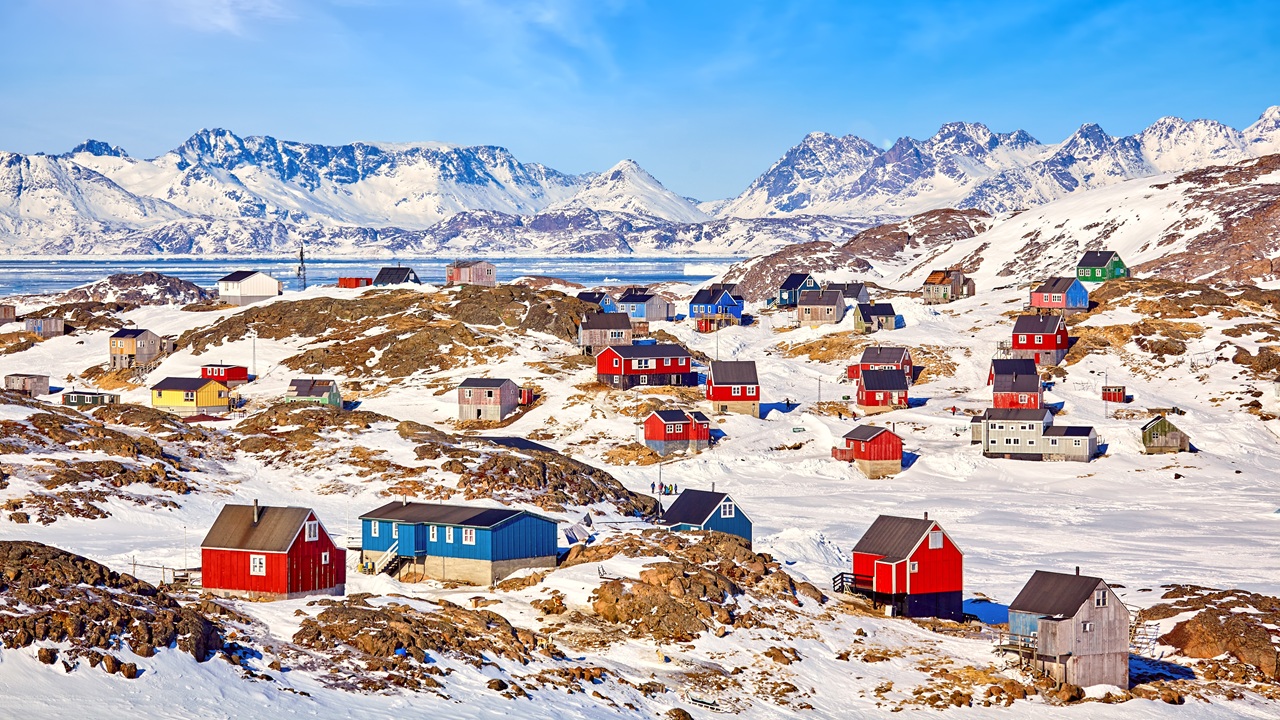
Image: Shutterstock / dibrova.
The post Why Does Greenland Matter, Anyway? appeared first on The National Interest.
Источник: nationalinterest.org