
«Данное сообщение (материал) создано и (или) распространено иностранным средством массовой информации, выполняющим функции иностранного агента, и (или) российским юридическим лицом, выполняющим функции иностранного агента»
 Topic: Critical Minerals, and Trade Blog Brand: Energy World Region: Americas Tags: Coltan, Defense Industrial Base, Latin America, Niobium, South America, Supply Chains, Tantalum, and Venezuela Venezuela’s Coltan and the Quiet Fragility of Tantalum and Niobium January 13, 2026 By: Macdonald Amoah, Morgan Bazilian, Jahara Matisek, Isabel Guajardo Retamales, and Greg Clough
Share
Venezuela shows how optionality in tantalum and niobium—not scale—could reduce US exposure to highly concentrated, geopolitically fragile supply chains.
The US intervention in Venezuela brought a flurry of analysis on oil trade and regional hegemony. A smaller part of the story that is largely absent from public discourse is critical minerals. The key point is not that Venezuela is suddenly a major global producer of minerals and metals; rather, it’s that the United States sits in a brittle position for certain small-volume, high-consequence metals, and Venezuela’s geology and illicit mining networks complicate that picture.
Tantalum and the Problem of Concentrated Supply
The Democratic Republic of Congo (DRC) accounts for roughly 43 percent of global tantalum supply and holds a large share of known reserves. By contrast, Venezuela’s verifiable tantalum production appears negligible. Public exports are minimal, including the last documented shipment of about five tons to Italy in 2018. The Maduro government also inaugurated a concentration plant in Bolívar State in 2018 with an announced capacity of 160 tons per day. However, there is no public evidence that output ever approached those levels on a sustained basis. This means it’s highly unlikely Venezuela can substitute for the production coming out of an unstable DRC.
And yet tantalum still matters in small amounts, because the United States is 100 percent import-reliant for it. Tantalum is used in high-performance capacitors that hold up under heat, vibration, and electrical stress, which is why it is embedded across advanced defense electronics, from aircraft avionics to precision-guided munitions. A US defense-industrial vulnerability emerges not because Venezuela supplies the market today, but because the overall tantalum system has clear concentration risk: primary supply is heavily dependent on the DRC, while refining and processing capacity is heavily concentrated in China. Together, upstream concentration and downstream concentration create a narrow passageway for the American defense industrial base.
Venezuela as Strategic Optionality for Critical Minerals Supply
This is where Venezuela becomes strategically interesting, but only in a hedging sense. Its relevance is defined less by current output than by whether it could become a future alternative supply node under a regime with better governance and higher transparency. Venezuela sits on the Guiana Shield, a geologic province that extends into Brazil and is associated with tantalum-bearing pegmatites. Brazil’s experience is not proof that Venezuela can scale quickly, but it is proof that the broader province is real. That matters because if the United States wants to reduce dependence on long, opaque supply chains, “near-shore” options in the Western Hemisphere become attractive on paper, even when they are politically hard and commercially uncertain in practice.
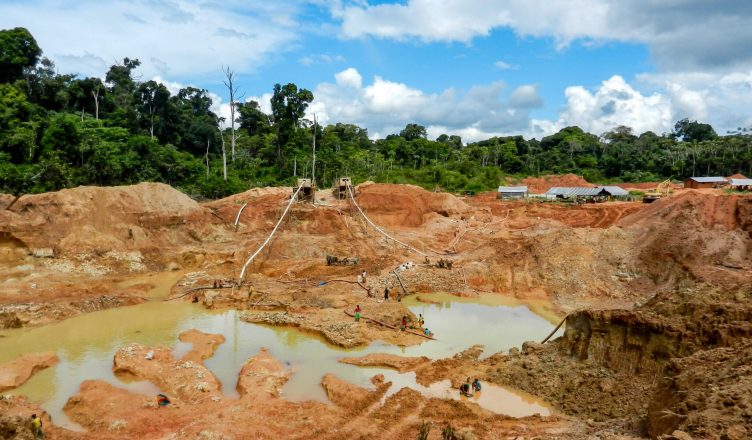
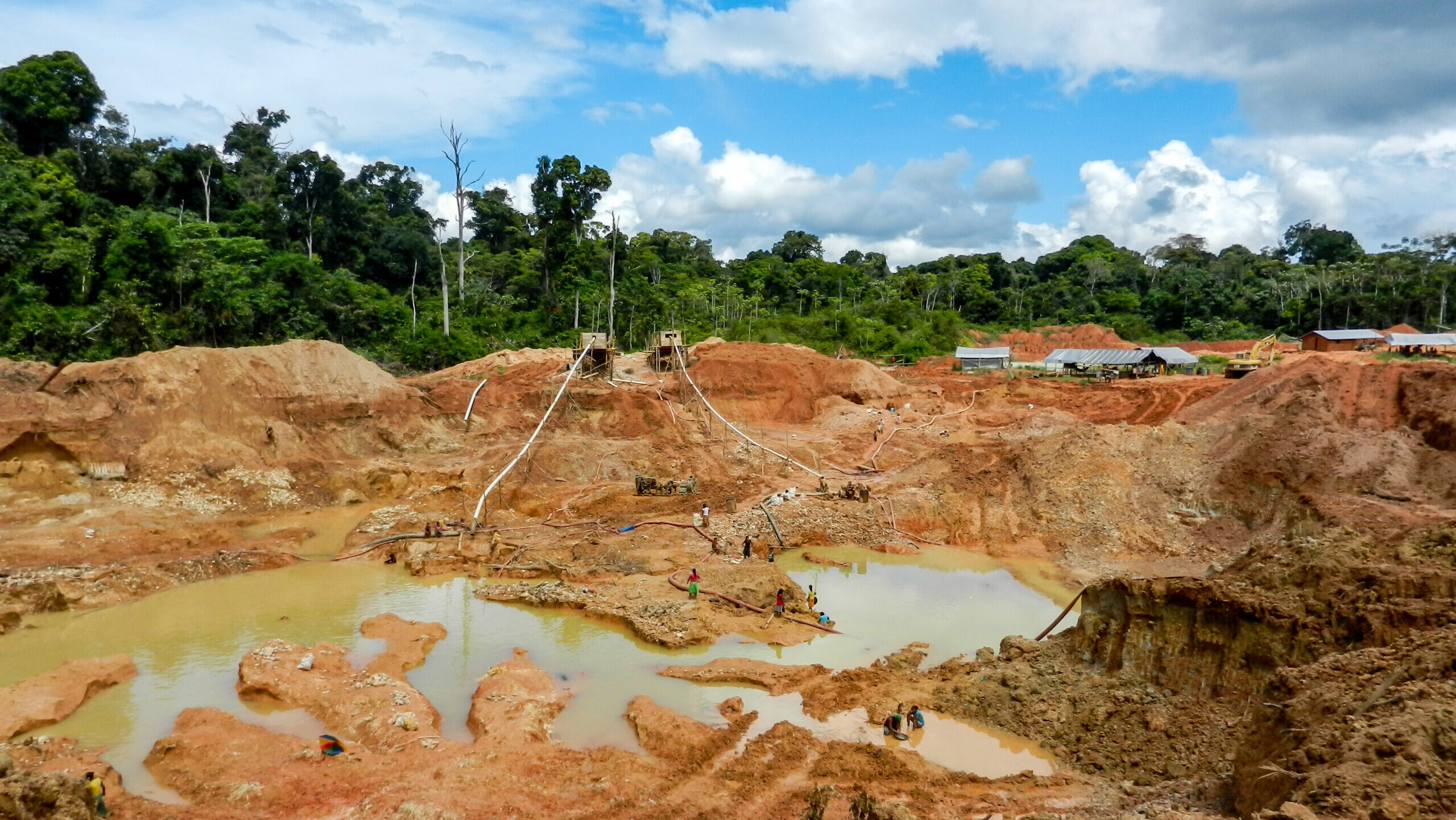
The immediate obstacle is that Venezuela’s mining sector has not functioned well. Since the designation of the Orinoco Mining Arc in 2016, a zone reported to cover roughly 12 percent of Venezuelan territory, public reporting has been sparse and state oversight weak. The result is a “data black hole”: little systematic information on reserves, production, or trade flows, and plenty of evidence of illegal mining, environmental damage, and armed groups. That opacity makes it difficult for any outside actor, including the United States, to distinguish between a theoretical mineral endowment and a commercially viable sector that can be regulated, certified, and integrated into legitimate supply chains.
Venezuela’s Mining Environment Today
This is where the story shifts from geology to political economy. Coltan mining, unlike oil, can be artisanal and diffuse. It is easier to smuggle, easier to launder, and easier to monetize through informal networks. Even at low volumes, this can create a sanctions-resistant channel that external actors may find useful. The strategic concern, therefore, is not that Venezuelan tantalum dominates global markets. The concern is that opaque corridors can provide “insurance” supply during crises precisely because they sit outside normal banking, certification, and shipping regimes. That does not make Venezuela decisive, but it can make it relevant to competitors like China and Russia seeking redundancy.
There is also a second mineral angle that is also underappreciated: niobium. This mineral is often produced alongside tantalum in pegmatite systems, but the global niobium market is dominated by Brazil, which controls roughly 90 percent of supply, largely through unusually low-cost deposits such as Araxá. This matters because a monopoly does not just influence supply; it influences pricing power.
Why does that matter for Venezuela? Because in markets with concentrated sellers and opaque contracting, pricing can be strategic and almost cartel-like. If a dominant producer can temporarily depress prices, it can make financing and development for higher-cost entrants much harder. In that context, a Western Hemisphere tantalum-niobium co-production story becomes interesting as a potential deterrent mechanism: if the United States ever developed a credible, low-cost co-produced stream elsewhere in the hemisphere, it could change the bargaining environment, even if it never “replaces” Brazil or the DRC. The point is optionality and diversification, not inevitability.
Potential Without Preconditions Is a Liability
Venezuela’s mineral potential is real in the geological sense, but its commercial reality is highly uncertain. The country’s current mining sector, to the extent it operates, appears deeply entangled in smuggling and militias. Any serious plan to treat Venezuelan tantalum or niobium as part of a resilient supply chain would require years of stabilization, credible on-the-ground security, transparent permitting, and trustworthy certification. Without that, Venezuelan minerals will be a major liability: a tempting narrative that outpaces the underlying data.
This is a challenge the United States could address if it forms the right kind of task force to investigate playable development approaches to generate something that contributes to mineral markets and strengthens Venezuela’s economy and long-term stability.
About the Authors: Macdonald Amoah, Morgan Bazilian, Jahara Matisek, Isabel Guajardo Retamales, and Greg Clough
Macdonald Amoah is an independent researcher with interests across critical mineral supply chains, advanced manufacturing gaps, the industrial base, and the geopolitical risks in the mining sector.
Morgan D. Bazilian is the director of the Payne Institute and professor at the Colorado School of Mines, with over 20 years of experience in global energy policy and investment. A former World Bank lead energy specialist and senior diplomat at the UN, he has held roles at NREL and in the Irish government, and advisory positions with the World Economic Forum and Oxford. A Fulbright fellow, he has published widely on energy security and international affairs.
Lt. Col. Jahara “Franky” Matisek (PhD) is a US Air Force command pilot, nonresident research fellow at the US Naval War College and the Payne Institute for Public Policy, and a visiting scholar at Northwestern University. He has published over 150 articles on industrial base issues, strategy, and warfare.
Isabel Guajardo Retamales is a researcher at the Payne Institute and an economics and market expert.
Greg Clough is the deputy director of the Payne Institute and an expert in illicit supply chains.
DOD Disclaimer: Views are their own.
Image: kakteen/shutterstock
The post Venezuela’s Coltan and the Quiet Fragility of Tantalum and Niobium appeared first on The National Interest.
Источник: nationalinterest.org