
«Данное сообщение (материал) создано и (или) распространено иностранным средством массовой информации, выполняющим функции иностранного агента, и (или) российским юридическим лицом, выполняющим функции иностранного агента»
 Topic: Naval Warfare Blog Brand: The Buzz Region: Americas Tags: Defense Industry, North America, Shipbuilding, SSN(X), Submarines, United States, and US Navy The US Navy’s SSN(X) Submarine Program Is Slowly Sinking January 30, 2026 By: Brandon J. Weichert
Share
The US Navy does not have the capacity to build the SSN(X) submarines at scale—but rather than acknowledging this, it has simply attempted to delay their completion dates.
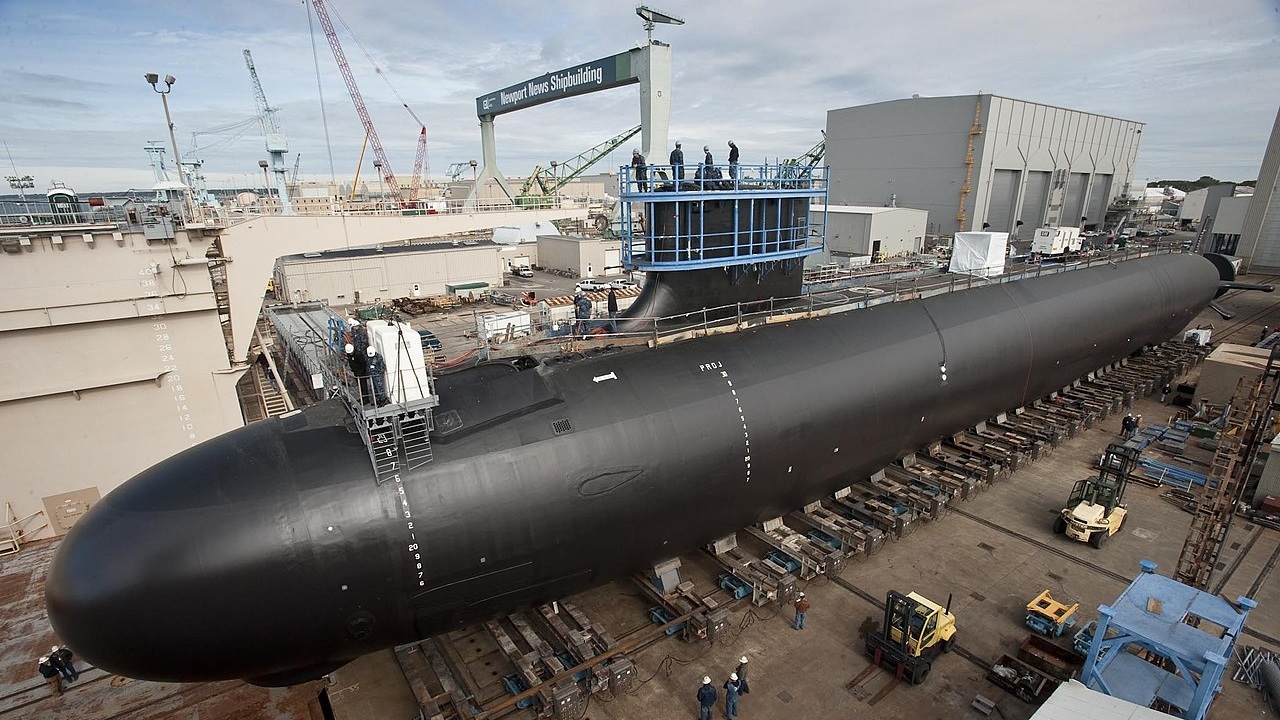
The US Navy is entering a period in which submarines will be the most important manned platform it possesses. Yet the Navy is undergoing a massive submarine building (and maintenance) crisis. This relates to the overall, ongoing US naval shipyard crisis.
Submarines are the Navy’s Future. Why Is It Dragging Its Feet on Them?
One of the biggest investments the Navy has made in recent years is in the new SSN(X) program—billed as the next-generation attack submarine designed to replace the current Virginia-class submarine program, which itself has struggled with production woes.
As of 2025, the Navy has deferred initial procurement for these new, highly complex—very expensive—SSN(X) platforms from Fiscal Year 2035 to FY 2040. And it is far from clear if those procurement plans will remain fixed, given the strains on the overall US economy and the increasing political toxicity of endlessly funding the US defense apparatus the way Congress has been doing.
From Silver Bullet to Budget Black Hole
The fact of the matter is that the SSN(X) program, like so many advanced American development programs, is getting far too costly. In fact, the cost projections are constantly inching up—one of the reasons the Navy ultimately kicked back their procurement date from 2035 to 2040, though it’s unlikely that these things will actually be cheaper 14 years from now.
Essentially, the Navy is finding that the defense industrial base, the naval shipyards, and even the advanced maintenance ecosystem that sustains the US Navy’s fleet, is not prepared for a bigger, more complex program like the SSN(X).
The Navy has itself warned that the delay in the SSN(X) has created what they’re referring to as a “design-base gap” between the Columbia-class SSBN and the SSN(X) design work. The Navy wistfully assures Congress that it will “manage” this gap.
But there is no managing this. The window for crisis management has closed. The Navy needs to fundamentally shift its resources away from its preferred systems, and to change its preferred acquisition methods, too.
LEU vs. HEU: What’s in a Submarine’s Nuclear Reactor?
A Congressional Budget Office (CBO) report estimated that the average unit procurement cost for the SSN(X) program at $8.7 billion. This is substantially higher than the Navy’s own estimate of $7.1 billion. This assumes around 10,100 tons submerged displacement.
There’s another aspect that Congress is investigating. It’s a technical aspect of the SSN(X). Congress is attempting to determine whether they should have the SSN(X) move to low-enriched uranium (LEU) fuel. Right now, the design schematics for the SSN(X) call for Highly Enriched Uranium (HEU) as fuel for the nuclear reactor. But, the adoption of LEU, according to the Congressional Budget Office, might not reduce the overall cost, as some initially believed.
One of the many downsides to LEU is that it will degrade the higher-end capabilities of the SSN(X). For example, the SSN(X) is designed to have greater endurance than its Virginia-class predecessors. But LEU, as its name suggests, holds less energy. That, in turn, leads to decreased reactor lifespan and requires nuclear refueling—something that the designers of the SSN(X) were hoping to avoid with their next generation attack submarine.
Lower energy also reduces the vessel speed and overall operational capabilities.
The US Navy’s Shipyards Are in Crisis
And because LEU requires midlife nuclear refueling, with all the wear-and-tear LEU causes on a submarine over the years, the maintenance costs would be considerably higher than what they already would be for the SSN(X) if it simply utilized HEU as fuel.
Remember, the SSN(X) is already projected to cost up to $8 billion per submarine. Employing LEU rather than HEU for nuclear reactor fuel might explode those costs.
Between defense industrial base strains—notably in the naval shipyards—the arguments over baseline design (the LEU vs. HEU fuel argument), and the already sticker shocked Navy’s decision to kick back the procurement of the first SSN(X) model by five years, the Navy has ensured that there will be a significant capabilities gap in their attack submarine force at some point over the next 15 years. This will occur, incidentally, at a time when most US naval analysts assess that the Chinese People’s Liberation Army Navy (PLAN) will be at the apex of its power.
The Coming US Attack-Submarine Gap
In their report last year, the CBO cautioned readers that the significant delays and the already high cost of the SSN(X) imply that there will be a timing, industrial base, and maintenance capacity trap. When you delay the boat, the design workforce at naval shipyards atrophies as it waits for the order to go in. By the time it does arrive, the shipyards might not turn it fast enough to make a difference.
Bottom line: the Navy’s SSN(X) next-generation attack submarine program has become a strategic challenge because its start has been deferred, its design and size are in flux, and its expected cost is in the high single-digit billions. As noted above, the industrial base and shipyard capacity cannot accommodate current demands, let alone new ones. New Navy ships and submarines must always fall within the rubric of realistic timelines and affordability. These two factors undergird the all-important readiness requirement of all branches of the US military.
Of course, any military system, especially a submarine, might take longer and cost more—even if the shipyards are available and the defense industrial base is working at maximum capacity.
At the same time, if one is already struggling under current conditions to meet demand, piling on with a new, complex, and larger system, such as the SSN(X), is merely setting oneself up for failure.
And failure in this domain will create massive strategic and capabilities gaps in the all-important undersea force…at a time when America’s primary strategic competitor, China, will have reached the height of its military capacity and readiness.
The SSN(X) was meant to keep the US Navy’s undersea capabilities at peak efficiency. It was supposed to be the silver bullet in deterring the Chinese at sea. Now, its absence on the frontlines just might be the cause of the conflict it was supposed to avoid.
About the Author: Brandon J. Weichert
Brandon J. Weichert is a senior national security editor at The National Interest. Weichert is the host of The National Security Hour on iHeartRadio, where he discusses national security policy every Wednesday at 8pm Eastern. He hosts a companion show on Rumble entitled “National Security Talk.” Weichert consults regularly with various government institutions and private organizations on geopolitical issues. His writings have appeared in numerous publications, among them Popular Mechanics, National Review, MSN, and The American Spectator. And his books include Winning Space: How America Remains a Superpower, Biohacked: China’s Race to Control Life, and The Shadow War: Iran’s Quest for Supremacy. Weichert’s newest book, A Disaster of Our Own Making: How the West Lost Ukraine, is available for purchase wherever books are sold. He can be followed via Twitter/X @WeTheBrandon.
Image: Wikimedia Commons.
The post The US Navy’s SSN(X) Submarine Program Is Slowly Sinking appeared first on The National Interest.
Источник: nationalinterest.org