
«Данное сообщение (материал) создано и (или) распространено иностранным средством массовой информации, выполняющим функции иностранного агента, и (или) российским юридическим лицом, выполняющим функции иностранного агента»
 Topic: Air Warfare Blog Brand: The Buzz Region: Europe Tags: Defense Industry, Missiles, NATO, Storm Shadow, United Kingdom, and Western Europe The UK’s Last Missile Gamble: Can “Project Brakestop” Save a Hollowed-Out Military? January 9, 2026 By: Brandon J. Weichert
Share
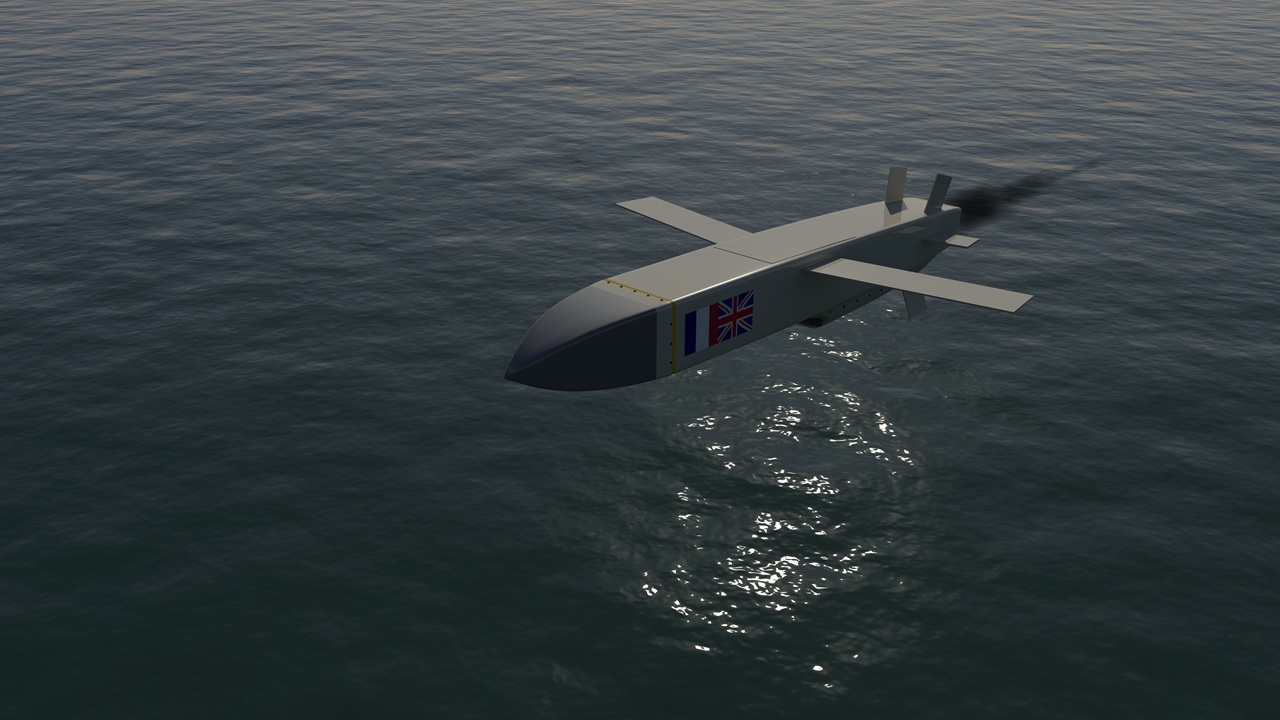
The “Project Brakestop” missile is designed to be cheap to build and easy to deploy—avoiding many of the pitfalls that faced the UK’s similar Storm Shadow program.
Britain is scrambling to bring its military up to fighting capabilities. It is obvious now that the Trump administration means to diminish the importance of NATO in its grand strategy. Recent moves by the Trump administration in Latin America and now calls for the absorption of Greenland indicate that the United States is not joking.
Trump Is Rewriting US Grand Strategy—and Leaving Europe Behind
This has placed the British and their European counterparts in NATO in an awkward position.
After all, almost all of Europe has been free-riding on American security guarantees since the 1950s. With Russia in Ukraine and the Americans seeking an exit from Europe, that leaves Britain and the rest of Europe in a bind.
Hence, European rearmament. On paper, this sounds like a necessary move. In reality, however, this will never work in the timeframe that the Europeans and British think they can restore Europe’s long lost martial prowess. They simply lack the capacity for mass producing weapons and ammunition. Nevertheless, London and some of the others are going to give it a try.
Project Brakestop: Britain’s Attempt to End-Run Missile Production
That’s where Britain’s Project Brakestop comes in. It is a cruise missile program that is specifically designed to overcome the scaling issues and the underlying poor state of the British defense industrial base.
According to Lt. Gen. Anna-Lee Reilly, Brakestop has charted a pathway forward in the UK for streamlining the production of at least some of their weapons.
As Reilly told the Defence Committee, “Brakestop is a cruise missile with five incredibly simple requirements: range, cost, payload, production quantity, can you ramp up, and being transportable in an [Intermodal/Shipping Container].” In her testimony to the Defence Committee, Reilly contrasted the “buy, try, and scale” approach of Project Brakestop with the development of the Storm Shadow missile.
Reilly claimed that Brakestop was doing live-fire testing in 12 months—whereas it took years, cost overruns, and all manner of technical complications to develop the Storm Shadow, the UK’s other notable cruise missile.
Britain aims to have 10-20 units of Brakestop produced per month. They want to deploy these systems to Ukraine, providing Kyiv’s beleaguered forces with cost-effective, long-range cruise missiles. In the future, the British military wants to model future weapons development off the Brakestop development.
While this program is important, it has yet to prove that it can do anything more than augment the costlier, more complex systems that the British military relies upon. Still, the UK should be commended for going this route with Brakestop. If they can both scale this project and then replicate the methods that developed it in such a short time, it might at least give London some semblance of defensive capabilities that it today utterly lacks.
Build Drone Swarms and Cheap Missiles, Not Warplanes & Warships
On top of Brakestop, Britain’s Royal Navy has recently announced its intention to build new warships. London is still desperately trying to figure out how to create a sixth-generation warplane to rival that which Chinese and Americans are building.
All these efforts, however, miss the mark. Britain is a smaller power. It must, therefore, think smaller in terms of defense technologies than it is.
Brakestop provides inspiration towards this goal. It likely cannot be applied to large, manned systems. The methodology behind Brakestop can be used by Britain to build drone swarms, unmanned underwater vehicles (UUVs), and other systems of the like. Operating in tandem, these small, streamlined, unmanned weapons can be as lethal as the more conventional systems that are too expensive and time-consuming to make.
So, if Britain is serious about rearmament, and they correctly assess the Brakestop approach is the correct one for weapons development. They should take the next logical leap and simply decide to prioritize the massive production of smaller systems, like Brakestop.
About the Author: Brandon J. Weichert
Brandon J. Weichert is a senior national security editor at The National Interest. Recently, Weichert became the host of The National Security Hour on America Outloud News and iHeartRadio, where he discusses national security policy every Wednesday at 8pm Eastern. Weichert hosts a companion book talk series on Rumble entitled “National Security Talk.” He is also a contributor at Popular Mechanics and has consulted regularly with various government institutions and private organizations on geopolitical issues. Weichert’s writings have appeared in multiple publications, including The Washington Times, National Review, The American Spectator, MSN, and the Asia Times. His books include Winning Space: How America Remains a Superpower, Biohacked: China’s Race to Control Life, and The Shadow War: Iran’s Quest for Supremacy. His newest book, A Disaster of Our Own Making: How the West Lost Ukraine is available for purchase wherever books are sold. He can be followed via Twitter @WeTheBrandon.
Image: Shutterstock / tsyklon.
The post The UK’s Last Missile Gamble: Can “Project Brakestop” Save a Hollowed-Out Military? appeared first on The National Interest.
Источник: nationalinterest.org