
«Данное сообщение (материал) создано и (или) распространено иностранным средством массовой информации, выполняющим функции иностранного агента, и (или) российским юридическим лицом, выполняющим функции иностранного агента»
 Topic: Air Warfare Blog Brand: The Buzz Region: Asia Tags: Dassault Rafale, Defense Industry, Fighter Jets, France, India, Pakistan, and South Asia The Next Dassault Rafale Fighter Jets Could Be Built in India January 18, 2026 By: Brandon J. Weichert
Share
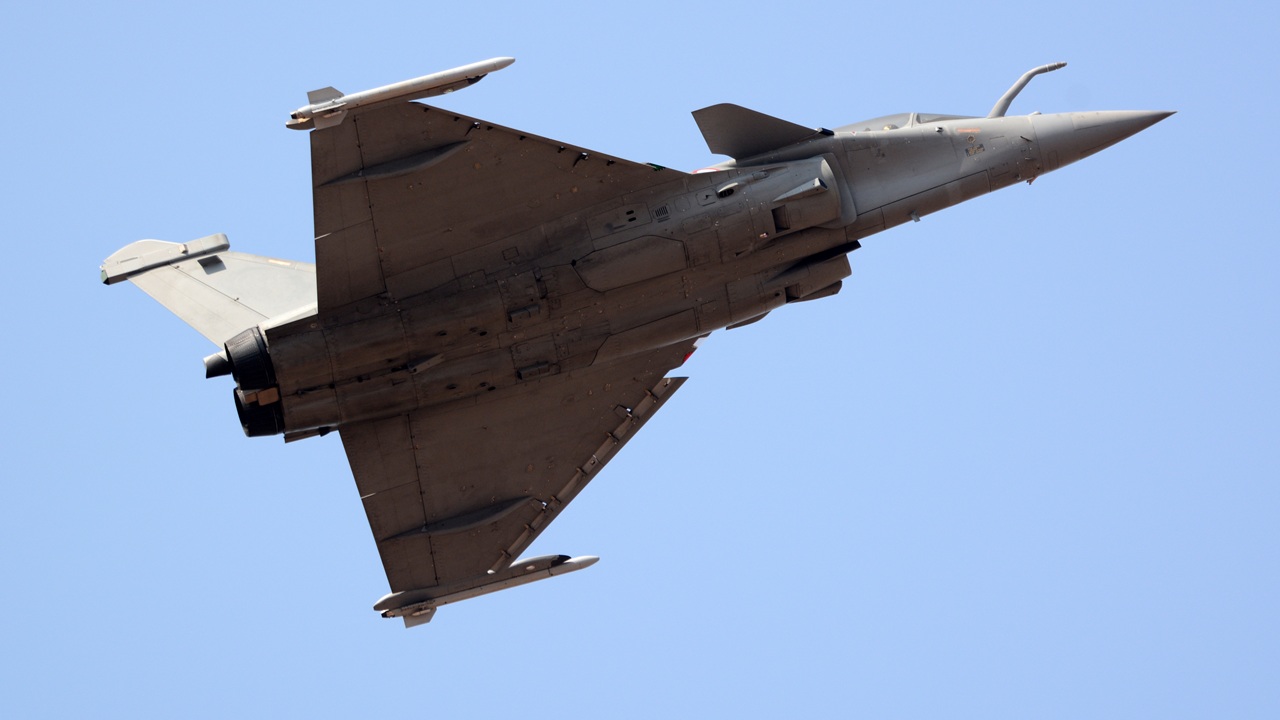
The conclusion of a new agreement between India and Dassault, under which 80 percent of the Rafale order would be built in India, is a win for both parties.
India is negotiating a major fighter aircraft deal with France to purchase 114 Dassault Rafale jets for the Indian Air Force (IAF). This is an extraordinary move, considering that less than a year ago, the government of India and the French aerospace firm were in a brutal war of words with each other following the poor performance of the French-made Dassault Rafale warplanes in the Indo-Pakistani War that lasted for four days last May.
Here’s the kicker, though. India wants around 80 percent of the new jets to be built in India, rather than France—part of its overarching strategy for indigenization of the armed forces. That Dassault agreed to this demand is likely why New Delhi returned to Dassault Rafale. After all, during last year’s war, the IAF and their French-made warplanes were upstaged by the Pakistani Air Force (PAF) and its Chinese-made JF-17s—and India appeared to be at their wit’s end with the French firm.
The Indians Want a Domestically-Built Fighter
After the May 2025 war, the Indians demanded to see the proprietary source code of the Rafales in their arsenal. Dassault resisted. It is, therefore, possible that by sticking with Dassault, everyone is happy and the conflict from a few months ago can be put to rest. Part of the spat between Dassault and the Indian government was over the Indian government’s insistence that their subpar showing in the air war against Pakistan was due to faulty planes provided by Dassault. The French firm, meanwhile, attributed it to pilot error and poor pilot training.
By building the new planes inside India, though, the IAF can ensure quality control—and, if something goes wrong with those planes while in a future combat setting, it will be harder to blame the French firm. It’s a win-win for everyone involved—unless the IAF performs poorly in another round of fighting with the Pakistanis or the Chinese, who are today encroaching again on Indian territory along India’s northern border with China.
New Delhi is committed to greater indigenization of their defense supply chain. So, Indian firms would be doing the lion’s share of creating components and assembling a majority of the jets in India. Dassault is even willing to establish a Maintenance, Repair, and Overhaul (MRO) facility in India to ensure the fleet of new planes is properly maintained in the country. In fact, this MRO could serve other operators in the region, giving India unprecedented advantages over their rivals.
The Dassault Rafale Deal Will Make India More Self-Reliant
The IAF is desperately trying to modernize and expand its capabilities amid force-structure pressures. Rafale, despite the spat between India and Dassault, is seen as producing high-performing multirole combat aircraft. Therefore, by getting Dassault to license their systems for construction in India, the Indians are growing their capabilities and becoming more self-reliant.
Plus, building locally will enhance India’s indigenous aerospace industry skills, strengthen local supply chains, and potentially boost export revenues over time.
By building these systems in India, the IAF is going to see a real impact in its operational capabilities. Today, the IAF’s gold standard has been to maintain around 42 fighter squadrons. Currently, however, that number is much lower—possibly as low as 30. By infusing indigenously built Rafales with the current fleet, India is making a real enhancement.
Another interesting aspect about India’s deal with Dassault is that it serves as a bridge from reliance on US and foreign elements to total self-sufficiency. There have been serious delays in ongoing indigenous programs—notably integration issues with the Tejas Mk1A. Then there’s the ongoing bottleneck for GE F404 engines, which is affecting other Indian projects.
The Economic Times states that Rafale has around 90 percent serviceability—and that those numbers exceed the serviceability of the US-made F-35s.
There are, of course, big risks that come with this. And they include an inability of India to meet tolerances at scale. While this is a smart step for India, there is the chance that costs could explode.
The Rafale Is a Step Towards True Strategic Autonomy
Ultimately, this Rafale deal is not really about France, or even about the bird itself. India is buying itself a stopgap from France. It’s a stopgap that ensures the IAF will have the requisite squadron strength and strategic breathing room—all while enhancing the country’s indigenous aerospace industry at a time when major war could erupt on the Indian subcontinent and domestic defense capacity will be the clincher.
Indigenization in this powerful age of corrective de-globalization, when nations are once more expected to take care of themselves, is a stress test of India. If New Delhi can pass this stress test, it will soon be able to maintain modern combat-ready fleets, meaning true strategic autonomy will have been achieved—the dream of India’s strategists since the earliest days of independence.
With China pressing along the Himalayas and Pakistan refining a Chinese-backed airpower model that has already embarrassed the IAF, New Delhi no longer has the luxury of learning these lessons slowly.
About the Author: Brandon J. Weichert
Brandon J. Weichert is a senior national security editor at The National Interest. Recently, Weichert became the host of The National Security Hour on America Outloud News and iHeartRadio, where he discusses national security policy every Wednesday at 8pm Eastern. Weichert hosts a companion book talk series on Rumble entitled “National Security Talk.” He is also a contributor at Popular Mechanics and has consulted regularly with various government institutions and private organizations on geopolitical issues. Weichert’s writings have appeared in multiple publications, including The Washington Times, National Review, The American Spectator, MSN, and the Asia Times. His books include Winning Space: How America Remains a Superpower, Biohacked: China’s Race to Control Life, and The Shadow War: Iran’s Quest for Supremacy. His newest book, A Disaster of Our Own Making: How the West Lost Ukraine is available for purchase wherever books are sold. He can be followed via Twitter @WeTheBrandon.
Image: Shutterstock / Joe Ravi.
The post The Next Dassault Rafale Fighter Jets Could Be Built in India appeared first on The National Interest.
Источник: nationalinterest.org