
«Данное сообщение (материал) создано и (или) распространено иностранным средством массовой информации, выполняющим функции иностранного агента, и (или) российским юридическим лицом, выполняющим функции иностранного агента»
 Topic: Air Warfare Blog Brand: The Buzz Region: Asia Tags: China, India, Missiles, Pakistan, Rockets, and South Asia The New Pinaka LRGR-120 Missile: A Quiet Revolution in Indian Doctrine January 10, 2026 By: Brandon J. Weichert
Share
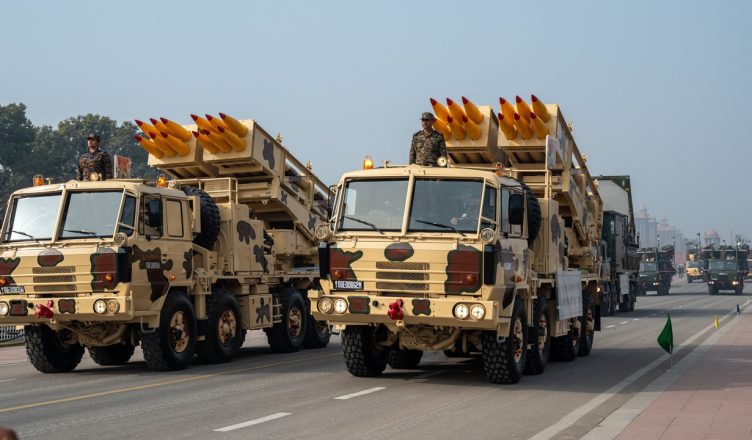
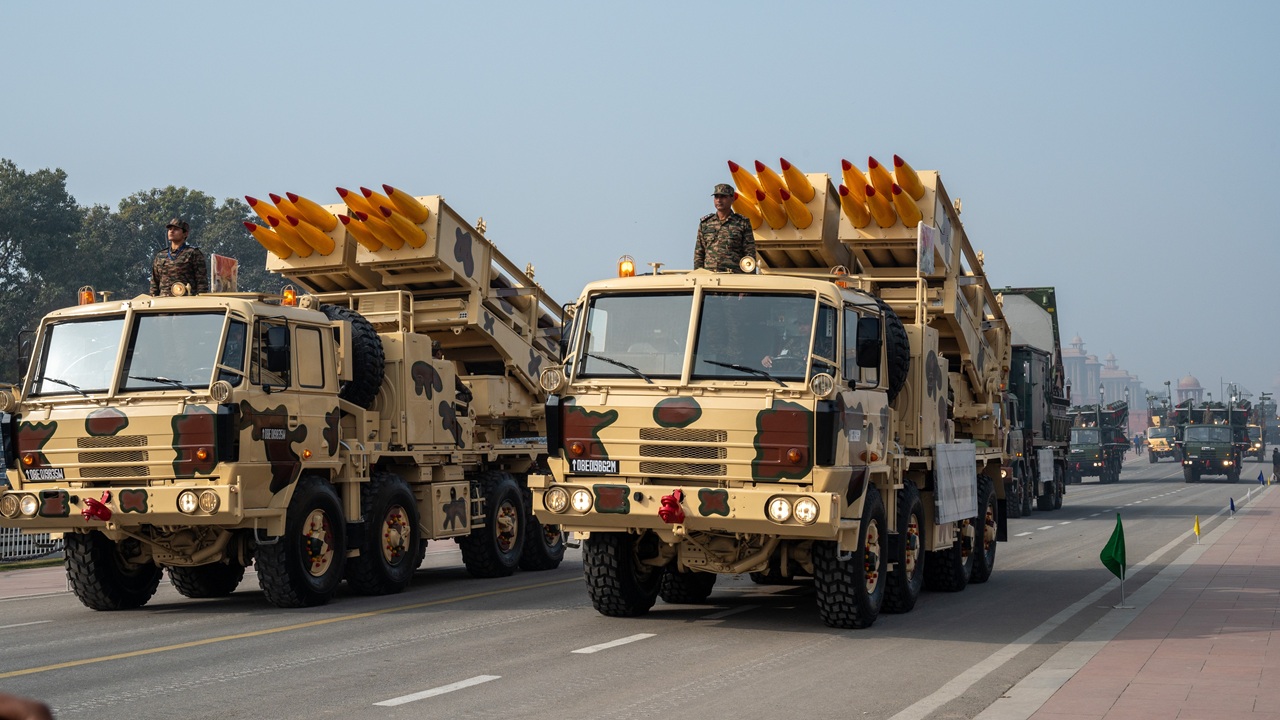
India’s new Pinaka LRGR-120 is roughly comparable to an American HIMARS rocket—but was built entirely within India, with capabilities that could be improved over time.
India’s Defense Research and Development Organization (DRDO) successfully tested its new Pinaka Long Range Guided Rocket (LRGR-120) at the end of last year. According to multiple reports on the matter, the weapon hit targets as far away as 120 kilometers with perfect precision.
It is a completely domestically developed weapon system that will enhance the Indian Army’s overall long-range strike capability—and these weapons can be fired from the launchers that India already possesses, thereby decreasing overall costs.
India’s Indigenous Precision Strike Breakthrough
India’s new Pinaka Long Range Guided Rocket (LRGR-120) relies upon an Inertial Navigation System (INS) with mid-course updates and terminal guidance for high precision. The Pinaka MBRL launchers can fire the LRGR-120s in salvos of up to eight guided rockets. These weapons are designed for standoff, precision-strikes directed against enemy command centers, artillery, and logistical hubs.
There are comparable foreign systems, among them the Turkish TRG-300 Tiger, Ukraine’s Vikha-M, Pakistan’s Fatah-I, and the US-made HIMARS/M270 with guided rockets. Pinaka Long Range Guided Rockets, because of their exceptional range, place this system in the upper tier of global long-range guided fires. Indeed, this domestically made system competes even with the American HIMARS platform.
France has expressed interest in potentially purchasing the Pinaka system from India, underscoring the broad appeal this new Indian weapon has on the global arms market. Nevertheless, the HIMARS in particular has greater ranges than the Pinaka. But this new weapon created by the DRDO nonetheless gives India a much-needed boost in its own long-range fires—and it ensures that India’s domestic arms production reaps the benefits by making it entirely within the country.
It should be noted here, too, that the Indians have alluded to the fact that the Pinaka is not a fixed weapon. There will be upgraded variants developed over time. As such, the current ranges on Pinaka will be extended in future variants. There have even been 200–300-kilometer variants discussed among the DRDO designers of this platform.
So New Delhi is committed to making this weapon system as competitive as possible on the world stage—and as lethal as possible, given the two threats India faces from neighboring China and Pakistan.
How Networked Targeting Transforms Rocket Artillery
It is important to bear in mind that the earlier Pinaka variants were intended for what’s known as area saturation. Essentially, they were designed to stop large formations of enemy troop movements. These were short-range tactics and were, by definition, short range weapons.
We live in an age where precision is important and fighting over the horizon precisely is key. That has been the timeless lesson of the Ukraine War, as well as India’s recent experience in their conflict last May with Pakistan.
Now, the LRGR-120 can precisely engage high-value targets deep behind enemy lines. Therefore, Indian doctrine has shifted toward deep fires—attacks that destroy targets with a smaller salvo rather than large fusillades that simply overwhelm a particular area.
Interestingly, LRGR-120 operates as part of a networked battle system. For instance, drones provide real-time targeting data and conduct nearly instantaneous battle damage assessments. This data is looped into the targeting for the LRGR-120, ensuring greater precision over long distances.
What’s more, information collected from forward observers and other units on a given battlefield are fed into the targeting data of an LRGR-120, ensuring pinpoint accuracy.
Because effective precision deep fires, like the LRGR-120, exist they can be a form of deterrence. After all, what enemy commander would want to mass his forces or key assets within the extended range of the LRGR-120?
The inability to mass forces stymies the combat effectiveness of an enemy force, prompting them to also rely upon whatever long-range precision weapons and drones they possess.
The Pinaka LRGR-120 will be under the artillery command structure of the Indian Army. Thus, it is a purely tactical weapon that fits within the corps or divisional fire plans of the Indian Army.
Why China and Pakistan Must Take Notice
India’s new LRGR-120 fundamentally reshapes Indian Army doctrine, moving it from volume saturation to precision strike. It shifts from near-front impact to deep operational effects. Furthermore, the new LRGR-120 moves from tube artillery support to a standoff tool of deterrence.
This weapon will transform the way the Indian Army fights forever. One can anticipate this system will be brought to bear against either the Pakistanis or Chinese if they attempt to move on Indian interests in the near-future.
About the Author: Brandon J. Weichert
Brandon J. Weichert is a senior national security editor at The National Interest. Recently, Weichert became the host of The National Security Hour on America Outloud News and iHeartRadio, where he discusses national security policy every Wednesday at 8pm Eastern. Weichert hosts a companion book talk series on Rumble entitled “National Security Talk.” He is also a contributor at Popular Mechanics and has consulted regularly with various government institutions and private organizations on geopolitical issues. Weichert’s writings have appeared in multiple publications, including The Washington Times, National Review, The American Spectator, MSN, and the Asia Times. His books include Winning Space: How America Remains a Superpower, Biohacked: China’s Race to Control Life, and The Shadow War: Iran’s Quest for Supremacy. His newest book, A Disaster of Our Own Making: How the West Lost Ukraine is available for purchase wherever books are sold. He can be followed via Twitter @WeTheBrandon.
Image: Shutterstock / PradeepGaurs.
The post The New Pinaka LRGR-120 Missile: A Quiet Revolution in Indian Doctrine appeared first on The National Interest.
Источник: nationalinterest.org