
«Данное сообщение (материал) создано и (или) распространено иностранным средством массовой информации, выполняющим функции иностранного агента, и (или) российским юридическим лицом, выполняющим функции иностранного агента»
 Topic: Human Rights, Oil and Gas, and Water Blog Brand: Middle East Watch Tags: Ali Khamenei, Inflation, Iran, Islamic Republic, Islamic Revolutionary Guard Corps (IRGC), Israel, and Sanctions The Crisis of the Islamic Republic of Iran January 6, 2026 By: Zineb Riboua
Share
Iran’s recent wave of protests strikes the regime precisely when it is at its weakest position in decades.
In recent days, a widening popular uprising has taken shape across Iran, as protests driven by deepening economic chaos intensify. In fact, the unrest has already left at least 20 people dead and nearly 1,000 arrested, but while the protests are rooted in economic pressures, popular grievances extend well beyond it, expressing a deeper confrontation with the Islamic Republic’s political order itself. Unlike earlier protest waves, this unrest unfolds as Iran’s core pillars—its economic viability, coercive capacity, and external deterrence—fail simultaneously, creating a systemic crisis the regime has never faced and may not survive.
Crucially, the regime’s failures are starkly visible in Iran’s accelerating water crisis, which has evolved from an environmental strain into a political fault line. A country of more than 90 million people is confronting its worst drought in over half a century, with collapsing aquifers, dried rivers, and water rationing spreading across cities and provinces. Instead of addressing decades of reckless dam construction and unsustainable agricultural policy, the regime has increasingly shifted blame outward. Iranian officials and state-aligned media have accused neighboring countries such as Turkey, the UAE, and Saudi Arabia of diverting rain clouds, and more recently have alleged that the United States and Israel are manipulating the weather.
Moreover, Iran’s water crisis directly contributes to prolonged power cuts that further intensify unrest. Power generation in Iran depends heavily on water-intensive infrastructure, leaving the grid vulnerable as reservoirs shrink. Chronic blackouts now disrupt daily life, turning infrastructure failure into immediate political anger and, alongside water shortages, accelerating mass unrest.
These resource failures are symptoms of a deeper constraint, one that operates not at the level of infrastructure but at the level of finance and state capacity. In fact, the first and second Trump administrations imposed sanctions of an unprecedented scope and intensity. Under the first “maximum pressure” campaign, the designation of the Central Bank of Iran on terrorism financing grounds severed the country from the global financial system. That single action forced Tehran to rely on an improvised shadow financial architecture centered on Dubai, Turkey, and Hong Kong, a system that the second Trump administration is now actively constricting through expanded sanctions.
The Islamic Republic’s shadow financial architecture keeps oil sales and basic trade barely functional, but it does so at the cost of systemic economic damage. Operating through opaque intermediaries, it leaks value and accelerates capital flight. Most importantly, it cuts the Central Bank off from reliable access to hard currency, leaving it structurally incapable of stabilizing the rial or containing inflation. US sanctions aggravate this dynamic by locking Iran into informal channels that prioritize regime survival over macroeconomic stability, allowing resources to be redirected toward security forces during periods of unrest while monetary policy collapses into symbolism, unable to absorb shocks or restore confidence.
US sanctions have also severely constrained Iran’s oil export base, sharply narrowing its pool of buyers. China now accounts for an estimated 90 percent of Iran’s crude exports, placing Tehran in a position of near-total dependency. This asymmetry allows Beijing to dictate terms, extract deep discounts, delay payments, and frequently substitute cash with barter arrangements. Because oil revenue remains the backbone of the Iranian state, fluctuations in oil prices or buyer behavior directly undermine the regime’s fiscal capacity. Any sustained decline in global oil prices, including scenarios involving Venezuela’s reentry into international markets, would translate into an immediate and severe fiscal shock for Tehran’s regime.
These constraints combined have produced a profoundly distorted budgetary structure. Iran’s national budget is effectively bifurcated between rial-denominated and crude-oil-denominated allocations. Because Iran cannot sell its oil through conventional financial channels, it increasingly uses oil as a substitute for cash, primarily to fund the security sector. The Ministry of Defense, for example, receives both rials and oil shipments, which it must then sell independently to finance weapons, operations, and support for proxy forces. This system pushes Iranian oil toward a small group of buyers, mainly China, forces state institutions to compete to sell crude, and drives prices down through discounts, further reducing national revenue.
At the same time, the shortage of foreign currency has forced the regime to impose extreme controls on the rial. Iran currently maintains an official exchange rate of approximately 42,000 rials per dollar, alongside a parallel market rate that is many times higher. The most recent protests erupted as the market rate neared 1.45 million rials per dollar.
This massive gap distorts everyday economic life in three reinforcing ways.
First, inflation has reached crisis levels, with official data showing a rate of 42.2 percent in December 2025, up 1.8 percent from November, while food prices surged 72 percent and health and medical goods rose 50 percent year on year. Combined with a mismanaged water crisis, these pressures sharply raise the cost of basic necessities.
Second, the erosion of pensions and savings forces households to abandon long-term planning and shift into survival mode, accelerating the flight from the rial into hard assets.
Third, the loss of confidence in the currency directly undermines the Islamic Republic’s ability to govern. When the rial no longer functions as a store of value, taxation, budgeting, and price controls lose credibility.
This is why even routine fiscal measures now trigger backlash. Reports that the government planned to raise taxes starting on March 21 immediately fueled public anger, not simply because taxes are unpopular, but because the increase is projected at 63 percent and is widely understood to finance expanding allocations to military, security, and religious institutions, including a 24 percent year-on-year budget increase for the Islamic Revolutionary Guard Corps. In a context of currency collapse and eroding purchasing power, the public no longer trusts the state to manage revenue competently or distribute it equitably.
The structure of state spending itself reinforces that perception. Subsidies and redistribution function less as social protection than as instruments of political management. Fuel subsidies illustrate the problem. Artificially low prices encourage waste, worsen pollution, and sustain large smuggling networks, while draining public finances. Similar arrangements exist across multiple sectors, benefiting intermediaries and politically connected actors rather than households. At the same time, significant portions of the economy remain under the control of the IRGC and foundations linked to the supreme leader, in which loyalty and access outweigh efficiency, thereby further suppressing productivity and private investment.
The regime’s external priorities compound these internal distortions. Despite domestic collapse, Tehran continues to allocate substantial resources to regional clients and proxy forces, often at the expense of domestic investment. The public widely understands this trade-off and has made it politically salient. Protest slogans rejecting foreign entanglements reflect a growing recognition that national resources are being allocated to regional influence while living standards inside Iran steadily deteriorate.
At a deeper level, these breakdowns reveal a regime that cannot admit error. The Islamic Republic is built on an ideological claim that the supreme leader and the clerical system guiding him are not merely in charge, but fundamentally right. In this worldview, failure is never the result of the regime’s bad decisions. It is blamed on enemies, sabotage, or insufficient loyalty. That mindset makes correction almost impossible. When policies fail, the response is not adjustment but denial and repression, even as daily life becomes harder and pressure mounts.
That same dynamic has played out beyond Iran’s borders. During Israel’s 12-day Operation Rising Lion, the Islamic Republic was not simply struck militarily but exposed as deeply compromised from within. The precision of the strikes revealed extensive intelligence penetration, degraded command-and-control, and a leadership apparatus unable to protect its own senior figures or regional network. The regime struggled to respond in a way that restored deterrence because escalation risked uncontrollable retaliation, while restraint confirmed the extent of its vulnerability.
A system that insists it cannot be wrong cannot adapt when its weaknesses are laid bare. Economically, this logic produces shortages managed by force rather than resolved. Strategically, it leaves Iran exposed to further pressure. In both cases, failure is deferred rather than corrected, allowing stress to accumulate until it spills into the streets.
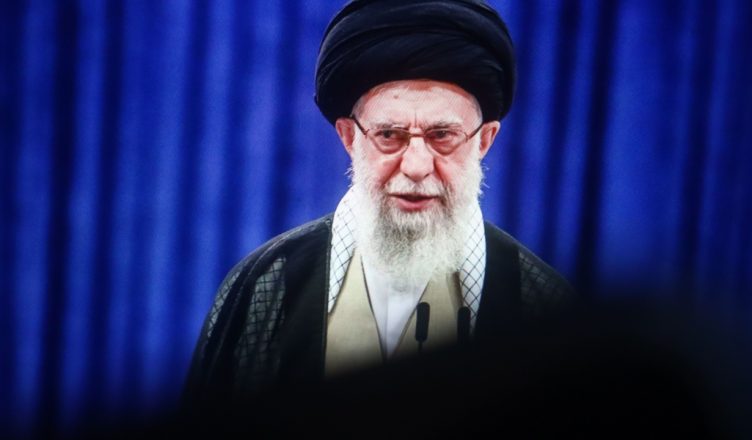
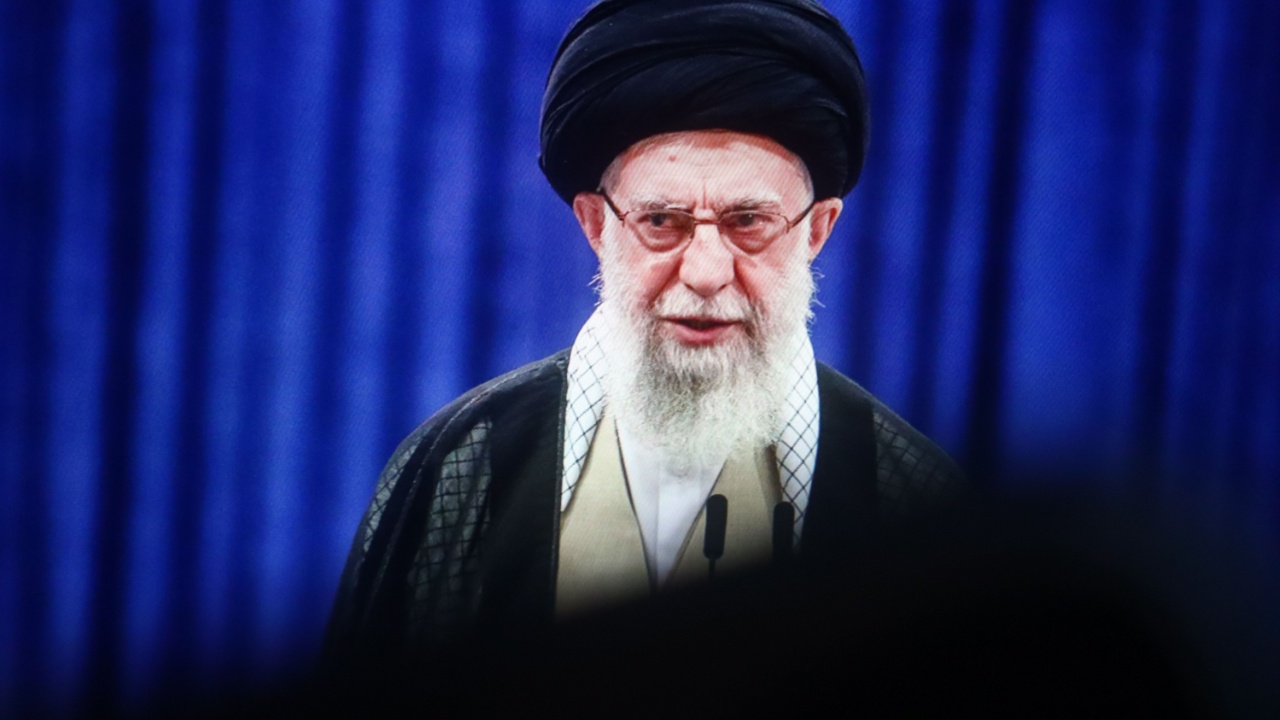
This is why, unlike during previous protest waves, Khamenei now faces choices with no stable exit. Repression is costly and less effective; sanctions and inflation sharply constrain resources; and external setbacks have narrowed the regime’s room to maneuver abroad. Sustaining control under these conditions requires exhausting what remains of the state’s economic and coercive capacity. The regime may survive this phase, but only by accelerating a longer-term collapse, one in which authority is preserved at the expense of viability, and survival itself becomes a process of managed decline rather than recovery. It is, indeed, the beginning of the end.
About the Author: Zineb Riboua
Zineb Riboua is the research fellow and program manager at the Center for Peace and Security in the Middle East at the Hudson Institute. She specializes in Chinese and Russian involvement in the Middle East, the Sahel, and North Africa, great power competition in the region, and Israeli-Arab relations. Prior to joining Hudson Institute, Ms. Riboua was a research assistant at the Center for Jewish Civilization at Georgetown University. Ms. Riboua’s pieces and commentary have been published in The Wall Street Journal, Foreign Policy, The National Interest, The Jerusalem Post, Tablet, and other outlets. Follow her on X: @zriboua.
Image: Photo Agency / Shutterstock.com.
The post The Crisis of the Islamic Republic of Iran appeared first on The National Interest.
Источник: nationalinterest.org