
«Данное сообщение (материал) создано и (или) распространено иностранным средством массовой информации, выполняющим функции иностранного агента, и (или) российским юридическим лицом, выполняющим функции иностранного агента»
 Topic: Diplomacy, and Terrorism Blog Brand: Silk Road Rivalries Region: Eurasia Tags: Afghanistan, Al Qaeda, Central Asia, China, India, Iran, ISIS-K, Pakistan, Russia, South Asia, Taliban, and United States The Case for US Engagement with Afghanistan January 22, 2026 By: Touqir Hussain
Share
The Taliban and Afghanistan’s neighbors are not able to stabilize the country. Only US influence can provide the right carrots and sticks.
Historically, Afghanistan has shrewdly exploited foreign powers’ interests in the country, whether during the Anglo-Russian Great Game or the Cold War, by playing opposing powers off against each other. The strategy ensured the security and financial viability of a country whose many political faultlines (ethnic, tribal, regional, sectarian, ideological) and landlocked status make it difficult to function as a stable modern state.
In the first three quarters of the 20th century, a Pashtun-dominated, elitist ruling establishment that shared power with regional strongmen provided an uneasy stability and a measure of functional statehood. But it unraveled following the overthrow of the monarchy in 1973, plunging the country into four decades of war, regional isolation, and domestic ideological and ethnic strife.
The country that the Taliban took over in August 2021 was neither pacified nor stabilized. Lacking legitimacy at home and recognition abroad, a factionalized Taliban now presides over a divided population, an unravelling economy, and a worsening humanitarian crisis. To secure economic and political support from countries in the region, the Islamic Emirate is following the same old Afghan strategy of leveraging one relationship against another. In the present case, India against Pakistan, Iran against Pakistan, India against China, and China against the United States.
This rentier-state model might help the Taliban survive, but it will not make them feel secure. And it will not stabilize Afghanistan. The space given by the Taliban to many jihadist, separatist, and terrorist organizations with whom they have had affinity over the years has created an ungoverned space where Al Qaeda has re-established itself, and IS-K has enhanced its presence. According to the UN Security Council’s Analytical Support and Sanctions Monitoring Team, more than 20 regional and transnational terrorist groups and organizations now operate within Afghanistan.
Some of these groups are a threat to Afghanistan, and some are destabilizing neighboring countries, including Pakistan, Tajikistan, and Uzbekistan. Others pose a possible threat to the United States and global security. They are well armed thanks to the large quantities of military equipment left behind by the disorderly US departure. We cannot afford to wait for another major incident to take the threat seriously.
The Rise, Fall, and Return of the Taliban’s Afghanistan
Taliban’s history is part of the long process of internal power struggles and external intervention that began with the overthrow of Afghanistan’s monarchy in 1973. The struggles for power triggered by the event culminated in the Soviet invasion in 1979. This, in turn, forced American and Pakistani support for the Afghan resistance and, later, the United States’ ill-conceived Global War on Terror, which destabilized the Afghan-Pakistani border region.
Throughout Taliban rule in the 1990s, various jihadist and sectarian currents in Afghanistan mingled with each other, leaving fertile ground for transnational networks like Al Qaeda. Afghanistan became a hinterland for some, a home for others, and a flagship for all. When they lost power after the US intervention in 2001, the Taliban’s fight became their fight too. Now that the Taliban are back in power, their old comrades in arms feel Afghanistan is as much their home as the Taliban’s.
Many of these groups enjoy Taliban protection in Afghanistan, as they did before 2001. Some, like Tehreek-e-Taliban Pakistan (TTP) and Baluchistan Liberation Army (BLA), they support directly. Toward others, like Al Qaeda, they turn a blind eye. Still others, like Islamic State-Khorasan Province (IS-KP), they have no control over and pose a serious threat. The Taliban want to keep the old militant allies on their side in case they are needed to defend the regime. In any case, the Taliban leadership fears that any attempt to go after fellow jihadist organizations could cause their own downfall by creating fodder for IS-KP.
Given the Taliban’s lack of political will and capacity to control the militant groups—friends and foes alike—they will remain a danger not only to Afghanistan’s stability but also to regional stability and possibly US and global security. The danger will only escalate over time. Leaked reports of the regime’s education reform plans indicate the intention to indoctrinate the youth population through a vastly expanding madrasa system.
The Taliban’s Governance Paralysis
All of this is happening within a governance vacuum as the Taliban navigates the challenges of establishing a functioning state with international recognition while staying true to their legitimizing, Islamist ideology. Murky internal power struggles don’t make this easy. Consequently, the country’s governance and policymaking are not working.
Aggravating the problem are the Taliban’s overreliance on jihadist allies who are pursuing their own agenda against neighboring countries. The Taliban seem unconcerned, helpless, or acquiescent. Their calculation, perhaps, is that their permanent isolation is not an option for the countries in the region. Afghanistan lies at the crossroads of many intersecting crises and concerns about terrorism, narcotics, and refugee flows. All of these problems would grow more acute if the regime fell. Consequently, the Taliban’s Central and South Asian neighbors have no choice but to engage eventually. In fact, the Taliban recognizes that leveraging these concerns to obtain concessions is a useful tactic.
Central and South Asia Can’t Engage the Taliban Effectively
At least 17 countries have embassies in Afghanistan. Apart from some shared interests and concerns, principally about terrorist threats and the repercussions of state collapse, each country has its own particular reasons for engaging with Afghanistan.
China has steadily increased its engagement with Afghanistan, but its long-term commitments remain cautious. Beijing is interested in investing in the oil and mining sectors. Still, it is treading cautiously due to its lack of confidence in the Taliban’s intentions and capacity to enforce order and security.
On the issue of terrorism, China has had some success in getting the Taliban to shift the East Turkestan Islamic Movement (ETIM) away from the Chinese border. Nonetheless, Beijing has failed to end Kabul’s support for the TTP, which is attacking CPEC projects and killing Chinese nationals in Pakistan. Recently, the Afghanistan-based Tehreek-e-Taliban Tajikistan (TTT) targeted Chinese workers in Tajikistan.
Even multilateral fora set up by Beijing, such as the China-Afghanistan-Pakistan Tripartite Foreign Ministers Dialogue and the Shanghai Cooperation Organization (SCO), in which Afghanistan has observer status, have not moved Kabul to act against or restrain the TTP. China’s offer to formally bring Afghanistan into its Belt and Road Initiative and invest in the proposed Pakistan-Afghanistan-Uzbekistan railway line has also failed to provoke movement. The Taliban’s commitment to these forums remains dubious.
Russia, the only country to formally recognize the Taliban regime, feels that the security situation in Afghanistan threatens to destabilize Central Asia, which will have a ripple effect on its own security. Moscow is particularly concerned about IS-KP, which has launched terrorist attacks in Russia, and the TTT. Russia, therefore, intends to gain influence in Kabul to shield itself from these forces and to take advantage of any economic opportunities that may arise.
As for Iran, countering IS-KP’s influence remains a major point of convergence between Iran and Afghanistan. Iran is also interested in the protection of Afghanistan’s Shia population. Along with India, Tehran has a shared interest in advancing access to Central Asia by sidestepping Pakistan. The increasing strain in Afghanistan-Pakistan relations has enhanced this opportunity. Iran is also presenting itself to the Taliban as a potential alternative to Pakistan as an economic partner. But the relationship is marred by strains over water-sharing issues and refugee problems.
However, although the above countries have shared security interests, they have not come up with a common strategy to deal with the Taliban and the jihadist groups harbored by them. The country remains relevant to them all, regardless of whether it is not cooperating on counter-terrorism.
The reality is that each has interests in Afghanistan that go beyond the question of terrorism or human rights. For some, like China and Russia, Afghanistan is at the center of regional connectivity; for some, like Pakistan, India, and Iran, it is an arena of regional competition for influence and proxy wars. For instance, Islamabad believes New Delhi is helping the TTP in conducting a deadly terrorist campaign against Pakistan. For some, especially in Central Asian countries, Afghanistan, with its challenging security situation, is too dangerous to fail.
Yet, the region’s countries (other than Russia) are fulfilling only the Taliban’s minimum requirements for economic relations, political and diplomatic support, and de facto recognition, which do not give them enough leverage to effect change. There is neither incentive nor compulsion for the Taliban to comply. That has emboldened the terrorist groups who feel they are free to pursue their own agenda with impunity. China, Turkey, and Qatar’s efforts to influence the Taliban’s policies have not worked. Other countries in the region, especially Central Asian countries, have virtually given up hope of change.
US Engagement with Afghanistan Cannot Wait
What needs to be done? The United States must get involved. For the sake of the Afghan people and peace and stability of Afghanistan and the region, and in the interest of US security, the Taliban need to be coerced and held accountable to the commitments made in the Doha accord. Only the United States has the intelligence capability, military means, and financial tools to offer incentives that the Taliban cannot refuse and apply coercive measures that they cannot absorb. Inducement and pressure have to work in tandem.
One could begin with the issue of terrorism. If it leads to a successful engagement, this might facilitate the next move (ie, addressing the more complex challenge of influencing Taliban policies on human rights, especially female education, and the establishment of an inclusive government). For now, these issues will have to take a back seat as they are caught up in the fissures and struggles for power within the Taliban. Emir Hibatullah Akhundzada feels that the factionalized Taliban can only be united behind an ultra-conservative vision, which is shared by him and the majority of the movement. The BBC reports that in a leaked clip of a recent speech, he warned that “As a result of divisions, the emirate will collapse and end.”
The US engagement will have to be coordinated with Pakistan, which has the military and intelligence capability to complement American efforts, as well as strong reasons to act against the Taliban, who are destabilizing Pakistan. If President Donald Trump is serious about Pakistan “as a credible, investment-ready mining economy,” he needs to pay attention to the security threats to Pakistan coming out of Afghanistan. A secure, economically and politically stable Pakistan is instrumental to the realization of regional US security aims.
The decision to engage with the Taliban would be difficult, considering the politics of engaging with a former adversary and the negative public perceptions of the Taliban’s gender polices. Yet, the alternative, a neglected and isolated Afghanistan, is an accident waiting to happen.
About the Author: Touqir Hussain
Touqir Hussain is a former senior Pakistani diplomat who has served as ambassador to Brazil, Spain, and Japan. He also held senior positions in the Pakistani Foreign Office, including that of additional foreign secretary, and headed the bureaus for the Middle East, the Americas, and Europe. From 1996 to 1998, he served as the prime minister’s diplomatic adviser. He now teaches as an adjunct professor in the Asian Studies Program at Georgetown University’s School of Foreign Service.
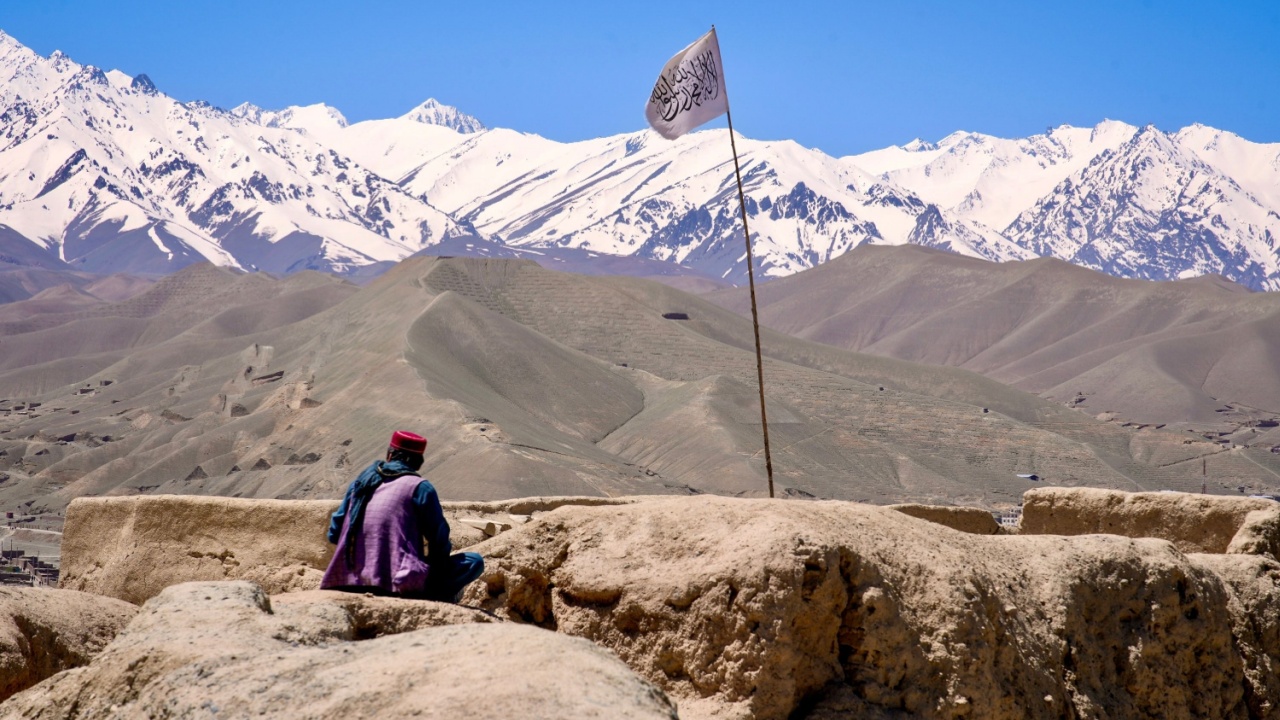
Image: EyeTravelPhoto / Shutterstock.com.
The post The Case for US Engagement with Afghanistan appeared first on The National Interest.
Источник: nationalinterest.org