
«Данное сообщение (материал) создано и (или) распространено иностранным средством массовой информации, выполняющим функции иностранного агента, и (или) российским юридическим лицом, выполняющим функции иностранного агента»
 Topic: Air Warfare Blog Brand: The Buzz Region: Americas Tags: B-21 Raider, Bomber Aircraft, China, Military Budget, Stealth Bombers, United States, and US Air Force The B-21 Raider Could See Its First Deployment Next Year—and China Isn’t Happy January 21, 2026 By: Brandon J. Weichert
Share
China can be content that the number of B-21 Raiders will likely remain fairly low—given its cost of nearly $700 million per aircraft.
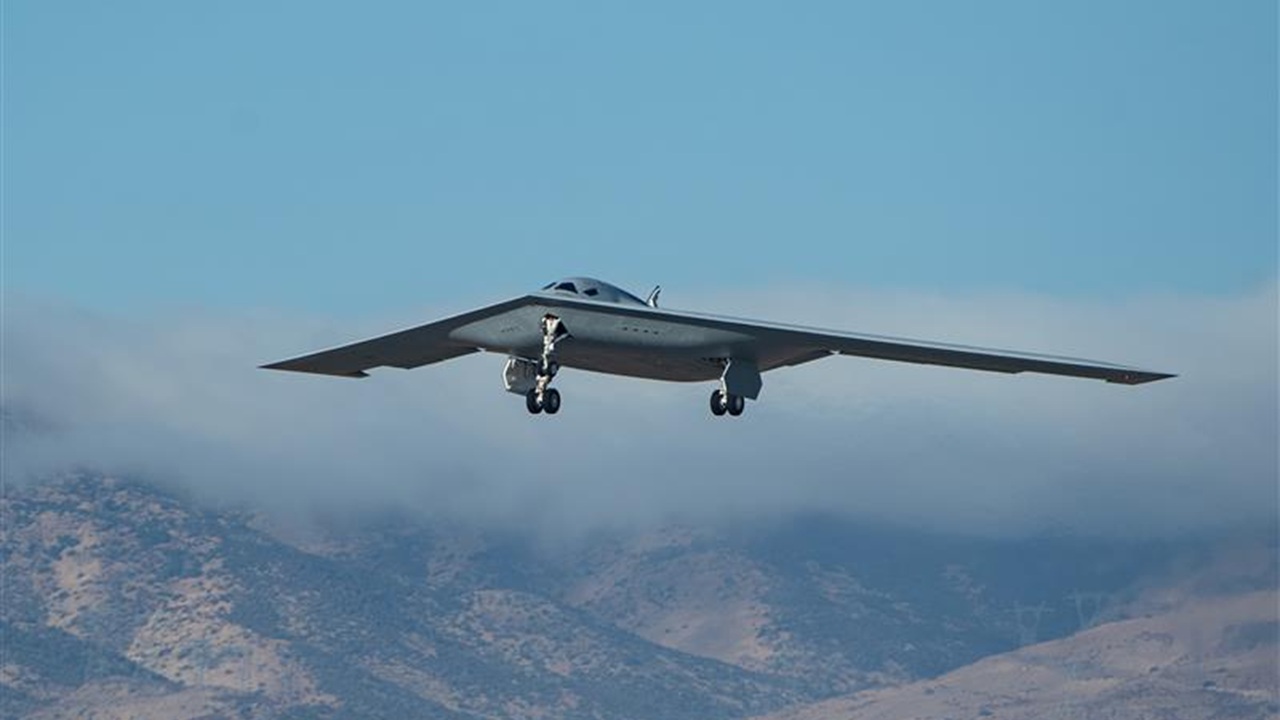
The United States Air Force is moving full speed ahead with the development of their B-21 Raider long-range nuclear-capable stealth bomber. The American air branch is employing at least two test aircraft, which is allowing for the Air Force to expedite the testing and development phase of this most significant project.
Meanwhile, the Air Force is building extensive infrastructure for maintaining these modern marvels at Ellsworth Air Force Base.
The B-21 Raider Breaks the Pentagon’s Stodgy Old Rules
The objective is to have Initial Operational Capability (IOC) for the B-21s by next year. In fact, the Trump administration’s increased defense budget request for Fiscal Year 2026 allows for the boosting of production on the B-21, meaning that some optimistic assessments say that the program can achieve IOC as early as the end of the current year.
Because of the importance of the B-21 for America’s overall deterrence—notably in the Indo-Pacific—the Pentagon has revamped its acquisitions process, at least for specific programs. Breaking Defense, an industry publication, explains that the new Pentagon acquisitions structure was specifically designed to revamp and expedite the production of some of the Air Force’s most important projects, such as the B-21 Raider. So the optimistic assessment that B-21s could reach IOC later this year is not that far-fetched. Add in the growing threat that China poses to the United States militarily, and you’ve got a perfect brew for speeding through the development phase of the B-21 Raider.
One of the many interesting aspects of the B-21 Spirit program is the way in which the Air Force is strategizing for a future war with China that might be sooner than anyone in DC realizes. According to The Diplomat, the Air Force is intent on “making a return to antishipping operations,” with the B-21 Raider being the centerpiece of this proposed new strategy. Recently, the Air Force approved the increasing of AGM-158C Long-Range Antiship Missiles (LRASMs) production.
As for the B-21 Raider specifically, The Diplomat reports that the Air Force is readying to adapt the “Quicksink” bombs for deployment from both the aging B-2 stealth bomber and the new B-21. Quicksink bombs are cheap but highly destructive weapons that would annihilate any Chinese invasion fleet moving toward Taiwan.
The B-21 Is Flying Faster Than the Bureaucracy Can React
One recent report indicates that the streamlining of this program—of the Pentagon’s normally sclerotic acquisitions system—is having the desired effect. After all, the B-21 is moving along faster than was originally anticipated. Specifically, it has a faster-than-expected success in flight envelope expansion.
That’s a fancy way of saying that the Air Force took the plane to its operational limits, testing how the bird handles a fast speed, high altitude, intense G-forces, and bank angles. Conducting test flights and doing extended envelope pilot training to acclimate future pilots of this system to the B-21.
The purpose of this test is to help the pilots build the skills needed for handling unusual issues, such as stalls or a sudden loss of airspeed midflight. Pilots during these trials are also taught how to prevent a total loss of control of the aircraft.
All these processes would ordinarily take years to process under standard operating procedures. But the Trump administration is deeply committed to this program, meaning that things are rolling fast.
Of course, despite the streamlined approach, their cost is still burdensome. One report states that the cost of each plane could cost as much as $692 million. The original request from the Air Force was to build a fleet of 100 B-21 Raiders—for an immense overall cost of around $70 billion. That math makes it unlikely we’re getting more than a handful of these birds, even with the streamlined design and development process.
Still, the Chinese might be seeing at least a pair of these birds (or not seeing them, considering their next-generation stealth features). And if the Air Force’s plans for these planes holds, the kind of armaments that these birds will possess will allow for them to stealthily strike Chinese warships and facilities from well beyond visual range (BVR).
Things may be rough for America’s defense industrial base. But the B-21 might end up being one of the few bright spots. And what a bright spot that is.
About the Author: Brandon J. Weichert
Brandon J. Weichert is a senior national security editor at The National Interest. Recently, Weichert became the host of The National Security Hour on America Outloud News and iHeartRadio, where he discusses national security policy every Wednesday at 8pm Eastern. Weichert hosts a companion book talk series on Rumble entitled “National Security Talk.” He is also a contributor at Popular Mechanics and has consulted regularly with various government institutions and private organizations on geopolitical issues. Weichert’s writings have appeared in multiple publications, including The Washington Times, National Review, The American Spectator, MSN, and the Asia Times. His books include Winning Space: How America Remains a Superpower, Biohacked: China’s Race to Control Life, and The Shadow War: Iran’s Quest for Supremacy. His newest book, A Disaster of Our Own Making: How the West Lost Ukraine is available for purchase wherever books are sold. He can be followed via Twitter @WeTheBrandon.
Image: Wikimedia Commons.
The post The B-21 Raider Could See Its First Deployment Next Year—and China Isn’t Happy appeared first on The National Interest.
Источник: nationalinterest.org