
«Данное сообщение (материал) создано и (или) распространено иностранным средством массовой информации, выполняющим функции иностранного агента, и (или) российским юридическим лицом, выполняющим функции иностранного агента»
 Topic: Air Warfare Blog Brand: The Buzz Region: Europe Tags: Belarus, Eastern Europe, Hypersonic Weapons, Missiles, NATO, Oreshnik, and Russia Russia Fired a Hypersonic Warning Shot from Belarus. NATO Isn’t Listening. January 7, 2026 By: Brandon J. Weichert
Share
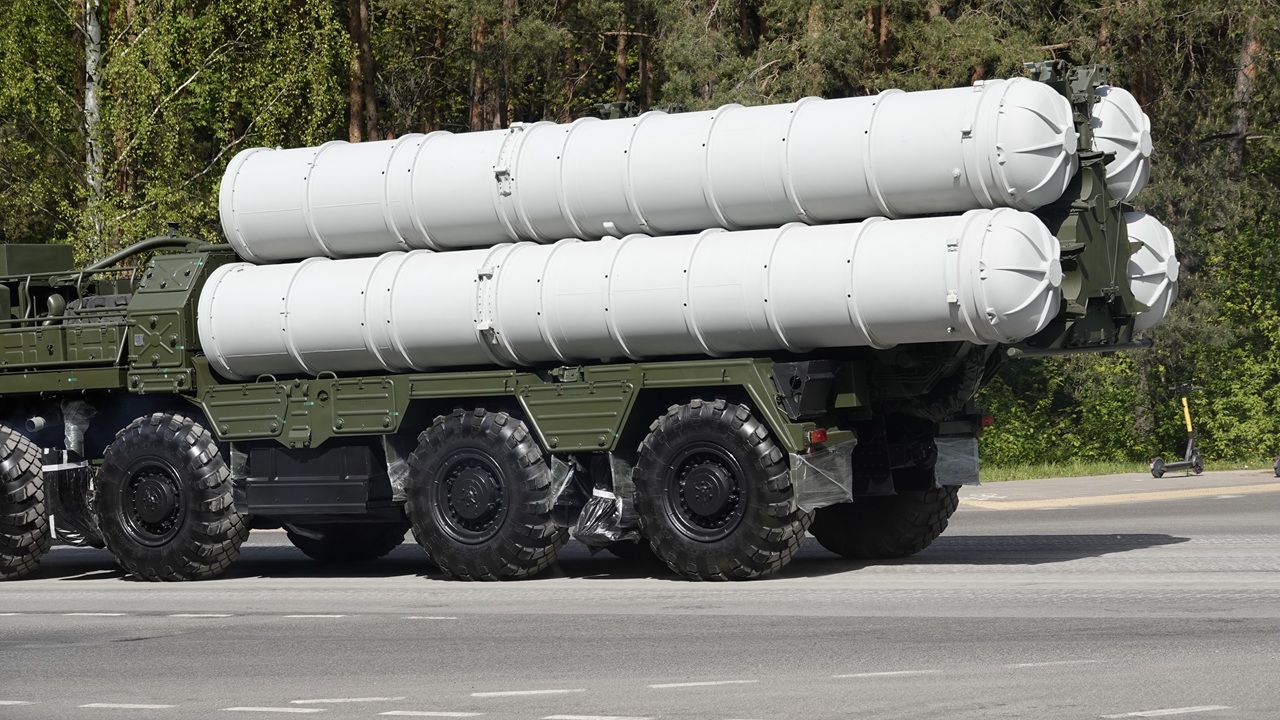
The deployment of Oreshnik missiles to Belarus—the likely front line of a NATO-Russia conflict—is especially concerning because European nations have no reliable countermeasures against them.
Belarusian President Alexander Lukashenko, a longtime ally and personal friend of Russian President Vladimir Putin, confirmed last month that Russia had deployed fully operational Oreshnik hypersonic missile systems to Belarus.
These missiles have been officially placed on combat duty, meaning that Moscow is planning to use them at some near-future point as part of a new round of offensives aimed at breaking the back of Ukraine’s resistance.
Belarus not only neighbors Russia, but shares a border with embattled Ukraine as well. Recall that it was from Belarus that Russian troops initially invaded Ukraine’s north in February 2022. That initial invasion was a shambolic mess, and Ukrainian troops routed Russian forces outside Kyiv—but Russia has learned much in the last four years of fighting. Opening an offensive with hypersonic weapons fired from Belarus would be devastating to the beleaguered defenders of Ukraine—especially since there are no known defenses against them.
Putin Just Put Mach 10 Missiles on Europe’s Border
The Oreshnik missile supposedly travels at Mach 10, making it all but impossible to intercept with existing air defenses. Deploying these systems to Belarus not only further threatens Ukraine, but it also increases Russia’s threat to European NATO members such as Poland, Lithuania, and Latvia—all of which are near to Belarus’ borders.
Russia’s deployment comes both at a time in which the Kremlin wants to button up the Ukraine War and at the moment in which the European NATO members are all clamoring for war with Russia. By placing a handful of these weapons so near to NATO’s borders—weapons that can easily outfly any NATO defense—Moscow is attempting to send a strong signal of renewed deterrence to the Europeans.
Oreshniks have an estimated range of up to 3,400 miles, or 5,500 kilometers, meaning that nowhere in Europe is safe from these weapons. This is on top of Moscow’s conventional nuclear weapons capability.
Belarus Is Russia’s Forward Operating Base Against Europe
Researchers Jeffrey Lewis of the Middlebury Institute of International Studies in California along with Decker Eveleth of the CAN research and analysis organization based in Virginia told Reuters that “they were 90 percent certain that mobile Oreshnik launchers would be stationed at the former airbase near Krichev, some 190 miles (307 km) east of the Belarus capital of Minsk, and 300 miles (478 km) southwest of Moscow.”
While Western news outlets have breathlessly reported the movement of these lethal weapons as being an outgrowth of Putin’s mania. In fact, the movement of these systems nearer to Ukraine and the rest of NATO Europe is a response to more provocative actions taken by NATO. As 2025 closed out, the United States Army announced they would be stationing their own intermediate-range hypersonic weapons system, known as Dark Eagle.
Of course, it should be noted that unlike the Oreshnik, the Army’s Dark Eagle platform is largely untested and is still very much an experimental system. The Russians, on the other han, have had access to the Oreshnik for years and they have perfected this system.
Nevertheless, Moscow is committed to restoring deterrence. If the Americans are planning to place the Dark Eagle system in Germany, nearer to Russian borders, at some point this year, Moscow was going to preempt that move by placing their more advanced—and numerous—Oreshniks in Belarus.
We have fully reached the tit-for-tat stage of geopolitics that once defined Europe during the dark days of the Cold War.
The End of New START Changes Everything
There’s another interesting development behind the Russian decision to deploy the Oreshnik in Belarus.
The 2010 New START Treaty, negotiated by Putin and former US President Barack Obama, expires this year. Once that treaty is gone, there will be no further strategic arms limitation agreement existing between the world’s two largest nuclear powers.
So, the deployment of the Oreshnik gives the Kremlin added leverage as the Americans make moves to expand their own capabilities. This is not the work of madmen. It’s the product of careful strategy.
About the Author: Brandon J. Weichert
Brandon J. Weichert is a senior national security editor at The National Interest. Recently, Weichert became the host of The National Security Hour on America Outloud News and iHeartRadio, where he discusses national security policy every Wednesday at 8pm Eastern. Weichert hosts a companion book talk series on Rumble entitled “National Security Talk.” He is also a contributor at Popular Mechanics and has consulted regularly with various government institutions and private organizations on geopolitical issues. Weichert’s writings have appeared in multiple publications, including The Washington Times, National Review, The American Spectator, MSN, and the Asia Times. His books include Winning Space: How America Remains a Superpower, Biohacked: China’s Race to Control Life, and The Shadow War: Iran’s Quest for Supremacy. His newest book, A Disaster of Our Own Making: How the West Lost Ukraine is available for purchase wherever books are sold. He can be followed via Twitter @WeTheBrandon.
Image: Shutterstock / VideoFromEveryWhere.
The post Russia Fired a Hypersonic Warning Shot from Belarus. NATO Isn’t Listening. appeared first on The National Interest.
Источник: nationalinterest.org