
«Данное сообщение (материал) создано и (или) распространено иностранным средством массовой информации, выполняющим функции иностранного агента, и (или) российским юридическим лицом, выполняющим функции иностранного агента»
 Topic: Drugs, and Foreign Leaders Blog Brand: Paul Pillar Region: Americas Tags: Donald Trump, George W. Bush, Iraq War, Latin America, Nicolás Maduro, South America, United States, and Venezuela Regime Change in Venezuela: Like Iraq, But With More Confusion January 5, 2026 By: Paul R. Pillar
Share
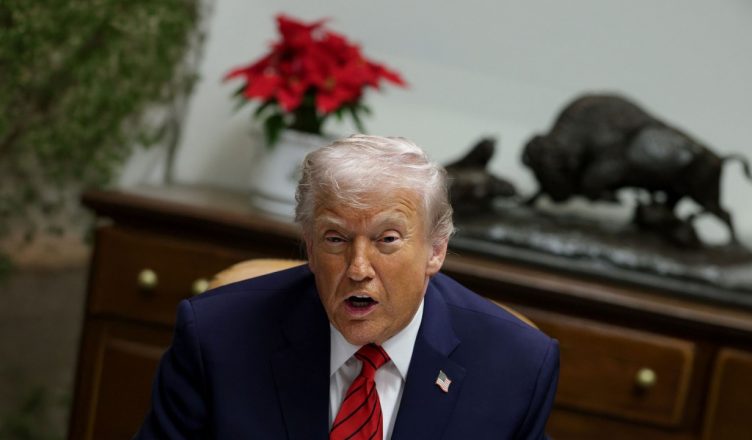
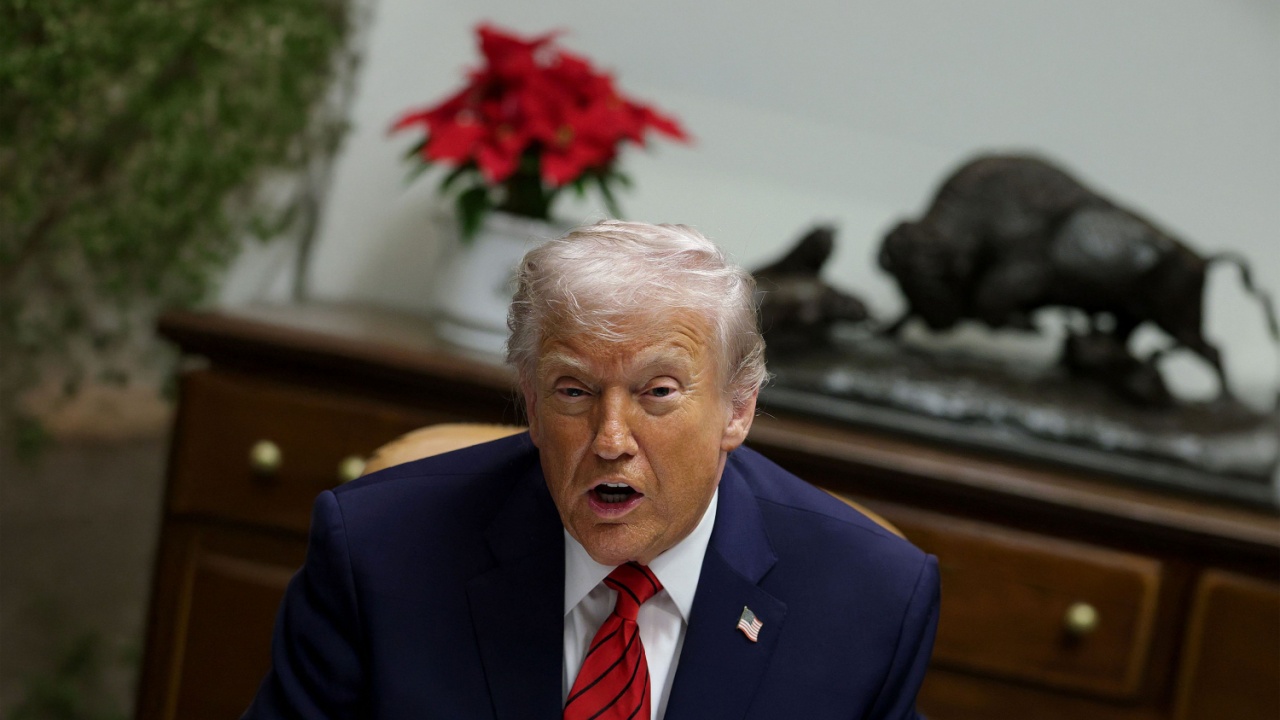
President Donald Trump appears to have given hardly any thought to how his administration is going to “run” Venezuela.
Two months ago, I recounted the eerie similarities between President Donald Trump’s escalating confrontation with Venezuela and the lead-up to the George W. Bush administration’s invasion of Iraq in 2003.
Both involved politicization of intelligence, with the administration making unqualified assertions about a supposed threat while ignoring or denigrating relevant output of the intelligence community. Both exhibited the absence of a policy process that would apply the insights of the national security bureaucracy to all possible ramifications of the coming military action. Both were driven less by specific behavior of the targeted country than by broader ideological or political objectives. Both became a vehicle for the incumbent president to find his footing or bolster domestic support.
Now that US forces have executed a leadership-decapitating military operation in Venezuela, there is no reason to be reassured on any of these points. For example, in his remarks to the press on the morning after the military operation, Trump repeated his assertions—in direct contradiction to the intelligence community’s judgment—about the regime of President Nicolás Maduro supposedly directing the Tren de Aragua drug cartel. This is an echo of the Bush administration’s assertions, which also contradicted intelligence judgments, about a supposed “alliance” between the Iraqi regime and Al Qaeda.
Although it is too early for reporting to confirm that the lead-up to Donald Trump’s decision to make war against Venezuela was as process-free as the decision to invade Iraq, everything we already know about Trump’s impulsive mode of decision-making and his administration’s crippling of the machinery of policy coordination suggests that this parallel with the Iraq episode remains. The military operation to seize Maduro was carefully planned. There is no indication that the decision to order the operation was as well.
Then there is the oil angle. In response to a reporter’s question about the potential cost if the United States “runs” Venezuela for an extended period, Trump said, “It won’t cost us anything, because the, uh, money coming outta the ground is very substantial, so it’s not gonna cost us anything.” This response echoes the claims by promoters of the Iraq War that Iraq’s oil resources meant the war would pay for itself—a war that instead has cost US taxpayers trillions of dollars.
To the extent that differences with the Iraq episode have emerged, the situation with Venezuela is even more disturbing than the Iraq case.
One major difference is the complete exclusion of Congress. Congressional review in the autumn of 2002 of the prospective war in Iraq was woefully inadequate, with no committee hearings and cursory debate, and with both parties rushing to get the vote over with. But at least there was a vote on a resolution authorizing the invasion. The Trump administration’s ignoring or deceiving of Congress regarding what it was up to in Venezuela not only raises major legal and constitutional issues regarding war powers, but also eliminates another potential sanity check.
Brushing off Congress also immerses the Venezuela issue in domestic political combat in unhelpful ways. The Iraq War resolution in 2002 passed mostly with Republican votes but also received substantial Democratic support, including from most Democratic senators. There was enough bipartisan buy-in to keep later anguish over the morass into which the Iraq War sank from becoming one more topic in crude partisan fighting. Given how the Trump administration has handled it, the Venezuelan issue is likely to exacerbate domestic divisions.
The Trump administration has blown off not only Congress but also the international community, and specifically the United Nations Security Council. The Bush administration sought the council’s endorsement for its war in Iraq. It ultimately failed to obtain the resolution it wanted and went ahead with a “coalition of the willing.” Still, its attempt implicitly recognized the Security Council’s role in authorizing such military operations. By continuing its open disdain for international law and international organizations, the Trump administration is contributing to an image of the United States as a destabilizing rogue elephant.
The United States will not have a British sidekick in Venezuela as it did in Iraq. It will not have a coalition of the willing, given the world’s reactions to its operation. The Venezuelan adventure will isolate the United States at least as much as the Iraq War did.
As weak as the Bush administration’s case for war in Iraq turned out to be, it appears to be more serious than any rationale the Trump administration has offered for what it is doing in Venezuela. Secretary of State Colin Powell’s infamous presentation to the Security Council in February 2003, in which he was ill-served by the intelligence community and his own administration, had major flaws that history has uncovered. Still, at the time, it was a plausible case that many knowledgeable people accepted.
In contrast, Trump’s random and conflicting claims about Venezuela and drugs, such as the statement in his post-attack press conference that each boat the United States has attacked in the Caribbean would have killed an average of 25,000 people, are easily seen as unfounded with even the most cursory knowledge of Venezuela’s limited role in the drug trade and the true sources of drug fatalities in the United States.
Perhaps the greatest discrepancy with the Iraq episode is how astoundingly uncertain Trump has left even the near-term future of what his administration is doing in Venezuela. The makers of the Iraq War had a plan, involving a full-scale military invasion, overthrow of the incumbent regime, and military occupation for a time with rule by an American proconsul. The plan was based on badly mistaken assumptions. Still, at least the American people had a fairly clear idea of what the United States would be doing in Iraq during the first couple of months after the invasion.
Trump has left the American people—and the Venezuelan people—wondering what the United States will be doing in Venezuela over the next couple of weeks. Will there be a bigger war there? Trump, in a press conference, said, “We are ready to stage a second and much larger attack if we need to do so, so we were prepared to do a second wave if we needed to do so. We actually assumed that a second wave would be necessary, but now it’s probably not…we’re not afraid of boots on the ground if we have to have.” Got that?
If, according to Trump, the United States is going to “run” Venezuela for a while, who exactly will be doing the running? Trump’s reply: “It’s all being, it’s all being done right now. We’re designating people. We’re talking to people. We’re designating various people, and we’re gonna let you know who those people are.” Sounds like a concept of a plan.
Will the remaining members of the Maduro regime have any role in governing Venezuela? Trump said that the administration has “had a conversation” with Vice President and now Interim President Delcy Rodríguez, and that “She’s essentially willing to do what we think is necessary to make Venezuela great again. Very simple.” But Rodríguez, in addressing her nation while standing alongside Maduro’s defense minister and police chief, called for Maduro’s release and said the US operation was “shameful.”
With this much uncertainty over even the basics of what the United States will do next in Venezuela, it is hard to have any confidence that the administration has thought through how to address the extremely complex post-Maduro political and security situation. Most troublesome will be elements of a coup-proofed regime that have a stake in the continuation of the system over which Maduro presided and have the capability for violent resistance.
Possibly even less thought has been given to what getting immersed in Venezuela does to the bandwidth available to deal with other problems, such as Ukraine and Gaza, and to how the administration’s actions may inspire comparably aggressive action by Russia or China.
The Iraq War’s place in history as one of the biggest international blunders the United States has committed is secure. But the Trump administration’s Venezuela project may make even the Iraq episode look well-managed by comparison.
About the Author: Paul R. Pillar
Paul R. Pillar retired in 2005 from a 28-year career in the US intelligence community, in which his last position was as the national intelligence officer for the Near East and South Asia. Earlier, he served in a variety of analytical and managerial positions, including as chief of analytic units at the CIA, covering portions of the Near East, the Persian Gulf, and South Asia. His most recent book is Beyond the Water’s Edge: How Partisanship Corrupts US Foreign Policy. He is also a contributing editor for this publication.
Image: Lucas Parker / Shutterstock.com.
The post Regime Change in Venezuela: Like Iraq, But With More Confusion appeared first on The National Interest.
Источник: nationalinterest.org