
«Данное сообщение (материал) создано и (или) распространено иностранным средством массовой информации, выполняющим функции иностранного агента, и (или) российским юридическим лицом, выполняющим функции иностранного агента»
 Topic: Land Warfare Blog Brand: The Buzz Region: Europe Tags: Defense Industry, European Union (EU), NATO, Russia, and Ukraine War No, Russia Isn’t Planning to Invade Europe in 2029 January 2, 2026 By: Brandon J. Weichert
Share
There is little evidence that Russia seeks a broader conquest of Europe after the Ukraine War, even as many hawkish European defense officials warn of one.
Various British and European leaders—and even some American intelligence officials—have recently circulated the claim that Russia is plotting an invasion of Europe by 2029.
Of course, these claims are being made by many of the same experts who have spent years proclaiming the end of Vladimir Putin’s regime in Russia is nigh—and that the Russians are always on the brink of being defeated by the Ukrainian Armed Forces. At the risk of sounding flippant, how can both be true? Are the Russians about to collapse, or is the Russian war machine so mighty that it will soon launch an invasion into NATO territories and risk a world war?
For their part, Russian leaders have continually argued that they have no interest in attacking Europe—with the caveat that they would consider such an action if they were attacked first. That is why it is irresponsible for NATO leaders to ruminate publicly about supposed future war plans, including using NATO forces to deprive Russia of access to their Kaliningrad territory in northern Europe.
Even with such unprofessional and loose talk from purported military leaders in Europe, there is no evidence that the Russian Federation intends to attack NATO. The bulk of Russia’s fighting forces are confined to the contested Eastern, Russian-speaking regions of Ukraine, while Russian forces continue holding the Crimean Peninsula along the Black Sea.
Is Russia a Failing State or a Supercharged War Machine? It Can’t Be Both
British sources I’ve spoken to in the last several weeks claim they fear that, if the Ukrainian forces collapse, the Russians will sprint to Kyiv to take the whole country. Once Ukraine falls to Russia, the logic goes, Moscow’s forces will then have an open field to attack any number of NATO countries.
But why would Russia do any of this?
In 2022, the Russians had ample opportunity to take Kyiv. In fact, there is evidence suggesting that Russia dragged its heels on capturing Kyiv at the start of the war because they were tricked by British and American leaders that the chance for a peaceful negotiation in Istanbul was awaiting them. NATO sources dispute this. But even former Israeli Prime Minister Naftali Bennett confirmed that the Americans essentially got Putin to back down in Ukraine with promises of peace talks in Istanbul.
Ukraine Tells the Real Story of Russia’s War Aims
Once the Russians showed good faith by withdrawing their forces, the Americans and British then pressured Ukrainian President Volodymyr Zelensky into not negotiating. So, the war quickly resumed. Had it not been for that diplomatic feint by the Anglo-American forces, though, it is likely that Putin’s troops would have conquered Kyiv. (This in no way denigrates Ukraine’s defense of Kyiv, which was heroic.)
Since that time, Putin consolidated his forces and firmed up the frontlines in the East and South of Ukraine. There is little evidence that Putin wants to capture Western Ukraine. And Moscow’s continued openness to a peace negotiation, even as the NATO powers equivocate on such a prospect, indicates that Russia’s aims are quite limited.
Especially when one considers the kind of firepower that Russia has at its disposal, and the way Western leaders accuse Putin of being Hitler reincarnate, Russian forces could have easily decimated Kyiv and anything else in Ukraine. Instead, Russia chose to fight a protracted, bloody war of attrition. And its objective is clearly to hold onto Crimea and Eastern Ukraine. Everything else to the West is something they are not too interested in controlling. Why would they be?
After all, historically, Western Ukraine has always been preferential toward their immediate European neighbors (modern Lviv, for instance, was historically Galicia, a Polish enclave).
To capture Western Ukraine in order to use it as a bridge for a larger invasion or attack on NATO’s European members would mean the Russian Armed Forces would become mired in a constant low-grade insurgency.
Russia’s Strategy is Attrition, Not Conquest
Besides, the Russians have already captured most of the parts of Ukraine with some of the most lucrative rare earth mineral deposits. What’s more, if the war continues—as it appears it will—the Russians might walk away with Odessa, a major port city still under Kyiv’s control.
Should Russia conquer Odesa, then, Western Ukraine could be allowed to go on as a rump state and ward of NATO.
Given how confined the Russian areas of operation are in Ukraine and how, since 2022, the Russians have eschewed reopening major ground offensives intended to take Kyiv, and considering how Putin and his top advisers have consistently stated their intentions to avoid a direct war with NATO, why are the Europeans and British claiming that Russia will attack NATO between 2027 and 2029?
It has nothing to do with actual intelligence. Instead, this timeframe has to do with when Europe believes its rearmament program will be sufficient enough to punch back at Russia. The fact that NATO has been humiliated in Ukraine, and that the Americans appear disinterested in really remaining an active part of NATO, has sent Europe scrambling.
Europe’s Relevance Crisis—and NATO’s Relevance Problem
After decades of neglecting their own defense, European nations are finally calling for rearmament. With NATO’s existence on the chopping block, suddenly European leaders want to poke the Russian bear as if in provoking the Russians, that will be enough to justify the continued investment into NATO—and America’s continued role in the alliance.
None of these conversations, though, prove that Russia is planning to initiate a conflict with Europe. This is all about Europe desperately trying to remain relevant on the world stage and continuing to milk the Americans for support. Russia is not going to attack Europe nor have they even really tried to move beyond Eastern Ukraine in the last three years of warfare.
The Europeans need to calm down when it comes to panicking about the Russians and instead focus on fixing their own domestic issues and making responsible enhancements for their collected defense.
About the Author: Brandon J. Weichert
Brandon J. Weichert is a senior national security editor at The National Interest. Recently, Weichert became the host of The National Security Hour on America Outloud News and iHeartRadio, where he discusses national security policy every Wednesday at 8pm Eastern. Weichert hosts a companion book talk series on Rumble entitled “National Security Talk.” He is also a contributor at Popular Mechanics and has consulted regularly with various government institutions and private organizations on geopolitical issues. Weichert’s writings have appeared in multiple publications, including The Washington Times, National Review, The American Spectator, MSN, and the Asia Times. His books include Winning Space: How America Remains a Superpower, Biohacked: China’s Race to Control Life, and The Shadow War: Iran’s Quest for Supremacy. His newest book, A Disaster of Our Own Making: How the West Lost Ukraine is available for purchase wherever books are sold. He can be followed via Twitter @WeTheBrandon.
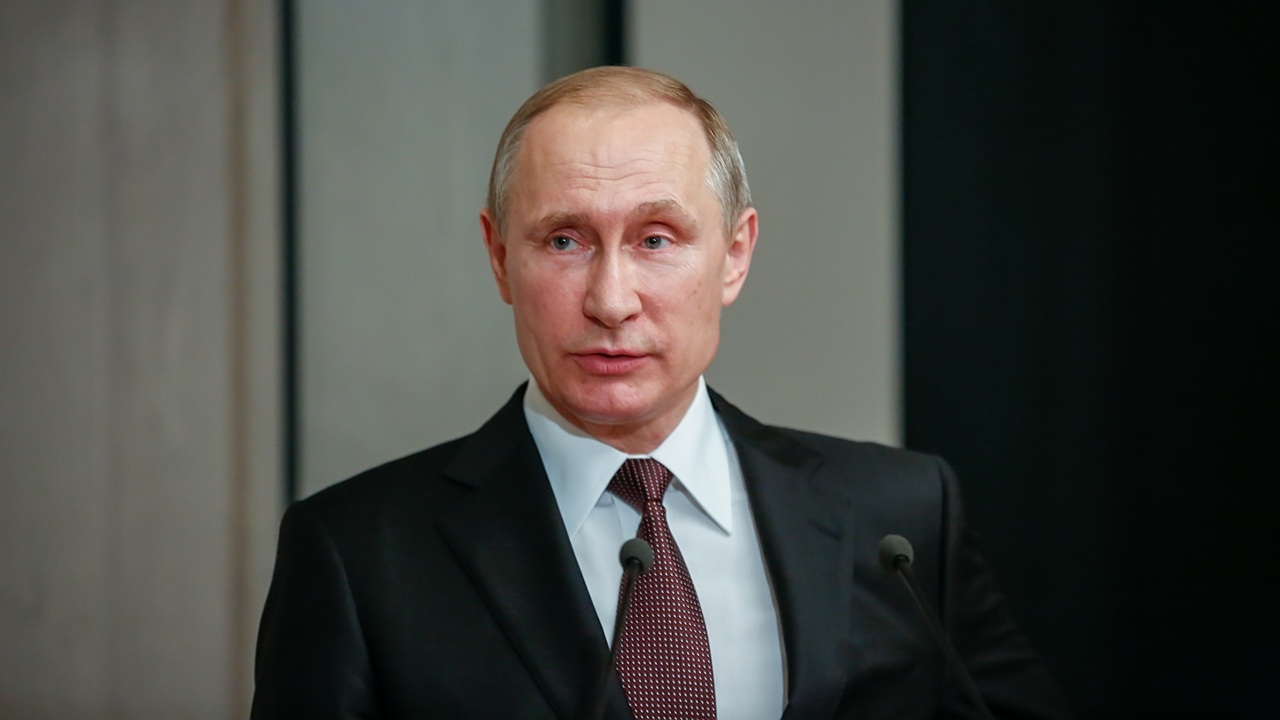
Image: Shutterstock / Ververidis Vasilis.
The post No, Russia Isn’t Planning to Invade Europe in 2029 appeared first on The National Interest.
Источник: nationalinterest.org