
«Данное сообщение (материал) создано и (или) распространено иностранным средством массовой информации, выполняющим функции иностранного агента, и (или) российским юридическим лицом, выполняющим функции иностранного агента»
 Topic: Naval Warfare Blog Brand: The Buzz Region: Europe Tags: Arctic Circle, Defense Industry, Norway, Russia, Shipbuilding, Ships, and United Kingdom NATO’s Northern Shield has a Hole: The UK Can’t Build Any Warships January 7, 2026 By: Brandon J. Weichert
Share
The Lunna House Agreement between the UK and Norway is well-conceived, but relies on a defense industrial base that is unlikely to meet either side’s expectations.
Lunna House is an historic location in the Shetland Isles, the British-owned islands lying roughly halfway between Scotland and Norway in the North Sea. Used as the headquarters for the Norwegian resistance during World War II, the estate has once again become a focal point in European history.
A World War II Ghost Returns—with Russia as the New Enemy
80 years after the British facilitated the Norwegian resistance against the Nazi war machine that had conquered Norway—and was threatening to do the same to Great Britain—today, the leaders of Britain and Norway believe they are again under the gun of an invader. This time, that invader is Vladimir Putin’s Russia.
Last September, the leaders of the United Kingdom and Norway signed the “Lunna House Agreement,” a major bilateral defense agreement, worth £10 billion. The goal of the Lunna House Agreement was to deepen overall military cooperation between the two powers. But seeing as both nations have long and storied histories as maritime powers, the specific goal of the Lunna House Agreement was to expand naval cooperation between the two states.
Britain and Norway Are Going All-In on the High North
This Lunna House Agreement comes in the midst of a wider, frantic European rearmament campaign aimed squarely at defending against the Russian bogeyman and meant to keep the Americans committed to European defense.
For the British and Norwegians, the agreement will maximize their cooperation on matters related to the North Atlantic and Arctic regions. These two areas of the world, closest to their respective shores, have become arenas of geopolitical competition. The Russian Navy has intensified the tempo of its operations in the North Atlantic, while at the same time expanding its presence in the Arctic to solidify its claim to that resource-rich area of the world.
NATO wants to counteract Russia’s growing presence in both regions. Since both Britain and Norway are technically two of the top naval powers in NATO, they are spearheading the effort. This is essentially bolstering the defense of NATO’s exposed northern flank.
What’s more, the agreement supports industrial cooperation and shipbuilding jobs—all while bolstering readiness. British Prime Minister Keir Starmer and his Norwegian counterpart, Jonas Gahr Støre, have made the case in public that the agreement is simply a deepening of already deep ties… and an important signal to Moscow that both Britain and Norway will rise to counter such threats.
The Lunna House Agreement integrates capabilities, strategic forces, and overall strategies for better defending critical European undersea infrastructure; it will allow for the two navies to better monitor Russian activity in the North Atlantic and Arctic as well.
The Right Submarines for the Wrong Industrial Reality
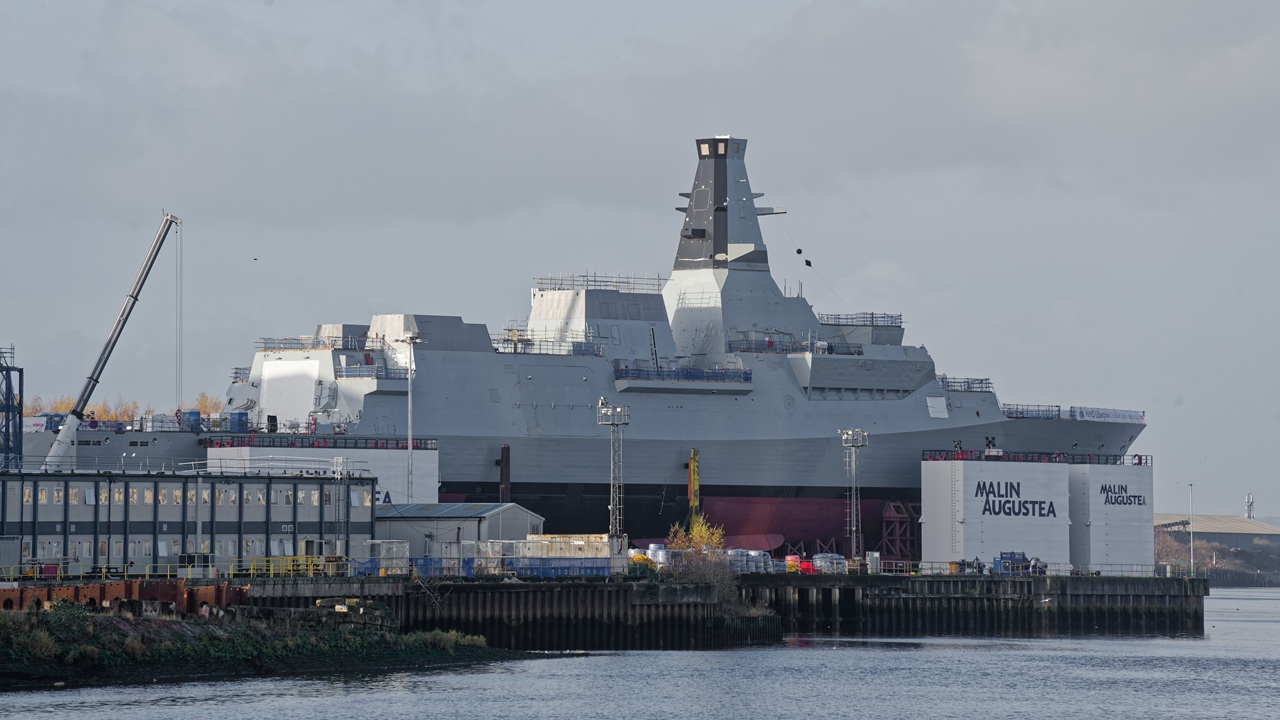
As per the Lunna House Agreement, both the British Royal Navy and the Royal Norwegian Navy will operate a fleet of British-made Type 26 anti-submarine warfare frigates. Eight of these warships will go to the British Royal Navy, while at least five will go to the Royal Norwegian Navy. The core mission of these ships is to hunt submarines and defend the threatened undersea lines of communications that are crucial for European connectivity.
It is believed that the first round of these Type 26 anti-submarine warfare frigates will first become available beginning in 2029. Under the deal, both Britain and Norway will share maintenance facilities, technology, and equipment. This will cut down on costs and increase the fighting capacities of both navies due to better interoperability. London will also join Norway’s ongoing program to develop offshore support motherships that will deploy uncrewed mine countermeasures and undersea warfare systems.
Meanwhile, the Royal Navy will collaborate with Norway on developing stockpiles of Stingray torpedoes. It will adopt Norwegian naval strike missiles for its ailing arsenal, too.
The UK-Norway agreement calls for joint planning and wargaming intended to enhance operational effectiveness of both militaries in the unforgiving environment of the High North.
For example, British Royal Marines will now train all year in Norway to enhance their cold-weather resistance and mountain warfare readiness.
Yet, as with so many aspects of the ongoing—spasmodic—European rearmament craze, there are many aspirational parts to this Lunna House Agreement.
Take, for example, the argument that the Type 26 warships will be available starting around 2029. The selection of Norway to partner with is key. At one point, Britain’s once-mighty shipbuilding industry produced 48 percent of all ships for Norway in 1951. By 1965, as Britain’s shipbuilding industry collapsed, it accounted for only 2.8 percent of Norway’s ship purchases.
Unmanned Ships Are a Better Way Forward for Norway and the UK
More to the point, Britain has yet to address the fundamental weaknesses of its nearly dead shipbuilding sector. And no amount of shipbuilding deals with Norway or any other country will fix the structural issues.
For instance, there are too few workers in British shipyards. The infrastructure undergirding those shipyards is bad. Regulations and other bureaucratic complications routinely conspire to stifle innovation and cost-saving techniques.
Most important, though, is that Britain lacks scale. London says it can start churning out Type 26 warships by 2029. That seems like a fantasy. Perhaps with Norway’s help, it might make that deadline. But the entire order won’t be filled until midway through—or, more likely, toward the end of—the 2030s. In that time, Russia’s Navy could easily become the dominant force in the North Atlantic and certainly in the Arctic.
Britain should focus on developing cheaper unmanned naval drones to do the job of these Type 26 anti-submarine warships. Trying to build these warships on that timeline will yield nothing but headaches—and cede key territory to the Russians.
About the Author: Brandon J. Weichert
Brandon J. Weichert is a senior national security editor at The National Interest. Recently, Weichert became the host of The National Security Hour on America Outloud News and iHeartRadio, where he discusses national security policy every Wednesday at 8pm Eastern. Weichert hosts a companion book talk series on Rumble entitled “National Security Talk.” He is also a contributor at Popular Mechanics and has consulted regularly with various government institutions and private organizations on geopolitical issues. Weichert’s writings have appeared in multiple publications, including The Washington Times, National Review, The American Spectator, MSN, and the Asia Times. His books include Winning Space: How America Remains a Superpower, Biohacked: China’s Race to Control Life, and The Shadow War: Iran’s Quest for Supremacy. His newest book, A Disaster of Our Own Making: How the West Lost Ukraine is available for purchase wherever books are sold. He can be followed via Twitter @WeTheBrandon.
Image: Shutterstock / richardjohnson.
The post NATO’s Northern Shield has a Hole: The UK Can’t Build Any Warships appeared first on The National Interest.
Источник: nationalinterest.org