
«Данное сообщение (материал) создано и (или) распространено иностранным средством массовой информации, выполняющим функции иностранного агента, и (или) российским юридическим лицом, выполняющим функции иностранного агента»
 Topic: Space Blog Brand: The Buzz Region: Americas Tags: California, International Space Station (ISS), Jared Isaacman, NASA, North America, and United States NASA’s Medical Evacuation of the ISS Is a Demonstration of US Space Power January 22, 2026 By: Brandon J. Weichert
Share
NASA Administrator Jared Isaacman’s quick evacuation of sick ISS crewmembers is a remarkable contrast to the Starliner crew stranded in space only two years ago.
NASA was recently forced to cut short the planned SpaceX Crew-11 mission because one of the astronauts developed an undisclosed medical problem while aboard the International Space Station.
The NASA Mission That Ended Early—and Why It Matters
Not only has the medical condition not yet been disclosed, but the crewmember suffering from the unnamed affliction has been kept under wraps.
So, on January 8, NASA decided to cancel a planned spacewalk when the crewmember was first falling ill. At that time, NASA began thinking about bringing the crew home early for proper medical care on Earth. The ISS is not equipped for such a scenario. So, for the first time in its more than 25-year history, a NASA crew rotation mission was terminated due to a medical emergency.
The four crewmembers were NASA astronauts Zara Cardman and Michael “Mike” Fincke, Japan JAXA astronaut Kimiya Yui, and Russian Roscosmos astronaut, Oleg Platonov. These four flew back to Earth onboard a SpaceX Crew Dragon “Endeavor” capsule.
On January 15, the capsule successfully splashed down off the coast of California. Recovery teams retrieved the astronauts, and all four were ultimately taken to a local hospital for observation before returning to NASA’s Johnson Space Center in Houston for further medical checks and flight-reconditioning.
Three astronauts remain aboard the ISS, NASA astronaut Chris Williams and Russian Roscosmos cosmonauts Sergey Kud-Sverchkov and Sergei Mikayev. They will stay in orbit until a new crew can be assembled and replace them. That next crew—Crew-12—is scheduled to launch around mid-February 2026, thereby restoring the station to its typical full complement of astronauts.
The Medical Evacuation Shows How Far NASA Has Come
NASA’s decision to prioritize the crewmember’s well-being shows an emphasis by the space organization on caring for its key personnel. NASA and its partners say the ISS operations remain functional, and the early return should not affect future missions, like the Artemis II.
Here’s why this move by NASA under former SpaceX astronaut, Jared Isaacman, is such a game-changing move. Go back to the last years of the Biden administration, in which a small crew of astronauts who were testing Boeing’s Starliner capsule found a problem and were forced to stay onboard the ISS—ultimately remaining for a year longer than they were supposed to.
It was a humiliating experience for the Americans. In some ways, it was reminiscent of the collapse of the Soviet Union, during which Soviet cosmonaut Sergei Krikalev was left stranded in space because the Soviet government had fallen and the new regime lacked the funding to retrieve him.
Luckily, both Krikalev and America’s astronauts eventually returned to Earth. But it did not happen until President Donald Trump returned to the Oval Office, and he tasked Elon Musk’s SpaceX with rescuing them.
Isaacman’s SpaceX Mindset Has Transformed NASA
Isaacman has almost instantly brought an entirely new culture with him to NASA. The existing NASA had become a bureaucracy that, in its heyday, was a Cold War-fighting institution but had transmogrified in the post-Cold War era into a risk averse agency.
Under the old leadership of NASA, for example, the sickly astronaut would not have been returned with some of their crewmates earlier to the planet surface. Instead, NASA’s old culture would have forced everyone to remain onboard, prizing endurance above all else. But Isaacman, a product of the SpaceX astronaut culture, prioritized rapid access to Earth-based medicine.
The old NASA lived off the principles of scarcity and risk. Mission commanders feared the expense and complications of returning early to Earth and how that would damage the overarching spaceflight mission of NASA.
Under Isaacman, however, NASA is embracing the “move fast and break things” ethos of SpaceX. That mindset is one of space being an open, always-accessible cosmos. If someone gets sick in orbit, it’s not the end of the world. Just like on Earth, you drive that person to the hospital.
Isaacman, in just a month of being on the job, has already fundamentally changed the culture and, therefore, the calculus of future mission commanders. Unlike before, these mission commanders will understand that they’re not in Antarctica, where help can only be reached at certain times of year. The people stationed on the ISS will have access to SpaceX and NASA’s spacecraft at almost any time. And if a mission must be aborted because of a medical emergency, it’s not the end of the world. It’s a learning experience—and a chance to demonstrate the power of NASA and America’s manned spaceflight program.
This emergency validated NASA’s commercial-crew strategy (which, remember, the existing bureaucracy at NASA had fought for years). SpaceX’s Crew Dragon acted as a medical lifeboat. There was fast undocking, controlled deorbit, and a precise splashdown. The mission was a highly professional, coordinated event—so well planned for that it seemed almost routine. What a contrast to the Boeing Starliner!
As for the teachable moment, this is a yellow light on plans for long-duration manned missions to either the moon or Mars. While the ISS is equipped for minor trauma, illness, and medical monitoring, it cannot handle a crewmember who is significantly ill. In future NASA missions further afield—on the Moon or Mars, for instance—if anyone gets sick, returning is not so easy.
Due to this experience, it is likely that NASA, SpaceX, and any other private space startup desiring to send Americans to distant locations in our solar system for long durations are already working on contingencies for handling such emergencies. One can expect heavier investment in artificial intelligence-assisted diagnostics, crew medical cross-training, the emergence of portable surgical and imaging technology, and much greater scrutiny over astronaut health.
There are those naysayers who will make the argument that this experience highlights how far away a manned mission to Mars is. Meanwhile, Elon Musk insists that he might get started with the unmanned missions to Mars to establish human infrastructure on that world as early as the end of this year. At the same time, the Americans are poised to return to the moon for the first time in 40 years.
And this time, Isaacman’s NASA intends to stay—especially considering how committed to conquering the moon (and Mars) the Chinese are.
Medicine, AI, and the Limits of Human Spaceflight
The medical evacuation of the ISS shows the ways in which new management at NASA is changing the culture for the better.
It is instructing future mission planners for longer duration missions on distant places in the solar system on how best to plan for every contingency that crews will face.
What’s more, it showcases the importance of a “planet hopping” strategy for NASA, SpaceX, etc. Rather than jumping straight to Mars and hoping for the best, establishing permanent human presence on the moon is far preferable.
Just as the ISS is a learning center, so too will an American base on the moon. Lessons learned there will be applied to missions going deeper into the solar system, such as to Mars.
In just a few short months, the Trump administration’s space policy is turning out to be perhaps the best thing about the controversial administration. It’s just too bad Trump and his inner circle don’t focus on this policy set, rather than some of the other things they’re fixated on currently.
About the Author: Brandon J. Weichert
Brandon J. Weichert is a senior national security editor at The National Interest. Recently, Weichert became the host of The National Security Hour on America Outloud News and iHeartRadio, where he discusses national security policy every Wednesday at 8pm Eastern. Weichert hosts a companion book talk series on Rumble entitled “National Security Talk.” He is also a contributor at Popular Mechanics and has consulted regularly with various government institutions and private organizations on geopolitical issues. Weichert’s writings have appeared in multiple publications, including The Washington Times, National Review, The American Spectator, MSN, and the Asia Times. His books include Winning Space: How America Remains a Superpower, Biohacked: China’s Race to Control Life, and The Shadow War: Iran’s Quest for Supremacy. His newest book, A Disaster of Our Own Making: How the West Lost Ukraine is available for purchase wherever books are sold. He can be followed via Twitter @WeTheBrandon.
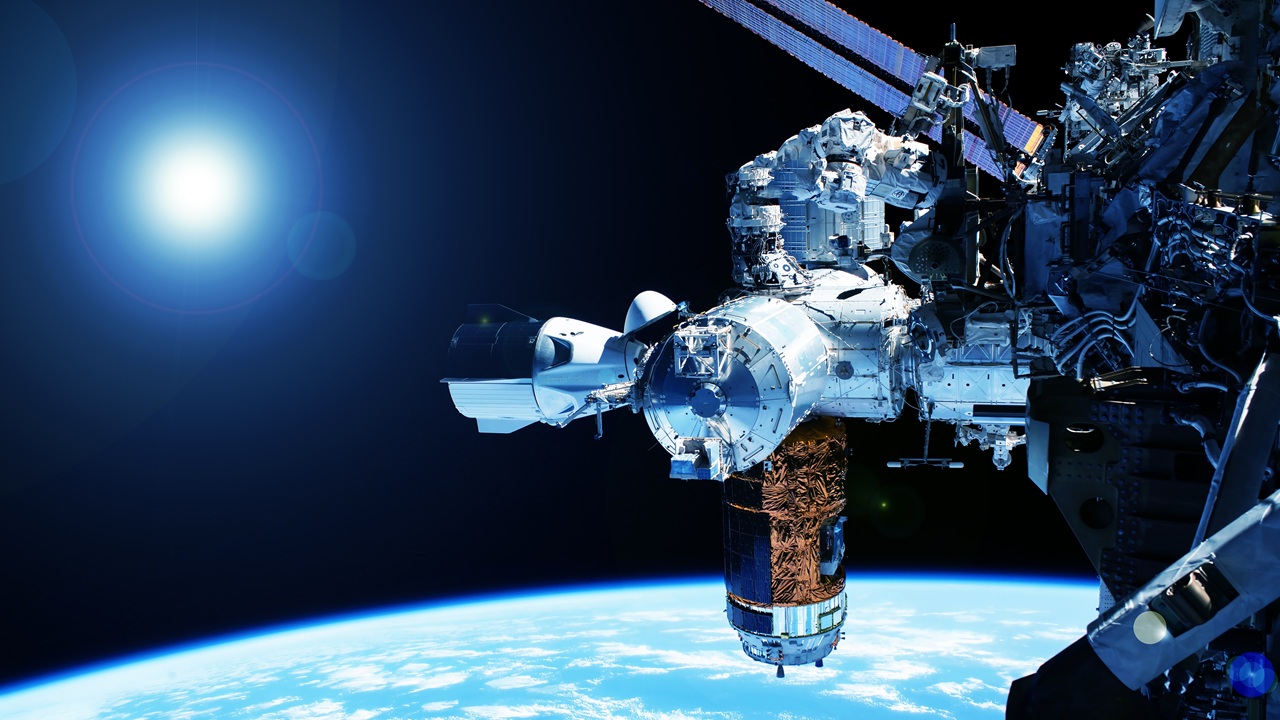
Image: Shutterstock / Artsiom P.
The post NASA’s Medical Evacuation of the ISS Is a Demonstration of US Space Power appeared first on The National Interest.
Источник: nationalinterest.org