
«Данное сообщение (материал) создано и (или) распространено иностранным средством массовой информации, выполняющим функции иностранного агента, и (или) российским юридическим лицом, выполняющим функции иностранного агента»
 Topic: Oil and Gas Blog Brand: Energy World Region: Americas Tags: Donald Trump, Latin America, Nicolas Maduro, South America, United States, and Venezuela Maduro’s Capture Won’t Disrupt Global Oil Markets January 6, 2026 By: Alex Gilbert, and Morgan Bazilian
Share
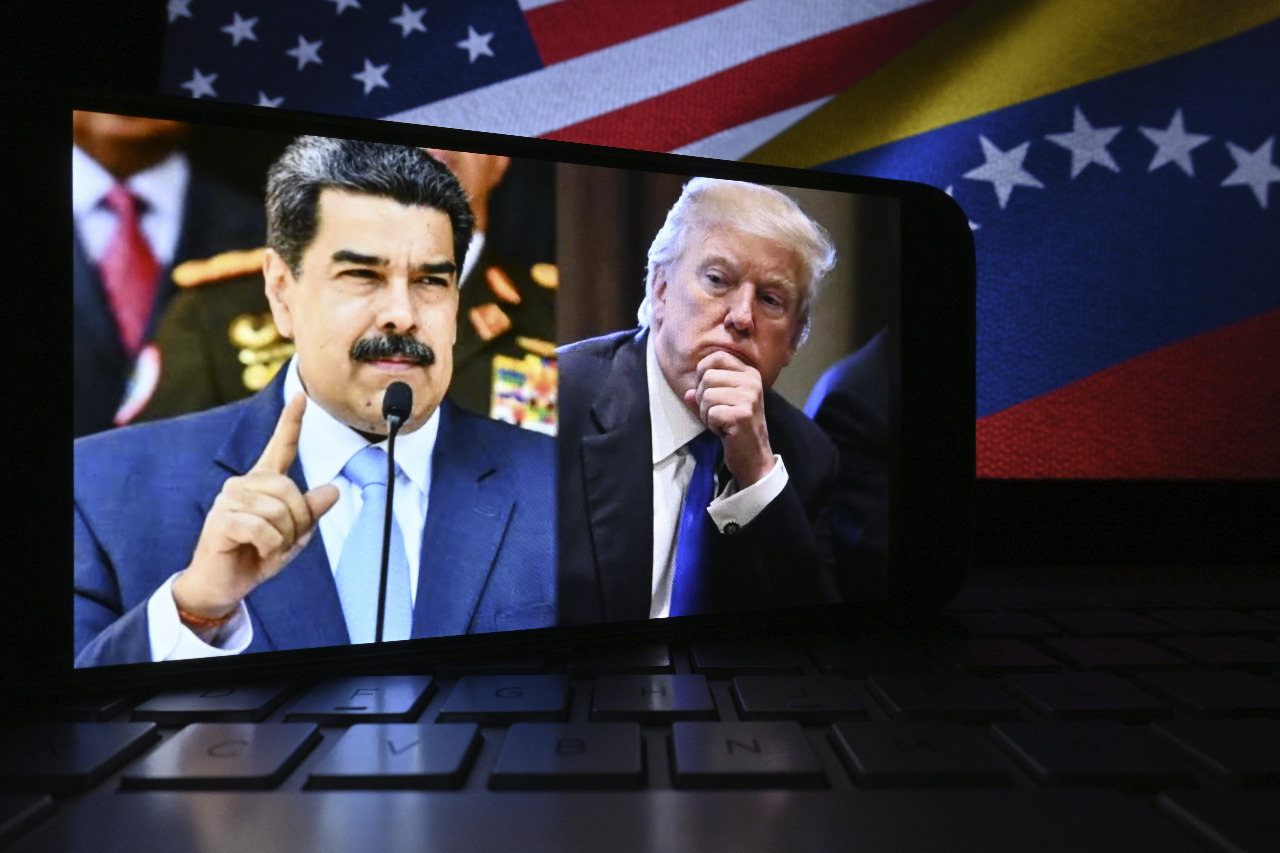
Maduro has been captured, but the lion’s share of the impact will be in the political and diplomatic arenas of world politics.
Early on January 3, US forces removed Venezuelan President Nicolás Maduro from the country and flew him to New York for arraignment on charges related to drug and arms trafficking. The political situation in Caracas remains fluid, and Washington’s stated objectives range from countering the narcotics trade to regional hegemony to more controversial claims about securing access to Venezuela’s oil.
The Fall of Maduro and Why It’s Not About the Oil
It is a dramatic geopolitical episode, but it is unlikely to be a durable oil price story—despite its narrative attractiveness. The reason is not that Venezuela lacks oil. Rather, it is that the historic role that Venezuela played in the global oil supply has largely receded, both due to the rise of US shale and neglect from the regime. While there are modest oil-related implications, the reality is that global oil markets will largely shrug off this development. And, at least so far, oil prices have traded sideways, even as US oil equities have jumped.
Start with the global balance. The International Energy Agency’s December 2025 Oil Market Report indicates a global supply surplus of almost four million barrels per day heading into 2026. In the early 2000s, Venezuela boasted production of up to ~3.5 million barrels per day, but the exit of Western firms, capital flight, biting sanctions, the loss of Venezuela’s skilled workforce, and poor management led that figure to fall below 1 million barrels per day. In a market already leaning long, geopolitical shocks must be either very large or very durable to reprice benchmarks for more than a news cycle.
Even if the situation stabilizes, Venezuela’s near-term ability to add meaningful numbers of new barrels is constrained by politics, infrastructure, market prices, and capital allocation realities.
The State of Venezuela’s Oil Market
The nation’s production and export capacity has been severely degraded, in large part due to neglect and underinvestment. It would take sustained and significant investment in order to substantially restore production. It would require substantial legal and contractual reform, opening the market to private participants, and debt and claims restructuring to restore the sector’s access to international financial markets. And it would assume an unusually smooth sequence in the near term: a stabilizing political settlement, clear authority over the oil sector, credible security on the ground, and a sanctions posture that allows trade to resume with minimal legal and reputational friction.
To the degree there are oil market impacts, they are more likely to be regional and concentrated in certain oil products, as opposed to large swings in WTI or Brent prices. A barrel of oil is not just a barrel of oil. Venezuela primarily produces heavy crude with a high sulfur content, which US Gulf Coast refining was historically configured to process. Sanctions on the Maduro regime led to those barrels being replaced primarily by Canadian heavy, forcing most Venezuelan barrels elsewhere. Any credible pathway to normalizing flows back toward the Gulf would tend to influence heavy-sour differentials, refinery margins, and product cracks more than it would reset global crude prices.
Similarly, there may be a modest impact on Chinese efforts to diversify its oil supply. In recent years, shadow and sanctioned oil fleets from Russia, Iran, and Venezuela have found a willing buyer in Chinese independent refiners, albeit at heavy discounts. Trade normalization may rebalance the oil supply away from China. Yet this was never a core Chinese energy security pillar.
The Path Forward for Venezuela: Oil and Grievance
Most notably, the country that Venezuela’s oil exports will matter most to is Venezuela. The commodity makes up more than 90 percent of the country’s exports and is a bulwark of the regime’s finances. Despite the effectiveness of the US raid, the administration’s policy and the day-after plan are still muddled. To the degree that the remnants of the Maduro regime are left in place, relief from US sanctions could be a significant incentive to produce the policy concessions the administration appears to be searching for. They could also bring Venezuelan barrels back to being traded in dollars, providing a minor boost to the currency’s dominance in hydrocarbon markets. The durability of such sanctions relief, however, is doubtful given the regime’s deep unpopularity and continued illegitimacy.
Beyond that initial window, the pathway gets longer and harder. Venezuela’s extra-heavy resource base, degraded infrastructure, and hollowed-out operational capacity raise the execution risk on every one of the steps needed to return the nation to major global market status. The rise of US shale includes marginal barrels that are shorter-cycle and with less risk. Capital discipline and shareholder return expectations will further compress the appetite for frontier political risk.
Finally, the “recovering stolen oil” rhetoric from the administration has real roots and will complicate any future efforts. Venezuela’s 1990s liberalization attracted major US and European investment and helped lift production to its peak. Under Hugo Chávez, Venezuela expropriated major assets and triggered extensive international arbitration, with roughly 60 proceedings recorded and estimated liabilities on the order of $20 to $30 billion. That legacy of grievance remains politically salient, and it will shape any attempt to normalize investment terms.
Maduro’s capture will have far-reaching implications for Venezuelans, hemispheric diplomacy, and international legal debates. The oil market implications are narrower and slower. Shale economics and Venezuela’s production collapse render claims that this is “about oil” archaic. Today’s market is larger, more flexible, and oversupplied.
About the Authors: Alex Gilbert and Morgan Bazilian
Alex Gilbert is the Vice President of Regulation at Zeno Power Systems, pioneering safety and licensing efforts for first-of-a-kind radioisotope power systems for maritime and space environments. Previously, he was a project manager at the Nuclear Innovation Alliance, where he led commercialization and regulatory reform efforts for advanced nuclear reactors. Alex is a fellow at the Payne Institute for Public Policy and a PhD candidate in Space Resources at the Colorado School of Mines. His research interests include nuclear innovation, strategic natural resources, energy security, and emerging technology policy.
Morgan D. Bazilian is the director of the Payne Institute and professor at the Colorado School of Mines, with over 20 years of experience in global energy policy and investment. A former World Bank lead energy specialist and senior diplomat at the UN, he has held roles at NREL and in the Irish government, and advisory positions with the World Economic Forum and Oxford. A Fulbright fellow, he has published widely on energy security and international affairs.
Image: Shutterstock/miss.cabul
The post Maduro’s Capture Won’t Disrupt Global Oil Markets appeared first on The National Interest.
Источник: nationalinterest.org