
«Данное сообщение (материал) создано и (или) распространено иностранным средством массовой информации, выполняющим функции иностранного агента, и (или) российским юридическим лицом, выполняющим функции иностранного агента»
 Topic: Foreign Leaders Blog Brand: Middle East Watch Region: Middle East Tags: Hamas, Hezbollah, Iran, Iraq, Islamic Republic, Islamic Revolutionary Guard Corps (IRGC), Israel, Lebanon, MENA, Palestine, Saudi Arabia, and Syria Iran and the New Middle East January 20, 2026 By: Robert D. Kaplan
Share
The end of a theocratic Iran will mean the end of the Middle Eastern region’s vortex of instability.
The Middle East is on the brink of a geopolitical earthquake. For close to half a century, since the Islamic Revolution of 1979, clerical Iran has been the organizing principle of the Middle East. Iranian revolutionaries created Hezbollah in Lebanon, supported and armed Hamas in Gaza, supported and armed the Houthis in Lebanon, and propped up the Assad family regime in Syria. They were an implacable enemy of both Israel and Saudi Arabia, and stoked terrorism and anti-Semitism in the West through social media and other means. And let’s not forget, Iran has been the principal force, through its militias, keeping the post-Saddam Hussein Iraq violent and anarchic.
Iran was an accessory to the October 7, 2023, Hamas attack on Israel, and that has proved to be the Islamic regime’s ultimate undoing. Israel’s military response in a two-year war shattered Hamas, devastated Hezbollah, and, as a consequence, led to the collapse of the Assad regime in Syria. Iran’s missile and nuclear threat against Israel led to the war last June, in which Israel and the United States did untold damage to Iran’s senior military and intelligence leadership and to its air defense system.
To draw the link between the mass protests against the regime and Iran’s recent military defeats in the region, one must understand Iranian military strategy in the wake of the Iran-Iraq War of 1980–1988. That war was fought on Iranian soil and traumatized what was back then a young Islamic Republic. Henceforth, the ayatollahs determined, with the help of the Islamic Revolutionary Guard Corps (IRGC), that they would create proxy armies far from Iran itself, so that future wars would not have to be fought in the Shia homeland. Hezbollah, Hamas, and other forces were designed to fight Israel while preserving the sanctity of Iranian territory.
The Israeli destruction of Hezbollah and Hamas opened the path for Israel and the United States to attack Iran on its own territory for the first time since the end of the Iran-Iraq War. This very fact fundamentally helped undermine the regime in the eyes of its own population. And that, together with mismanagement of the economy, the currency, and the potable water system, ignited the recent uprising.
Iran was so powerful for decades because of its large population, its geographic protection on the Iranian plateau, and, most importantly, the cultural genius of its people. Iran is not Arab; it is Indo-European, and thus when the Iranian state turned to proxy warfare and terrorism, it was enormously effective. The very fact and advancement of its nuclear program—something only a handful of countries could technologically manage on their own—attests to the Iranian cultural genius. Iran is not a state with artificially drawn borders like Syria and Iraq. It is an age-old civilization. And with a population of over 90 million, Iran is, along with Turkey, the largest and most educationally advanced Muslim population in the Middle East. Thus, a tumultuous process returning Iran to a normal, non-ideological state would shake the region. Just as the Islamic Revolution was a world-historical event, so would a secular counter-revolution be.
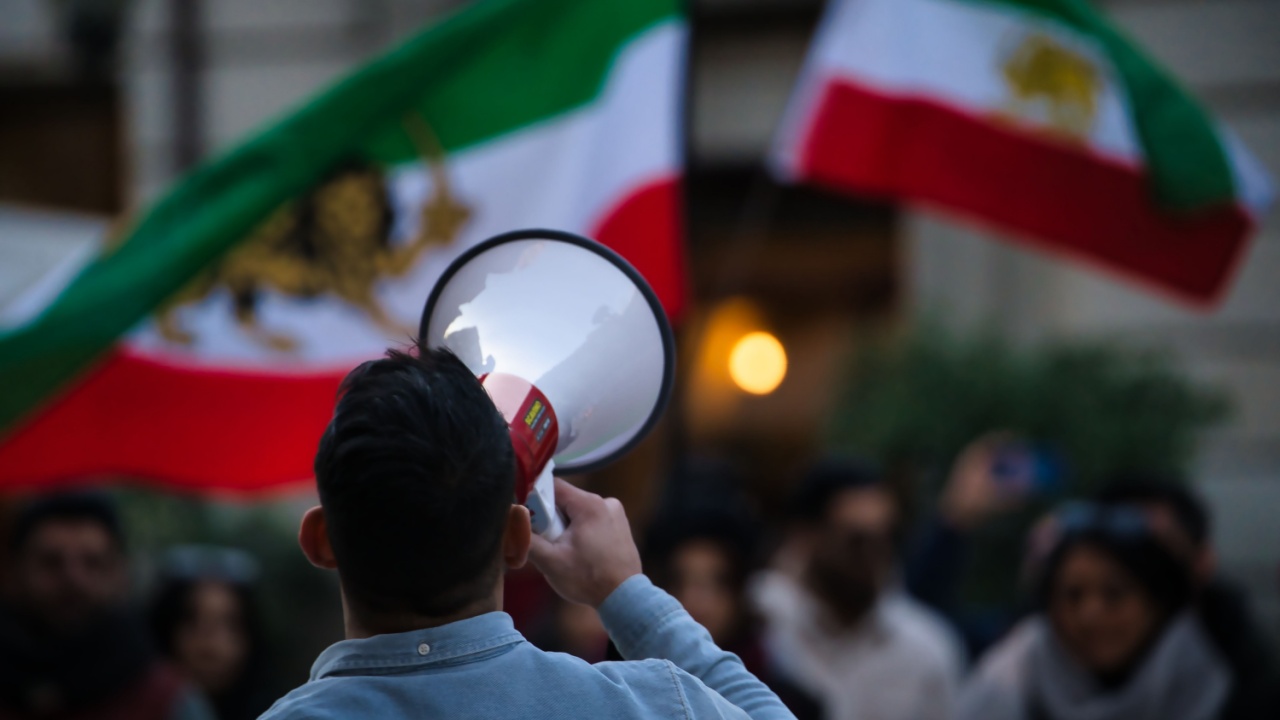
In my book, The Loom of Time: Between Empire and Anarchy from the Mediterranean to China (2023), I openly predicted the end of the Islamic Republic and its geopolitical consequences. It is possible that within a reasonable period of time, Crown Prince Reza Pahlavi (the late Shah’s son) will return to Iran in some capacity, and a new regime will begin exploring relations with both the United States and Israel. Persians and Jews have been friends over the centuries and millennia. The past half-century has been nothing more than an aberration in this historical pattern.
An implicit Iranian-Israeli axis, which includes Saudi Arabia and the Gulf states, would allow Lebanon to normalize and strengthen as a state without Hezbollah. It would help Syria stabilize, force the Palestinians to negotiate with a greater Israel, and alleviate the perception of Iraq as an unmitigated American failure. It will also curb anti-Semitism in the West. None of this will happen overnight. It could take a few years. But the process will begin the moment the clerical regime in Tehran collapses or evolves.
Of course, other scenarios are possible. The clerical regime could hang on to power for a few years. A civil war could erupt with a modest level of chaos as the IRGC and other regime forces battle the demonstrators. Iran’s minorities in its borderlands could declare autonomy, with the Baluch in Iran’s southeast linking up with their ethnic compatriots in Pakistan, the Azeris in Iran’s northwest moving closer to Azerbaijan, and so forth. The whole political geography of not only the Middle East but also the Indian Subcontinent and Central Asia could be affected. This is because a future Iranian state will be a weaker state than that of the tyrannical ayatollahs. In any case, the process of dramatic historical change has begun.
Tolstoy wrote in War and Peace (1869) that analysis is not enough; one must use one’s literary imagination to espy future geopolitical events (in Tolstoy’s novel’s case, Napoleon’s invasion of Russia and the burning of Moscow). Now is the time for all of us to use our imaginations regarding a future Middle East. When the Shah was in power, few analysts could actually imagine an Iran without the Pahlavi dynasty. For decades now, few analysts could imagine an Iran without the ayatollahs. But the crowds in the streets of Iranian cities and towns indicate that over 90 million people—young, educated, and tech-savvy—may be about to leave the political darkness and join the global economy and system.
In fact, radical Islam has been in retreat in the Middle East for years now. The role model in this process has been the fiercely secularizing, de facto ruler of Saudi Arabia, Crown Prince Mohammed bin Salman. It was the Islamic Revolution that, by politicizing Islam, actually killed the devotional worship of Islam itself inside Iran. Iran’s future, like Saudi Arabia’s, bends toward secularism. This is where the region is going, never mind the remnants of jihadism in West African back-of-beyonds, which is merely the upshot of anarchy and weak governments. And a secularizing Middle East will embrace a Jewish State more readily than Western leftists and anti-Semites ever can. The Palestinians, without powerful military patrons like in the past, will gradually adapt to the new reality. A post-clerical Iranian regime may not actually care that much about the Palestinians, especially as the very destruction of material life inside Iran under the ayatollahs will help bring about an abrupt change in foreign policy.
Iran’s future could very well be democratic, and that could affect politics in certain Arab police states. Iran, though not Arab, might serve as a role model in the region. Iran’s greater level of political development, even under the ayatollahs, with its cabinets, limited elections, and vague separation of powers, does give it institutional advantages lacking in the Arab world.
The Middle East is turning on its axis. With regard to the great events of history, what for many years seems improbable suddenly becomes inevitable.
About the Author: Robert Kaplan
Robert D. Kaplan’s most recent book is Waste Land: A World in Permanent Crisis. He holds the Robert Strausz-Hupé Chair in Geopolitics at the Foreign Policy Research Institute and is a distinguished senior lecturer at the University of Texas at Austin. He is the bestselling author of twenty-three books on foreign affairs and travel translated into many languages, including The Good American, The Revenge of Geography, Asia’s Cauldron, Monsoon, The Coming Anarchy, and Balkan Ghosts.
Image: Federico Gallucci / Shutterstock.com.
The post Iran and the New Middle East appeared first on The National Interest.
Источник: nationalinterest.org